
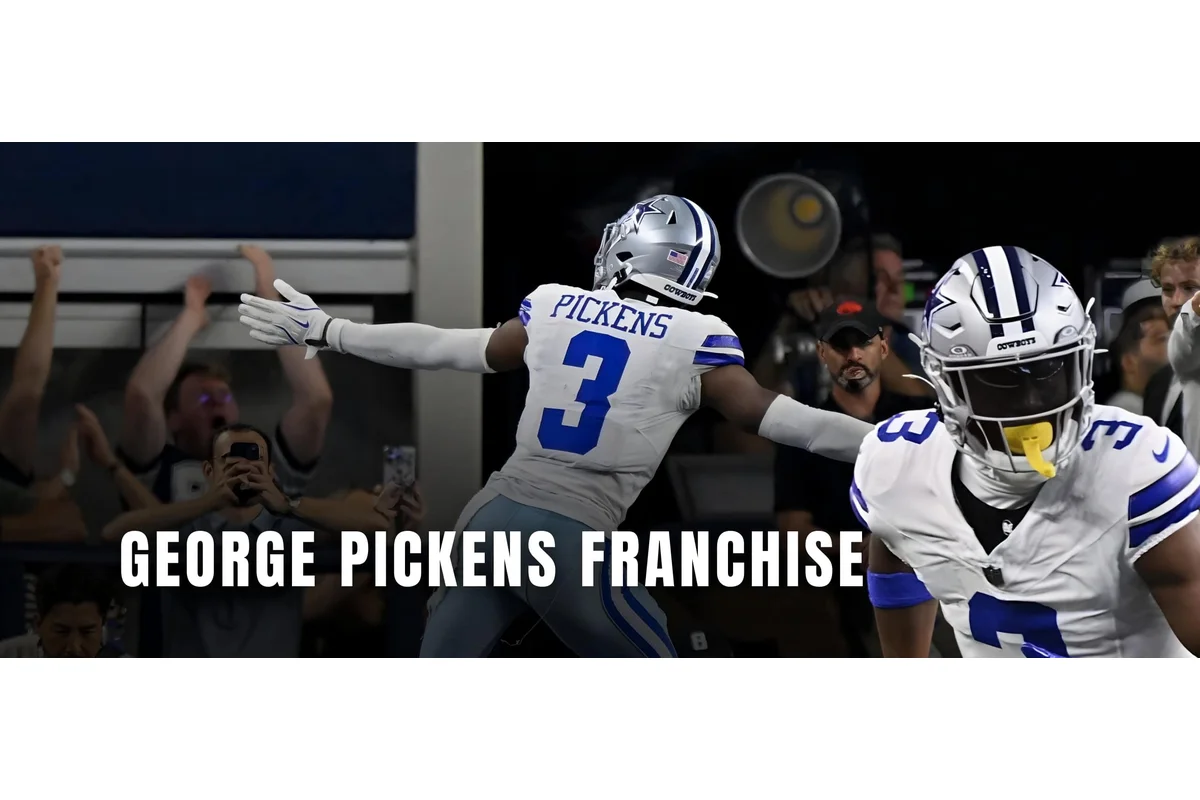
The Dallas Cowboys are currently involved in contract talks with wide receiver George Pickens, who was designated with the franchise tag last week as the NFL free agency period approaches. The key point of tension lies with Pickens’ agent, David Mulugheta of Athletes First, a highly influential figure in the league whose involvement has previously complicated Cowboys negotiations.
Mulugheta, who also represents linebacker Micah Parsons, played a pivotal role in last year’s troubled contract discussions between Parsons and the Cowboys. Team owner Jerry Jones believed a deal had been settled before Mulugheta stepped in to negotiate further, which led to a breakdown in talks and eventually Parsons being traded to the Green Bay Packers.
Just before the Parsons trade, Jones publicly criticized Mulugheta, highlighting the friction between the two.
The issue very frankly is we’ve had the negotiation in my mind, and the agent’s trying to get his nose in it right now and try to come in there and improve off the market we had already set,
Jones said, underscoring the dispute’s intensity.
Past Conflicts Between Owner and Agent May Influence Current Talks
The fallout between Mulugheta and Jones regarding Parsons created a strained environment, with Parsons siding with his agent and Mulugheta responding openly during an ESPN appearance. That disagreement confirmed a difficult working relationship. Now, as George Pickens enters free agency under Mulugheta’s representation, Jones faces another complex negotiation.
Despite this history, Jones maintains a professional stance toward the current discussions. He emphasized that confronting agents is part of the business and dismissed any hard feelings. Jones told reporters,
Let me be real clear—I have no issues at all with working with (George Pickens’) agent. And I have no issue with the agent, not at all. When he’s representing a player or someone that we have, a coach, someone we’re with, those issues are just obvious. Because the better job I can do for the club, the better off we are. The better job he can do for the player, financially, the better he gets. He gets more money.
Franchise Tag Places Cowboys and Pickens on a Temporary Contract Path
The Cowboys currently hold Pickens under the franchise tag, a one-year contract costing the team $28 million and a significant salary boost for the wide receiver. While this arrangement guarantees Pickens substantial earnings for the upcoming season, he continues to seek a long-term deal following an impressive year in which he amassed 1,429 receiving yards and 93 catches—ranking third in receiving yards league-wide and fourth in Dallas Cowboys franchise history.
Long-term negotiations could prove challenging financially. Spotrac estimates Pickens’ market value for a four-year contract at $122 million. Since the Cowboys assigned him a non-exclusive franchise tag, he is free to negotiate with rival teams. However, any team signing Pickens would need to compensate Dallas with two first-round draft picks. Given the combined cost of a high annual salary and draft pick compensation, there appears to be little interest from other franchises at present.
Consequently, the Cowboys are positioned to negotiate directly with Mulugheta and Pickens to resolve this contract before the free agency window fully opens.
Implications for the Cowboys’ Offseason and Future Roster Stability
These ongoing contract talks hold significant implications for the Cowboys’ offseason strategy and roster planning. Securing Pickens with a long-term contract would stabilize their receiving corps and reward the standout performance from last season. However, the complicated history between Jones and Mulugheta, combined with Pickens’ high market value, adds layers of uncertainty to reaching an agreement swiftly.
How the Cowboys navigate this negotiation could define their offseason momentum and influence relationships between team management, players, and agents moving forward. With free agency on the horizon, both sides are likely motivated to find common ground to avoid further disruption, but the process remains complex amid competing interests and financial demands.
It’s late. Maybe I’m old. Anyway Jerry Jones said he’s got no issues working with one of George Pickens’ agent David Mulugheta. pic.twitter.com/tudlu2ipJx
— Calvin Watkins (@calvinwatkins) February 28, 2026
