
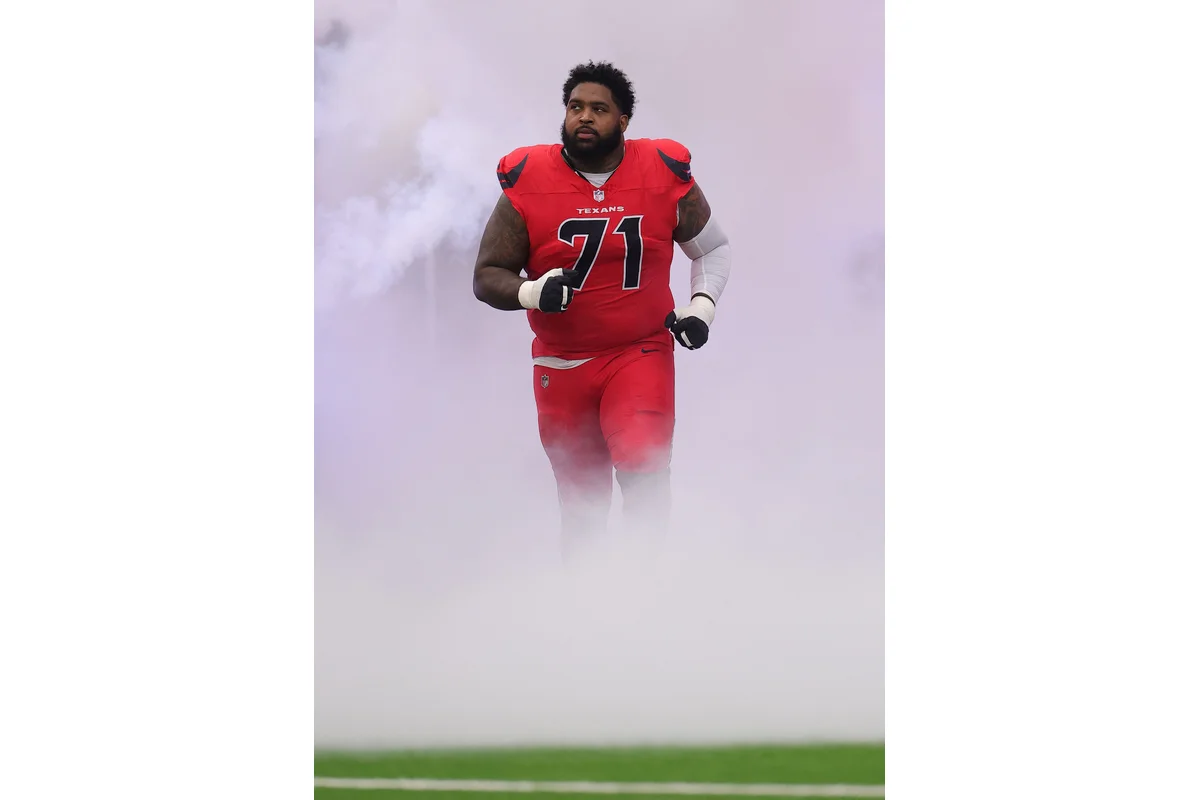
The NFL’s free agency period officially opens on March 9 with the legal negotiating window, but major personnel changes have already occurred. Last week, the New York Jets traded edge rusher Jermaine Johnson to the Tennessee Titans for defensive tackle T’Vondre Sweat. Following this, the Houston Texans moved offensive tackle Tytus Howard to the Cleveland Browns in exchange for a fifth-round draft pick. The Detroit Lions later surprised many by sending running back David Montgomery to the Texans for guard Juice Scruggs and two draft picks. These transactions mark the beginning of a frenetic offseason as teams reposition themselves for success.
ESPN analytics writer Seth Walder is assessing these high-profile trades and signings through a multi-faceted lens that considers on-field impact, salary cap consequences, player value and age, and each franchise’s long-term and immediate goals. His evaluations focus on how these moves alter each team’s chances to compete for the Super Bowl, reflecting both certainty and potential risk.
Detroit Lions Trade Running Back David Montgomery to Houston Texans
Trade overview: Texans receive RB David Montgomery; Lions acquire G Juice Scruggs and 2026 fourth-round and 2027 seventh-round draft picks.
Grades: Texans – D; Lions – A
In a move aimed at shoring up their struggling rushing attack, the Texans acquired veteran running back David Montgomery to complement second-year back Woody Marks. Houston’s running game ranked near the bottom of the league in 2025, finishing 31st in expected points added (EPA) per designed carry. While Marks showed some positive signs by gaining 31 rush yards over expectation, offensive line struggles were the largest barrier to success, as Houston’s line ranked dead last in run block win rate.
Montgomery brings reliability, having gained 125 rush yards over expectation with Detroit last season. However, his role has diminished steadily in recent years, particularly with the rise of younger talent such as Jahmyr Gibbs. Between 2023 and 2025, Montgomery’s snap share and carries dropped considerably, reflecting a reduced offensive role. His receiving contributions have also fallen off, with only 24 receptions last year compared to 54 early in his career.
The financial aspect is manageable for Houston, with Montgomery costing $6 million in base cash this year and $9 million non-guaranteed next year if the team does not retain him. Still, at 29 years old, the veteran running back represents an aging asset whose diminishing role and production raise questions about the value of the trade. In that light, Detroit’s haul in the trade—including a promising young guard in Juice Scruggs and two draft picks—positions them advantageously for future roster building.
Scruggs, a 2023 second-round pick, has struggled to establish himself as a reliable starter. His pass block and run block win rates have lingered near the bottom percentiles in various offensive line roles, including guard and center. With only one year left on his rookie contract, the Lions benefit most from the draft capital obtained and can pursue another running back prospect or affordable veteran free agent to bolster their backfield.
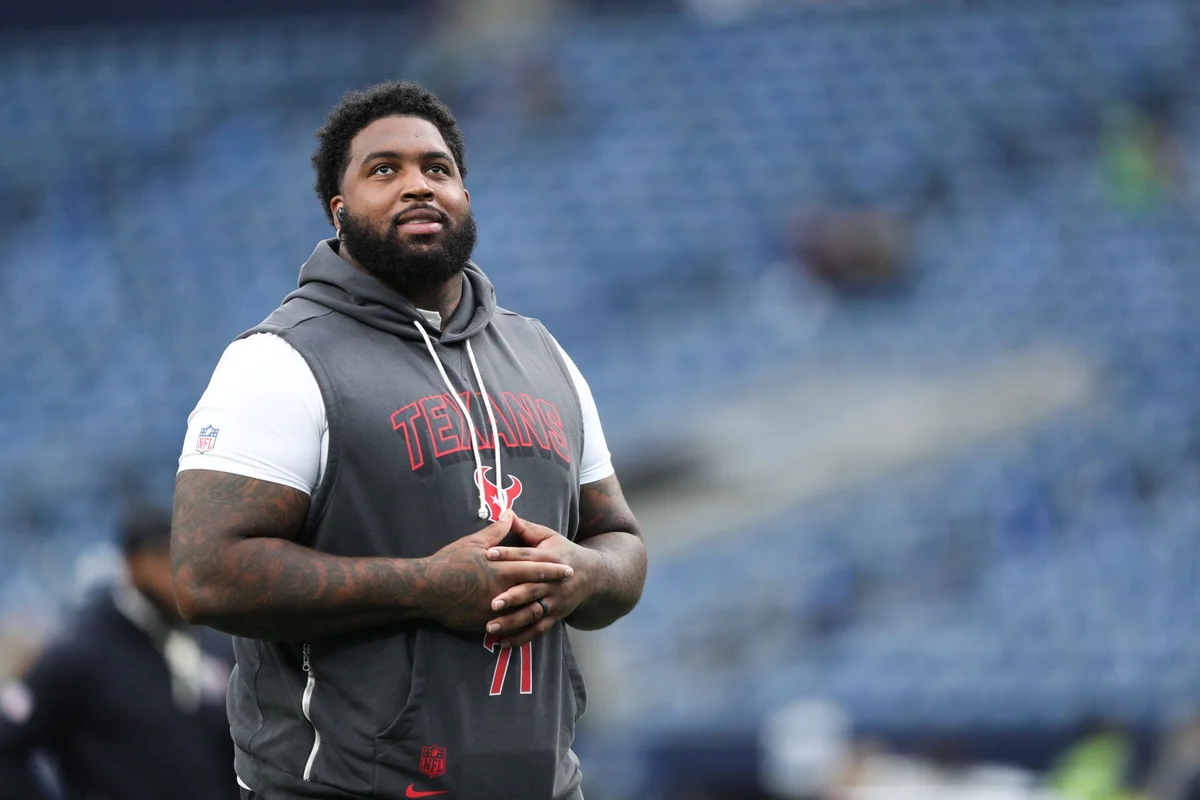
Cleveland Browns Acquire Offensive Tackle Tytus Howard in Large Contract Extension
Trade details: Browns receive OT Tytus Howard; Texans receive 2026 fifth-round draft pick.
Grades: Browns – D+; Texans – A-
The Browns made the bold decision to begin their intensive offensive line overhaul by acquiring Tytus Howard, an offensive tackle with experience playing both tackle and guard over his seven NFL seasons. This move is a foundational step in rebuilding a line facing six free agency departures in 2026, critical to protecting a likely young quarterback, whether it be Shedeur Sanders or another emerging talent.
Howard’s future role with Cleveland remains somewhat unclear, though right tackle appears to be the most probable starting position based on his history. Recent performance metrics indicate below-average results; in 2025, Howard ranked around the 24th percentile in pass block win rate and 31st percentile in run block win rate as a tackle, maintaining similar low marks in 2024. His peak years, notably 2021 and 2022 when he ranked in the top 10 in pass block win rate, seem to be behind him, especially given persistent weaknesses in run blocking.
Financially, the commitment is significant. Howard is set to earn $17.5 million in 2026 under his existing contract, which ends that year, but the Browns have agreed to a two-year, $45 million extension, as reported by ESPN’s Adam Schefter. With Cleveland’s salary cap precariously close to its limit before the deal, this allocation raises concerns about resource management, especially given Howard’s likely status as a below-average starter. Trading away a draft pick for this deal underscores the calculated risk Cleveland is taking in its urgent offensive line reconstruction.
For Houston, trading Howard for a draft pick is sound business. The Texans’ offensive line struggled notably last season, ranking last in run block win rate and near the bottom in pass protection. With several free agents ahead on the line, including Ed Ingram and Trent Brown, Houston has flexibility to redirect funds, especially with pressing needs to secure emerging stars like quarterback C.J. Stroud and edge rusher Will Anderson Jr.
Jets and Titans Execute a Player Swap Addressing Different Team Needs
Trade summary: Jets receive DT T’Vondre Sweat; Titans acquire Edge Rusher Jermaine Johnson.
Grades: Jets – A-; Titans – C-
The Jets, known recently for favorable trade deals, made another savvy move by exchanging Jermaine Johnson for T’Vondre Sweat in a one-for-one deal. Johnson showed promise with a Pro Bowl 2023 season tallying 7.5 sacks but has struggled with consistency and injuries, including a 2024 Achilles injury limiting him to three games. His overall pass rush win rate has lagged behind typical starters, raising doubts about his reliability over four NFL seasons.
In contrast, Sweat, a second-round pick in 2024, has contributed solidly as Tennessee’s starting nose tackle, bolstering the Jets’ interior defensive front. While his pass rush win rate from the defensive tackle position is below average, the context of his role on the line is important, and he should improve New York’s run defense while offering some interior pressure. The Jets already have key interior defensive linemen like Harrison Phillips and Jowon Briggs.
Johnson’s contract demands are steep, with a fifth-year option set at $13.4 million, whereas Sweat remains cost-effective with two years left on his rookie deal, paying $1.6 million and $2.1 million in those seasons. The combination of lower cost, youth, and team control makes this a smart acquisition for the Jets, while the Titans’ willingness to pay a premium for edge help appears less justified.
Wide-Ranging Effects on Team Rosters and Future Outlooks
These trades illustrate the varied strategies teams employ during NFL free agency and trade periods, balancing immediate needs with salary cap realities and roster building. Cleveland’s gamble on Tytus Howard emphasizes the Browns’ urgency to reconstruct their offensive line for a franchise quarterback’s protection. Meanwhile, Houston’s calculated moves, including trading Howard and acquiring Montgomery, highlight a rebuilding phase that prioritizes flexibility and draft capital.
The Jets continue their pattern of astute roster management by acquiring young, cost-controlled talent, potentially improving their defensive front without overspending. Detroit capitalizes on an aging running back’s remaining value by replenishing draft assets and investing in the future.
Moving forward, teams will need to address remaining roster holes, while monitoring how these acquisitions translate to on-field performance amid the upcoming NFL season. The Browns, in particular, must hope their investment in Howard will pay dividends despite the inherent risk of a costly contract for a below-average starter. Houston and the Jets appear to have positioned themselves advantageously by blending youth and financial prudence.
