
The Detroit Red Wings, in the midst of their win-now phase, continue to face challenges solidifying their defensive lineup. According to Ansar Khan of MLive, the team is actively pursuing a right-shot defenseman to stabilize the second pairing, with St. Louis Blues’ Justin Faulk emerging as a primary target. The goal is to find a seasoned player capable of handling heavy minutes while providing stability and protection for Detroit’s younger defense prospects.
Faulk, who is 33 years old, fits the veteran profile Detroit lacks—a defenseman who can skate effectively, distribute the puck reliably, shoot powerfully from the point, and mentor upcoming stars. Integrating Faulk is not just about filling a roster spot; it addresses crucial needs related to the development of rookie Axel Sandin-Pellikka, whose promising offensive instincts require a strong, experienced partner to shield defensive lapses.
Evaluating How Faulk Complements Detroit’s Defensive Structure
This potential trade holds hallmarks reminiscent of Steve Yzerman’s bold moves, though it carries substantial risk. While Justin Faulk is no longer at the peak of his prime as he was five years ago, that past performance decline might serve Detroit’s immediate needs well. The St. Louis Blues are shifting toward rebuilding, and Faulk’s $6.5 million cap hit—with only one year left on his contract—makes him a trade candidate they may want to offload.
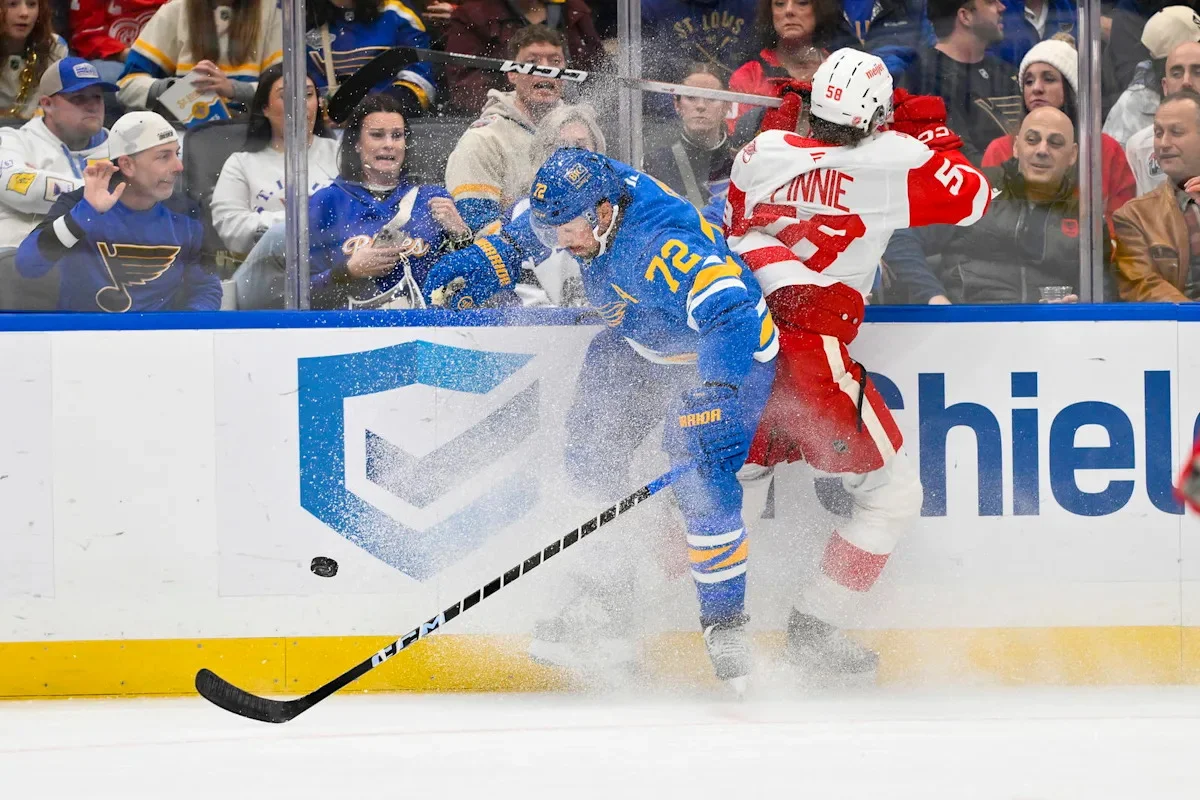
Detroit’s roster already includes Ben Chiarot, a physical defenseman who struggles with puck movement and would benefit from a partner who excels in transitioning the puck quickly. Faulk’s skating ability remains a strength despite his age, and his powerful shot from the blue line would add a new element to Detroit’s secondary power-play unit, which has lacked dynamism this season.
Beyond on-ice performance, Faulk’s presence offers mentorship benefits. Paired with Axel Sandin-Pellikka, he could create a balanced defensive pair where Faulk shoulders the defensive duties. This setup would allow Sandin-Pellikka the freedom to exploit his offensive potential without constant defensive pressure. Past successful veteran-rookie duos, such as Moritz Seider’s early development, provide a blueprint for how this pairing might thrive.
Trade Logistics and the No-Trade Clause Challenge
The financial components of acquiring Faulk appear manageable for Detroit. With sufficient salary cap space, the Red Wings could take on his contract in full, simplifying the transaction. The Blues, motivated to clear cap space, might require a reasonable package, possibly involving a mid-level prospect and a draft pick rather than demanding excessive assets.
One significant obstacle is Faulk’s 15-team no-trade list, which may or may not include Detroit. Players often invoke such clauses to avoid relocating mid-season or moving to certain geographical areas. If Detroit is on Faulk’s no-trade list, convincing him to waive it will be crucial. Selling the vision of joining a competitive Original Six franchise with playoff aspirations might persuade Faulk to accept the move rather than remain with a rebuilding St. Louis team.
If Faulk agrees to waive his no-trade rights, the deal addresses an urgent team need, protects Detroit’s top defensive prospect, and would expire after one year, preventing long-term salary complications.
Following Detroit Red Wings’ Updates and Engagement Opportunities
As the NHL trade deadline approaches, keeping informed on the latest Detroit Red Wings developments is vital for fans and analysts. For those looking to monitor trade rumors and team news closely, nhltraderumor.com offers timely updates on Detroit and league-wide activity.
For hockey enthusiasts interested in testing their managerial skills, participating in fantasy hockey pools provides an engaging way to stay connected to the season and compete for prizes within a strong community. Additionally, regular updates on game times ensure fans won’t miss any pivotal moments as the Wings battle through the playoff race.
