
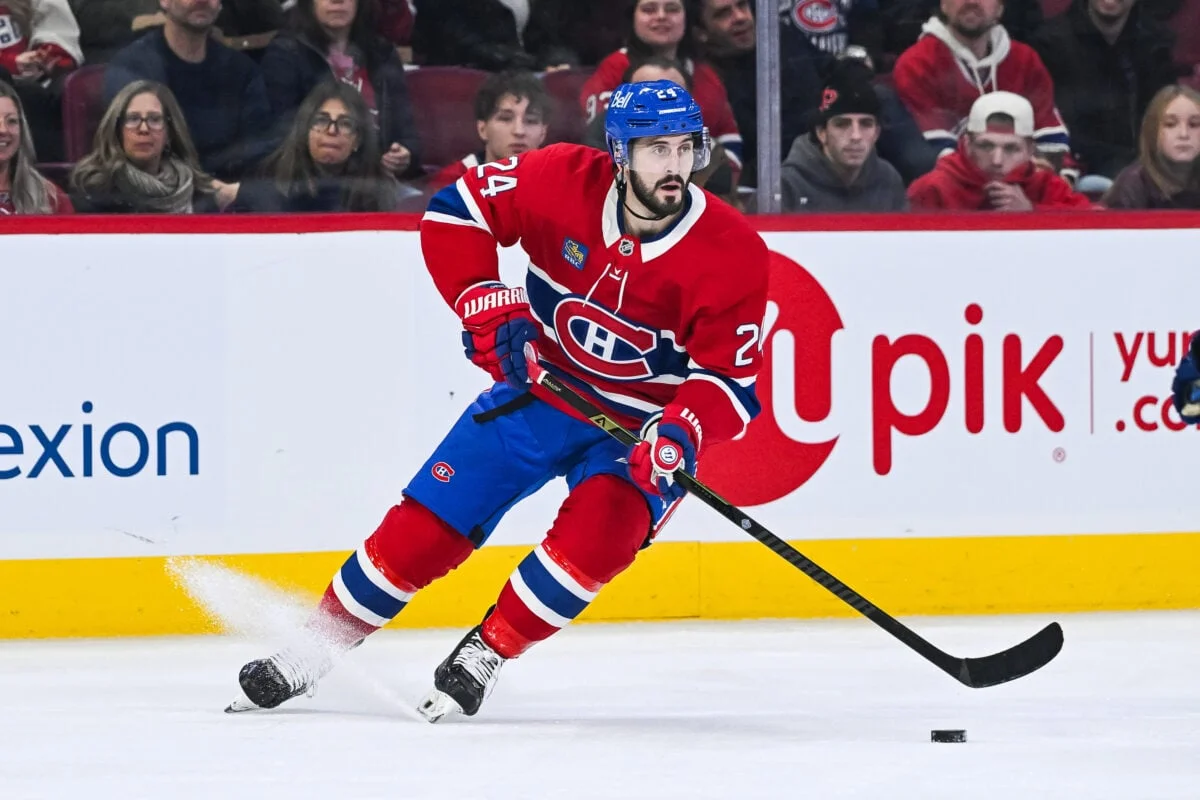
The Montreal Canadiens are managing a salary cap situation that is currently tight but poised for greater flexibility in the near future. Heading into the 2025-26 season, the team’s cap hit stands at approximately $95.17 million, just under the $95.5 million NHL upper limit. Navigating this constrained space while developing a roster capable of future success is a key challenge for general manager Kent Hughes and his front office. Effective cap management remains essential, especially given the Canadiens’ goal of balancing veteran presence with a rising core of young players.
Entry-Level Contracts and Potential Bonuses
The Canadiens have several younger players on entry-level contracts that help moderate their cap figures. These players include forwards Zachary Bolduc, Ivan Demidov, Oliver Kapanen, defenseman Lane Hutson, and goaltender Jacob Fowler. Their contracts range from one to three years, with cap hits between $863,300 and $950,000 per season. In addition to base salaries, the team faces potential bonuses totaling just under $4 million, spread among these players.
Ivan Demidov, who was signed ahead of schedule last season allowing playoff participation, has started his rookie year strongly. General manager Hughes is expected to prioritize a long-term extension with Demidov rather than another bridge deal, anticipating a contract in the $10 million range if signed early, potentially including an eighth year. Many of Demidov’s bonuses fall under “A” category incentives and are likely achievable.
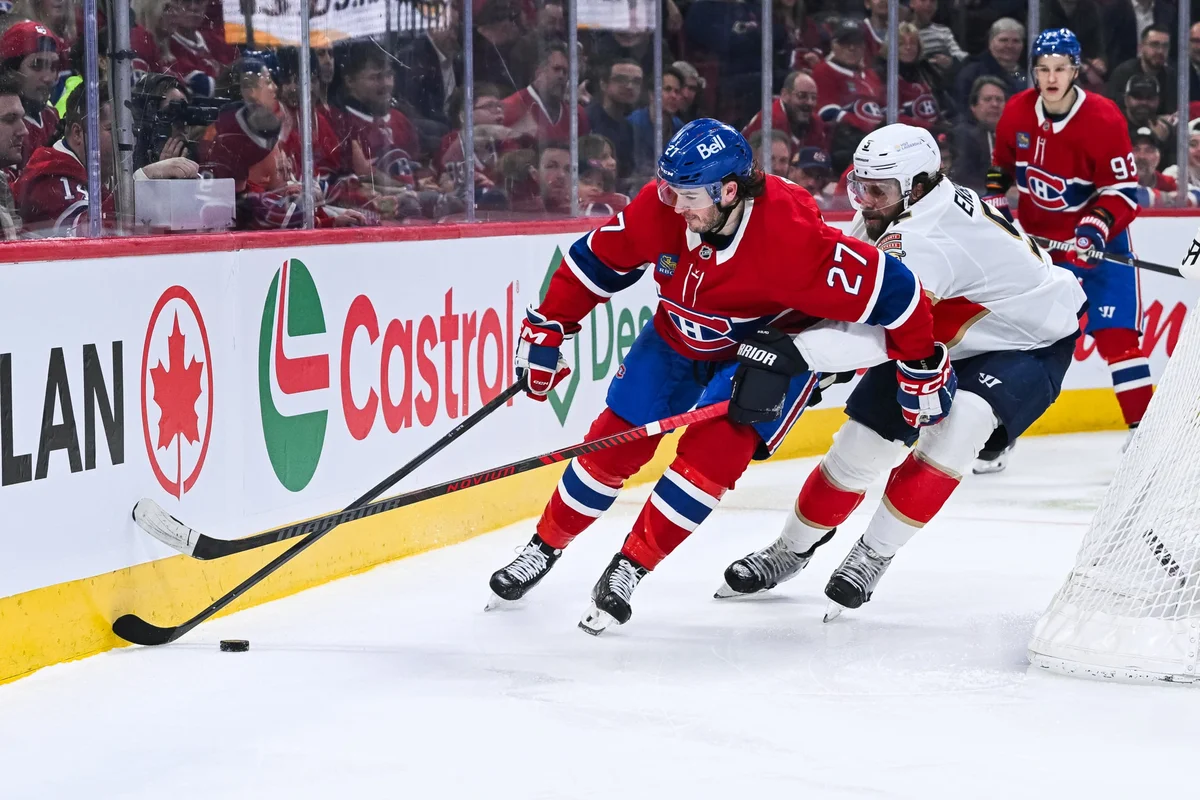
Oliver Kapanen’s role has expanded significantly this season. Although he has raised his production, questions remain about his offensive ceiling, suggesting a shorter-term deal in the vicinity of $4 million may be appropriate. Several bonuses in his contract are attainable, including some “A” category incentives focused on goal scoring. Zachary Bolduc, acquired from St. Louis, has demonstrated potential as a secondary scorer and is likely to remain on a bridge contract exceeding $3 million. His two “A” bonuses, particularly one tied to scoring 20 goals, seem within reach.
Lane Hutson, with a variety of “A” bonuses in his contract adding up to $1.15 million, has already earned $750,000 of those bonuses. His contract features a rare cap on bonuses, limiting additional earnings despite hitting all bonus criteria. Kapanen shares a similar limitation on bonus money. Goaltender Jacob Fowler, recently recalled from the AHL affiliate Laval, has already surpassed certain game-play bonuses and is considered a potential future starter. While his trajectory is promising, Fowler remains years from unrestricted free agency (UFA) status, and the escalating salary cap could see his value rise toward the $8 million mark if he establishes himself in the NHL.
Short-Term Contracts and Key Players Signed Through 2025-26
The Canadiens have a handful of important restricted and unrestricted free agents under contract through the 2025-26 season. Forward Kirby Dach (RFA), forward Patrik Laine (UFA), forward Joe Veleno (RFA), and defenseman Arber Xhekaj (RFA) make up this group.
Patrik Laine was signed in the 2024 offseason after it became evident a return to Columbus was unlikely. He has provided some offensive firepower, particularly on the power play, despite injury setbacks including a long-term lower-body injury this season. His one-year contract includes performance bonuses designed to mitigate risk for the Canadiens while offering Laine upside earnings tied to games played and productivity.
Kirby Dach has faced persistent injury troubles since being acquired in 2023. When healthy, he has shown potential as a top-six forward but inconsistency hampers his prospects. His qualifying offer is set to increase to $4 million, but a long-term deal appears doubtful given his health history.
Joe Veleno arrived via free agency after a buyout by Seattle, carrying modest qualifying offers but limited market interest. His best chance to remain is likely through Montreal’s tender offer, given his sub-$1 million qualifying offer and uncertain trade market. Arber Xhekaj, deployed primarily as a sixth defenseman, is unlikely to see a large role increase this season, but reaching 200 NHL games could justify at least doubling his current $1.3 million cap hit.
Contracts Extending Through 2026-27
A significant portion of the Canadiens’ roster is locked up through 2026-27, including forwards Josh Anderson, Phillip Danault, Brendan Gallagher, Alex Newhook, defensemen Alexandre Carrier and Jayden Struble, and goaltenders Jakub Dobes and Samuel Montembeault.
Brendan Gallagher, now 33 and predominantly a bottom-six forward, carries a $6.5 million salary but is likely to see a substantial pay cut in his next contract given his age and declining role. Josh Anderson, younger and known for physical play, has produced below expectations relative to his current $5.5 million salary and may face a smaller salary in his next deal.
Phillip Danault rejoined the Canadiens prior to the holiday roster freeze and serves primarily as a defensive specialist. His role may not justify his $5.5 million salary in future contracts, suggesting the possibility of a pay reduction. Alex Newhook has yet to secure a top-six position full-time but remains a valuable versatile forward, often scoring 30 points per season. His qualifying offer falls to $2.1 million, and the team might prefer a shorter-term contract near $4 million to maintain control.
Alexandre Carrier, acquired midseason from Nashville, has established himself as a reliable right-shot defenseman, frequently logging over 20 minutes per game. He is expected to command a salary over $4 million in free agency. Jayden Struble, on the first season of a bridge contract, has a role and salary similar to Xhekaj and might see his cap hit double depending on performance.
During the past season, Samuel Montembeault demonstrated signs of becoming a legitimate starting goaltender, which could have propelled his salary toward $6 million. However, underwhelming early results have diminished those prospects, requiring him to rebuild his value. Jakub Dobes, in the midst of a bridge deal, has established himself as an NHL regular; his next contract could range broadly from $2 million to $5 million depending on his final standing.
Long-Term Contracts Through 2027-28 and Beyond
Forward Alexandre Texier recently joined Montreal after requesting a contract termination from St. Louis and accepting a significant pay cut. His strong start earned him a two-year extension with a higher salary, suggesting that if he continues to perform well, the team will benefit substantially. However, if his role diminishes to a depth player, the contract could be viewed unfavorably.
Jake Evans remains signed through 2028-29 after choosing to stay with Montreal rather than pursue a trade. Though his 36-point output from the 2024-25 season is unlikely to be repeated, Evans provides valuable penalty kill contributions and is expected to maintain a useful role for at least a few seasons.
Core Players Locked in for Multiple Seasons
The Canadiens have secured several cornerstone talents through long-term deals extending to the 2030 offseason or beyond. This group includes forwards Cole Caufield, Juraj Slafkovsky, Nick Suzuki, and defensemen Noah Dobson, Kaiden Guhle, Lane Hutson, and Mike Matheson.
Former general manager Marc Bergevin moved swiftly to avoid repeating a costly departure by signing Nick Suzuki to an early extension. Suzuki has developed into a legitimate two-way number one center, providing a team-friendly cap hit of $7.875 million through 2029-30. Given the rising salary cap, his next contract could potentially double this amount if he maintains top-line performance. Caufield, who posted a career-high 37-goal season and is on pace to surpass it, has become a bona fide top-line winger. His contract value is expected to increase further in the coming years.
Juraj Slafkovsky’s development has been steady if not spectacular, with the team banking on his evolution as a top-six power forward despite point totals that have improved gradually. His contract through 2032-33 could provide solid value if he reaches his projected upside.
Noah Dobson’s price tag reflects his status as a top right-shot defenseman, but his role on the Canadiens differs from his previous one with the Islanders. With Lane Hutson now commanding prime offensive minutes on the blue line, Dobson’s production has shifted, though Montreal believes his contract is justified for the long term.
Lane Hutson, the Calder Trophy winner with 66 points last season, secured a contract extension reflecting his importance to Montreal’s future. Despite being undersized, the Canadiens are optimistic about sustaining his impressive initial impact.
Mike Matheson opted for a team-friendly long-term deal rather than testing free agency, with a salary beginning at $4.875 million in 2025-26 rising to $6 million in subsequent years. Although he will be in his 30s by the time this contract matures, the deal appears favorable for the team in the early years.
Kaiden Guhle, a capable top-four defenseman when healthy, signed a shorter term than his peers, likely reflecting concerns about his injury history. If Guhle can consistently hold down a second-pairing role and remain on the ice, the team should be satisfied, but ongoing health problems could make the contract problematic.
Salary Cap Penalties and Buyouts Status
The Canadiens currently have no active player buyouts or retained salary transactions impacting their cap. However, they are carrying a bonus overage penalty of approximately $1.75 million, slightly increasing their team cap obligations.
Among non-entry-level players, Nick Suzuki stands out as the best contract value due to his production relative to salary, while Patrik Laine is considered the worst value under the current financial structure.
Cap Outlook and Strategic Opportunities Ahead
Montreal’s recent trade involving a fifth-round pick to San Jose cleared the final year of Carey Price’s contract, enabling them to utilize the Long-Term Injured Reserve (LTIR) space. Despite this, injuries and the mid-season acquisition of Phillip Danault kept them on LTIR for much of the season, restricting cap room and forcing a mostly balanced “money-in, money-out” approach near the trade deadline.
Looking ahead, the expiration of several high-value contracts over the next two summers—including those of Laine, Danault, Gallagher, and Anderson—positions the Canadiens for increased salary cap flexibility. This, combined with anticipated NHL cap growth, is expected to free up close to $13.8 million for the 2025-26 season and nearly $55 million by 2027-28, although the team will need to fill approximately two-thirds of the roster by that latter season.
General manager Kent Hughes has emphasized the importance of adding players at the right moment as the team emerges from its rebuild phase. The growing cap space presents a significant opportunity to invest in the Canadiens’ young core and complement their emerging talent with strategic acquisitions.
