

Discussions about potential trades involving Braden Schneider have intensified in recent days, particularly with the New York Rangers considering roster changes. Last week, talks focused on possibly moving Schneider along with Alexis Lafreniere as part of a broader retooling strategy. However, attention has shifted now to which teams might serve as suitable trade partners. Among these, the Detroit Red Wings stand out as a compelling destination for Schneider, owing to their evolving team needs and rebuilding approach.
Detroit’s Rebuild Strategy Under Steve Yzerman
Since Steve Yzerman resumed his role as general manager in 2019, the Detroit Red Wings have undertaken a comprehensive rebuild centered around accumulating draft assets and exercising patience. Their strategy has involved consistently securing early draft picks, often holding multiple selections within the first two rounds. Instead of sacrificing promising prospects to acquire veteran players, Detroit has preferred to fill roster gaps through selective free-agent signings. This approach has allowed their prospect pool to develop depth and complexity over time.
The Current Status of Detroit’s Roster and Prospect Pool
Despite these efforts, Detroit has yet to translate its rebuilding investments into playoff success, with a postseason absence stretching back a decade. Beyond standout prospects Lucas Raymond and Moritz Seider, few of Yzerman’s draft selections have emerged as definitive top-tier contributors. Now, positioned near playoff contention, Detroit appears poised to transition from accumulating assets to strategically consolidating its roster through targeted upgrades.
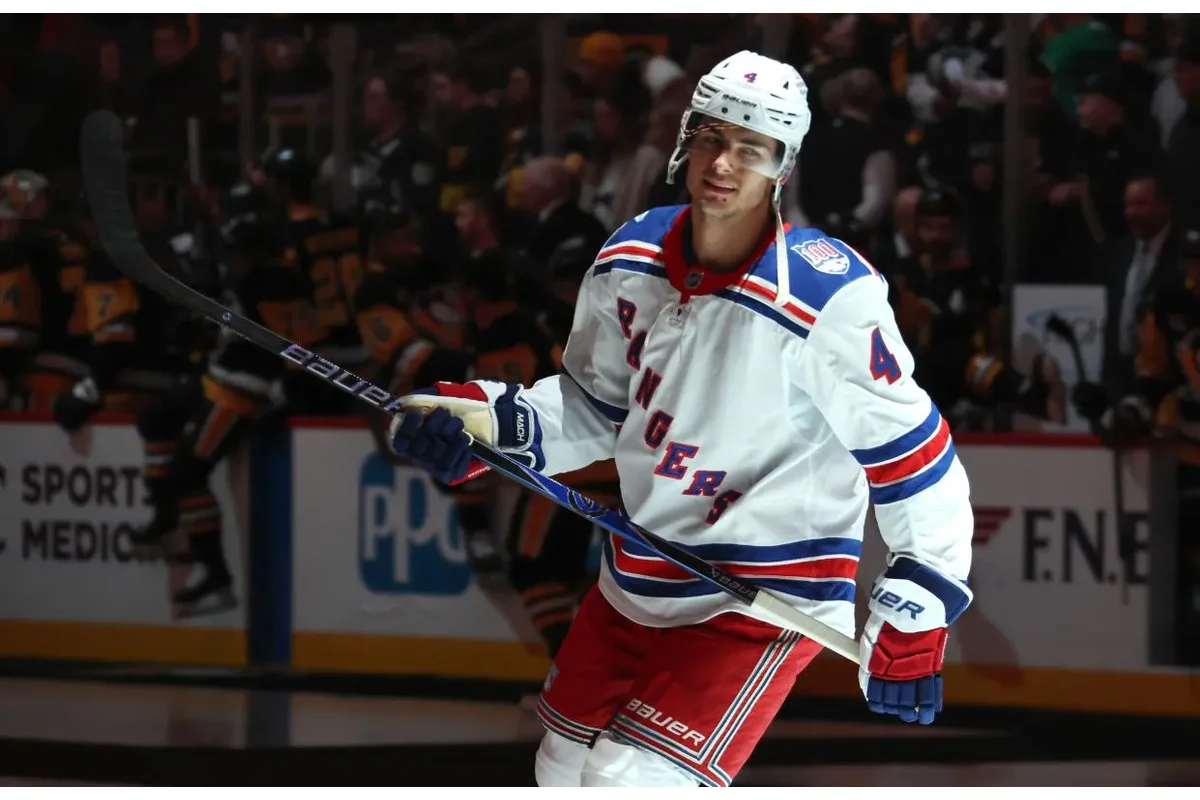
Braden Schneider’s Defensive Profile Aligns with Detroit’s Needs
For a team on the cusp of competitiveness, Schneider’s profile as a young, right-shot defenseman with cost-controlled potential fits Detroit’s requirements well. The Red Wings currently face defensive instability beyond Seider, relying on a rotating cast of veterans such as Travis Hamonic, Ben Chiarot, and Jacob Bernard-Docker, alongside developing prospects. Pairing Schneider—who offers promising defensive steadiness—with Detroit’s current mix could provide more reliable blue-line depth as the team seeks to firm its defensive core.
Developmental Defensemen in Detroit’s Pipeline
Simon Edvinsson, now in his second season, shows promise as a left-side defenseman, while Axel Sandin-Pellikka, though making offensive strides at just 20 years old, remains raw defensively. Albert Johansson contributes significant minutes but still looks like a longer-term prospect rather than an immediate solution. Other prospects, including William Wallinder, currently in the AHL, and Anton Johansson, developing in the SHL, possess potential but are not yet ready for NHL roles. This context underlines how Schneider’s profile could fill a pressing gap.
Advancing Detroit’s Center Position with Vincent Trocheck
Besides defensive concerns, Detroit has targeted upgrades at center, particularly a second-line role, which remains an area of moderate weakness. Reports leading into the Olympic roster freeze indicated Detroit was actively seeking a proven second-line center. Andrew Copp, while serving this role for a period, performs closer to a third-line matchup center. Offensive metrics such as goals and high-danger scoring chances hover around league averages, signaling the need for another dependable offensive center. Vincent Trocheck emerges as a significant potential upgrade to meet this need.
Depth and Prospects at Center and Wing Positions
Detroit’s young center prospects include Marco Kasper, the eighth overall pick in 2022, who has seen a decrease in ice time and projects more as a defensively responsible middle-six player instead of a key offensive contributor. Nate Danielson, selected ninth overall in 2023, benefits from smooth skating and strong positional awareness, making him a dependable two-way player though not an elite offensive force. Meanwhile, Michael Brandsegg-Nygård, a Norwegian first-round pick in 2024, offers a pro-caliber frame and physical style but remains a longer-term project currently developing in the AHL. It is noteworthy that Detroit pursued Trocheck before he opted to sign with the Rangers.
Why Alexis Lafreniere Is a Less Natural Fit for Detroit
Contrasting with Schneider and Trocheck, Alexis Lafreniere represents a less ideal match for Detroit’s roster. The Red Wings’ most urgent needs are at center and right defense, not on the wing where Lafreniere primarily plays. Moreover, Detroit’s winger corps is already crowded, and the organization appears more inclined to trade from this position group rather than add to it. Consequently, Lafreniere does not address Detroit’s key structural concerns.
Trade Implications and Future Outlook
Detroit’s situation exemplifies the practical thinking guiding the Rangers’ retooling efforts. Trades are most likely to align with clear roster needs rather than purely with player reputation. Schneider addresses Detroit’s defensive imbalance, while Trocheck fills an essential offensive role at center. Packaging Lafreniere alongside these players may yield prospects such as Albert Johansson and Marco Kasper plus draft picks, including a protected first-rounder. As potential partners are further evaluated, this principle of roster logic will remain central to formulating viable deals.
