
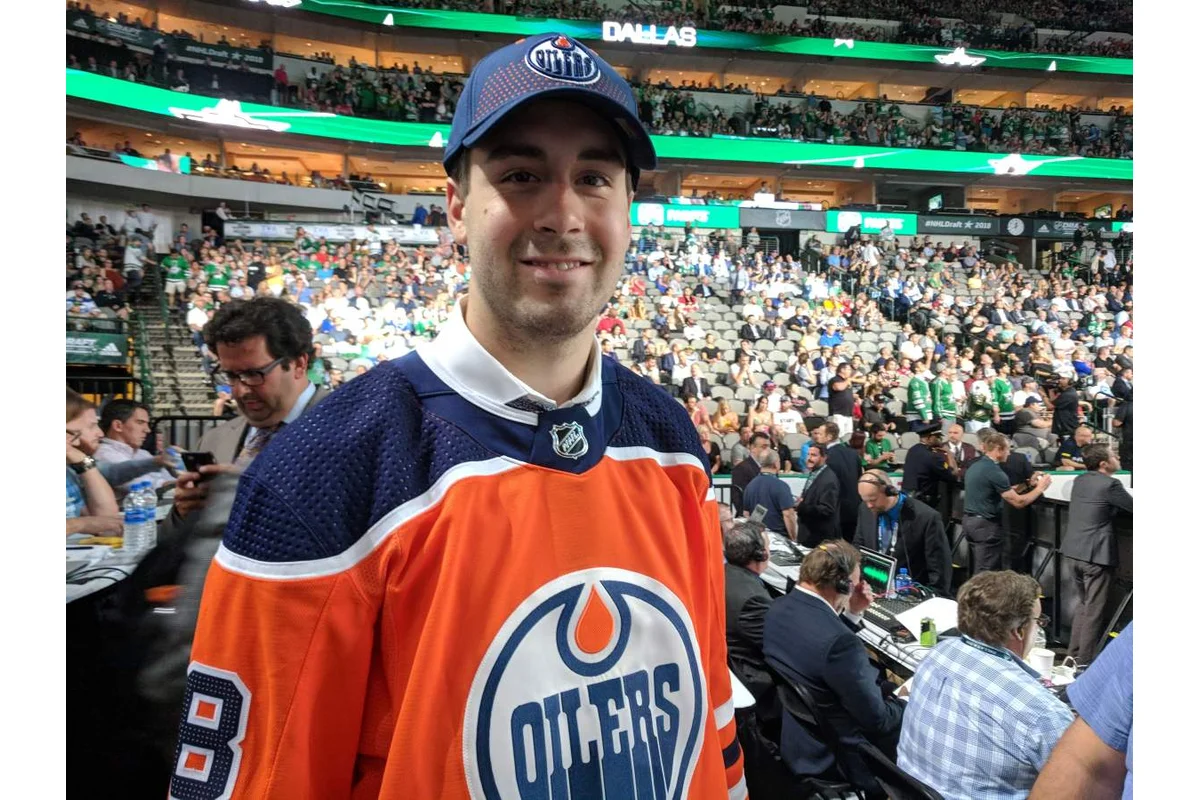
The Edmonton Oilers have encountered persistent challenges this season with their bottom-six group, undermining their overall performance. Despite the offensive firepower led by stars like Connor McDavid and Leon Draisaitl, the team has struggled to effectively ice three balanced lines, revealing troubling depth issues that affect their competitive edge.
While players such as Vasily Podkolzin have secured a spot on Draisaitl’s wing and Matt Savoie has made strides as a penalty killer, overall production in the bottom-six remains inconsistent. The root of the problem lies in a lack of defined roles and a clear identity for this forward group, which the Oilers need to address urgently after the Olympic break in order to remain playoff contenders.
Establishing Defined Roles to Strengthen the Bottom Lines
The Oilers’ troubles with bottom-six roles call back to a turning point in February 2022, when the team replaced head coach Dave Tippett with Jay Woodcroft. Woodcroft’s arrival marked noticeable improvements, particularly among the lower lines. Former Oilers forward Derek Ryan highlighted the positive impact this had on team cohesion, noting that a stronger sense of role clarity helped improve overall performance.
Traditionally, bottom-six forwards are expected to bring more grit, physicality, and defensive responsibility compared to the skill-focused top-six. Successful recent Oilers teams that reached the Stanley Cup Finals demonstrated bottom-six lines with clear identities, such as the 2024 trio of Connor Brown, Adam Henrique, and Mattias Janmark, and the 2025 grouping including Kasperi Kapanen and Vasily Podkolzin.

These groups succeeded because each player knew their role perfectly: Brown and Janmark excelled on penalty kills, Henrique was trusted on draws and played a comprehensive 200-foot game, while Kapanen and Podkolzin provided physicality and quick bursts of offense. In contrast, the current bottom-six appears disjointed, lacking that sense of purpose and structure.
Poor individual performances from players like Andrew Mangiapane and Trent Frederic have exacerbated these issues, but the absence of a collective identity cannot be ignored. Winning hockey games, especially in the playoffs, requires that every player understands where to be on the ice and what is expected of them. Without this, the Oilers’ bottom-six remains vulnerable.
Following the Olympic break, speculation is growing about potential coaching adjustments, but regardless of staff changes, the Oilers must clarify roles and foster a distinct bottom-six identity to improve results.
Building a Scoring Third Line and a Defensive Fourth Line
One effective strategy for bottom-six construction, embraced by many successful NHL teams, involves creating a scoring-oriented third line to complement a shutdown fourth line. With playoffs increasingly reliant on line matching, having a third line capable of contributing offensively is crucial.
Florida’s victory over Edmonton in last year’s playoffs highlighted this approach, as their third line of Luostarinen, Lundell, and Marchand provided both physical play and scoring. The Oilers could benefit from assembling a similar line featuring Jack Roslovic, Ryan Nugent-Hopkins, and Kasperi Kapanen. Nugent-Hopkins is known for his complete 200-foot game, Roslovic brings an offensive mindset, and Kapanen adds relentless hustle.
Aside from the question of who replaces Ryan Nugent-Hopkins on McDavid’s wing—Isaac Howard is a candidate worth trying—this hypothetical third line might provide the scoring and energy the Oilers need.
Regarding the fourth line, success often lies in subtlety. The ideal fourth line quietly contains the opposition without dominating the spotlight. Curtis Lazar has been the Oilers’ standout fourth-line forward this season, providing physicality and reliability, qualities essential for this role.
Mattias Janmark, no longer able to sustain third-line minutes, could transition to the fourth line alongside Lazar and perhaps Josh Samanski, who has experience on both the third and fourth lines. Although this line is unlikely to produce much offense, its physical presence and defensive steadiness could make a valuable contribution.
Experimenting with Youth and Experience on Separate Lines
An alternative approach the Oilers could consider is dividing the bottom-six into a ‘kid line’ and a ‘veteran line.’ This method carries more risk but offers long-term promise by giving younger players meaningful ice time and responsibility. Matt Savoie, Isaac Howard, Josh Samanski, and Quinn Hutson represent the youth movement the Oilers hope to develop as part of their future core.
For instance, the team might experiment with a 3C line of Samanski, Savoie, and Howard. Savoie’s 5v5 puck control and chance creation have improved substantially, and he is an elite penalty killer. Howard has dominated the AHL following his demotion and merits another look in the NHL, while Samanski’s promotion reflects the organization’s confidence in his potential. The 1990 Oilers won the Stanley Cup in part due to the legendary ‘Kid Line’ of Joe Murphy, Ryan Graves, and Martin Gelinas, suggesting a new generation could reintroduce this concept.
With a youth-focused third line in place, the fourth line could be manned by veterans such as Lazar, Janmark, Frederic, and Henrique. Their mandate would be to maintain stability, contribute defensively, and provide a calming presence on the ice, safeguarding the team during key moments and slowing the game down when necessary.
Following a potential trade of Mangiapane, the Oilers might look for a player skilled in fulfilling this veteran role. A fast, energetic kid line putting pressure on opponents combined with a steady, composed veteran line might rejuvenate Edmonton’s bottom-six dynamics.
The Imperative for Change in Lower Lines
As the season approaches its critical phase, the Oilers’ coaching staff, led by Kris Knoblauch, faces mounting pressure to reconfigure the bottom-six lineup. Maintaining the current setup post-Olympic break risks continued underperformance in crucial games and may jeopardize job security for those responsible.
Establishing clearly defined roles and an identity for these bottom-six forwards will not only boost their confidence and cohesiveness but also strengthen the entire team’s depth. This adjustment is vital if Edmonton aims to secure a third consecutive trip to the Stanley Cup Final and sustain their reputation as a top contender.
Photo by Curtis Comeau/Icon Sportswire
