
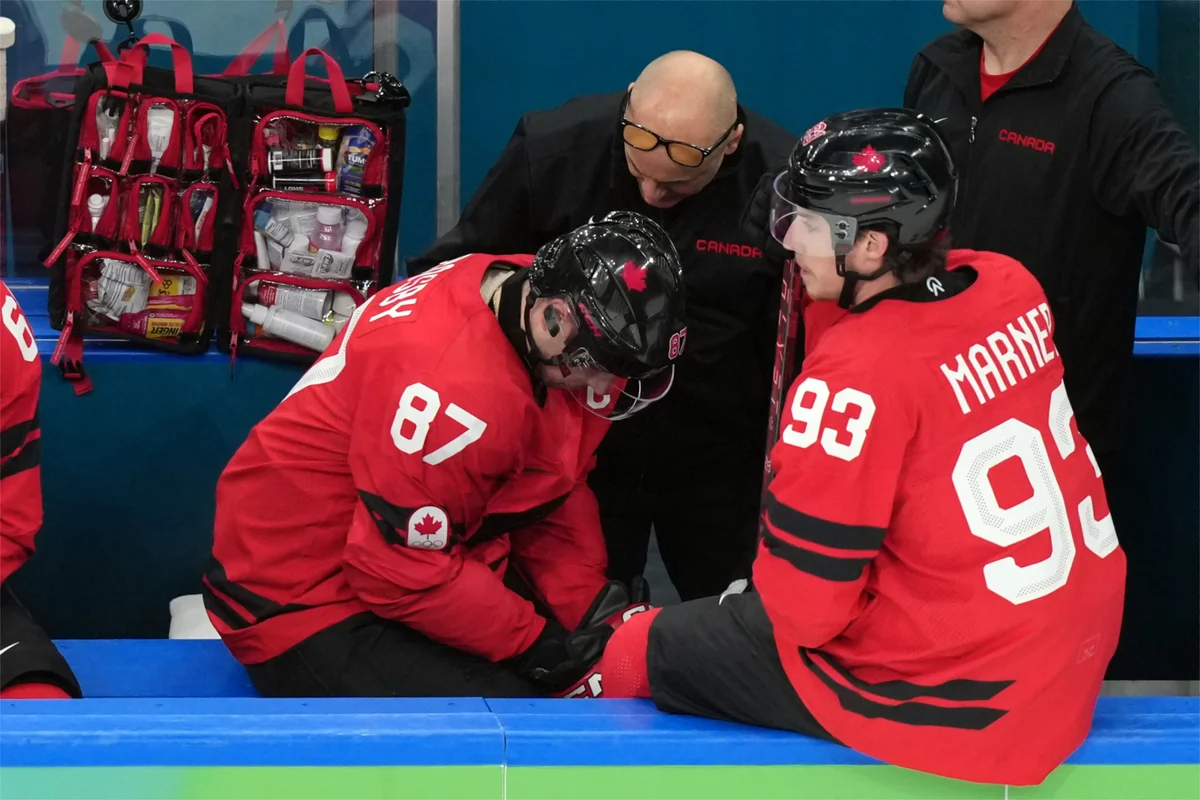
Sidney Crosby, a defining figure in Canadian hockey who led the nation to a historic gold medal on home ice during the 2010 Vancouver Olympics, has been Canada’s captain in every international tournament since Sochi 2014. However, the mantle of top Canadian hockey leadership is gradually shifting towards Connor McDavid, his younger teammate at the 2026 Milan Winter Olympics. Although Crosby has allowed McDavid to eventually take over the captaincy, Hockey Canada initially retained Crosby as captain for the NHL’s return to Olympic competition.
Canada’s general manager, Doug Armstrong, praised Crosby’s leadership, saying,
“He moves between management and coaches and players with great ease. He’s as good a leader as I’ve been around and I’ve seen.”
With Crosby’s injury during the current Olympics, the leadership transition to McDavid, who wears number 97 following Crosby’s number 87, may accelerate. Should Crosby be sidelined for the semifinal against Finland, McDavid is expected to wear the captain’s “C” and lead the team.
“Those two, it’s Sid and then Connor who’s kind of filling in his shoes and kind of taking on that role,”
said Macklin Celebrini, Canada’s youngest player at 19.
“They’re different in the way that they carry themselves, but both of them are awesome people and awesome teammates.”
McDavid’s Determination and Performance at His First Olympics
At 29 years old, Connor McDavid makes his Olympic debut at Milan, contrasting with 38-year-old Sidney Crosby’s third Games. The 12-year gap in NHL participation at the Olympics delayed McDavid’s opportunity, but he is now seizing it fully. Leading all scorers with 11 points, McDavid is a frontrunner for the tournament MVP if Canada captures gold again, following the path set by Crosby and Drew Doughty in 2010 and 2014.
Reflecting on McDavid’s impact, Crosby commented,
“He’s doing everything, whether it’s with the puck without the puck, (being) physical, he’s leading by example in every possible way. He’s poised, and guys have taken some runs out of him. He just continues to play. I think he’s (got) a lot of focus that way. He’s been leading the way.”
Drew Doughty, Canada’s second-oldest player at 36, has faced McDavid’s dominance in NHL playoffs over the past four years and now witnesses it on the Olympic stage.
“I don’t know if he’s playing better or what, but it’s obviously on a bigger stage,”
said Doughty.
“For him to be able to handle that pressure and play the way he’s playing, it’s pretty special.”
Crosby’s Strong Start Cut Short by Injury
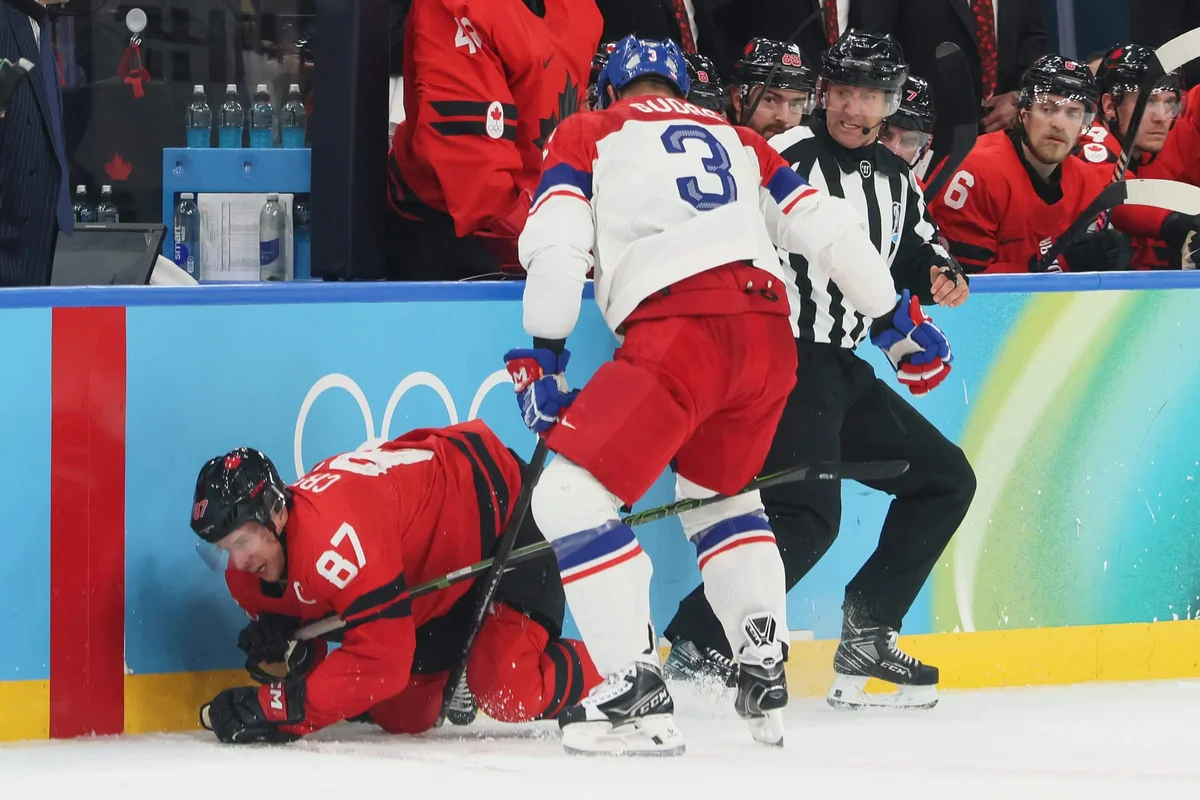
Aiming for his third Olympic gold, Crosby was performing admirably with six points in three games before suffering a right knee injury in the fourth game. He left the quarterfinal against Czechia but remained a vocal presence, addressing his team during the second intermission. Canada rallied from behind to win in overtime, inspired in part by Crosby’s message.
Coach Jon Cooper emphasized the motivational role Crosby played, explaining,
“We didn’t want this to be Sid’s last game at this Olympics, so it was big motivator for the guys coming out.”
Cooper continued,
“There was a lot more than that. But he’s a true leader. And they don’t want this to be the end of the tournament for him.”
Crosby’s participation in the semifinal against Finland remains uncertain though he has not been ruled out.
“If he can play, he’s definitely going to,”
Cooper affirmed after practice.
McDavid Already Embracing a Leadership Role on Team Canada
Although the team has not fully confronted the possibility of playing without Crosby on the ice, preparations are underway. McDavid, who captains the Edmonton Oilers, is stepping into his role as a national team leader at the Olympics, demonstrating qualities expected of Canada’s future captain.
Goaltender Jordan Binnington praised McDavid’s leadership, stating,
“He’s a great leader for us. He wants the puck. He wants to make a difference. He’s excited to play. He brings great energy, and he’s had a lot of big goals, contributed to a lot of big goals for us.”
Coach Cooper noted a shift in Canada’s leadership dynamics since last year’s 4 Nations Face-Off, where vocal veterans like Crosby, Doughty, and Brad Marchand dominated. Now, McDavid has taken on a more prominent leadership role.
“He’s much more—not that he wasn’t comfortable—but I think there was a lot of uncertainty especially because we hadn’t seen best on best and this group hadn’t been together for so long,”
Cooper remarked.
“In this tournament, he’s been fabulous.”
McDavid is known for being quieter than Crosby and has yet to win a Stanley Cup, but he extensively studies Crosby’s leadership style. He said,
“Everybody here watches him and is trying to learn off him. Sid is just himself, and it doesn’t need to be anything more or less. I think everybody’s different in their own way.”
Doughty described Crosby as,
“the guy that showed all the young guys, young players growing up, what it means to be Canadian, what it means to be a Canadian hockey player.”
Doughty is confident McDavid is prepared to inherit that legacy.
“I can’t say enough good things about him, great guy off the ice, fun to hang around, and then when it’s game time, he’s dialed in and ready to go. And he puts that jersey on and he’s the best player on the ice every night. It’s crazy.”
Significance of the Leadership Shift Ahead for Canada
The unexpected injury to Sidney Crosby at a critical Olympic moment has thrust Connor McDavid closer to the forefront of Canada’s hockey leadership. With Crosby’s decorated history as three-time Stanley Cup winner and two-time Olympic gold medalist, his gradual passing of the captain role signals the dawn of a new chapter for Canadian hockey. McDavid’s poise under pressure and standout performance suggest he is ready to carry the legacy forward, reflecting a carefully managed transition within Hockey Canada’s ranks.
The evolving leadership dynamic between Crosby and McDavid reflects broader themes of mentorship and succession in elite sports, emphasizing the importance of readiness when the mantle must be passed. As McDavid gains experience leading on the international stage, Canada’s hockey future appears secure, and fans await whether the team will replicate the gold medal successes of the past.
