
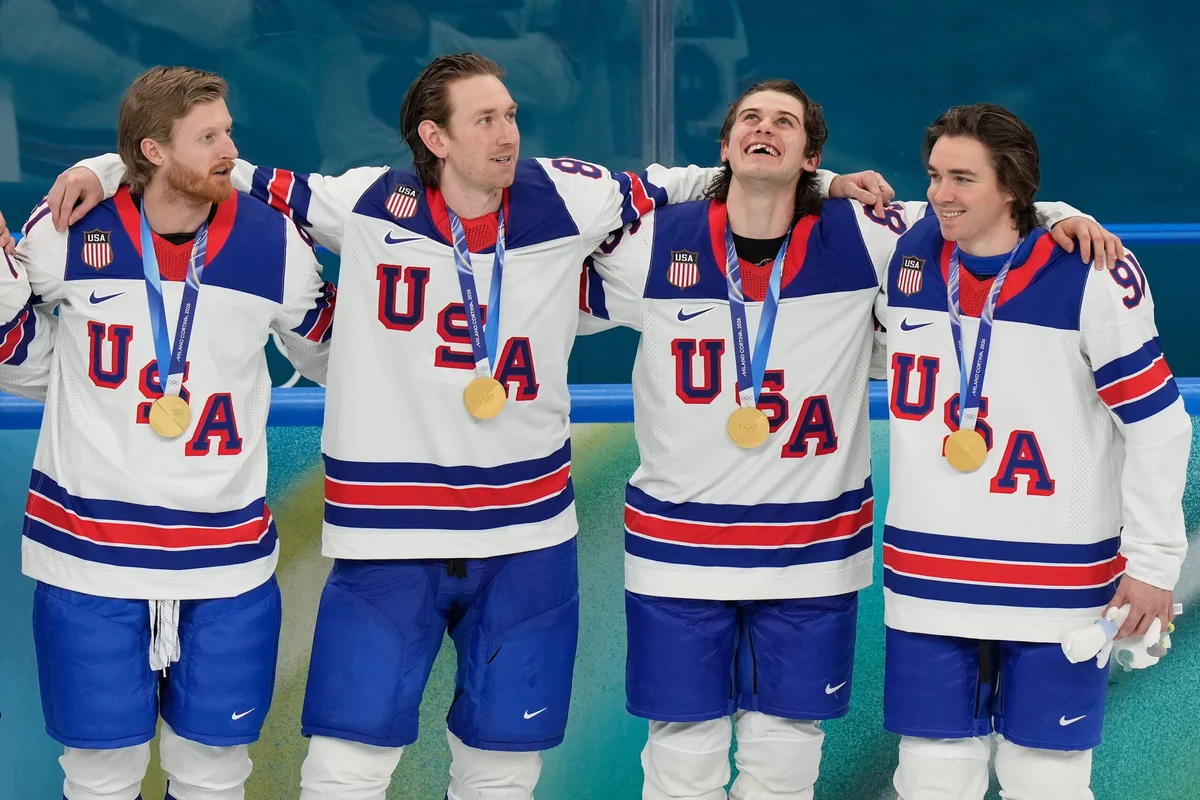
In a dramatic finish at the 2026 Winter Olympics men’s ice hockey gold medal game held in Milan, Italy, Jack Hughes secured the victory for the United States with a game-winning goal in overtime. The goal came during a tense battle against Canada on February 22, completing a historic moment for the U.S. team.
Hughes’ achievement, now known as the Jack Hughes Olympic winning goal, capped off a gripping overtime sequence and delivered the gold medal to the U.S., marking a significant highlight of the tournament.
Key Moments Leading to the Winning Goal
The winning play began after Connor McDavid of Canada failed to convert an early scoring chance in the three-on-three overtime period. From that point, Hughes picked up the puck behind the U.S. net, igniting a quick counterattack that caught Canada off guard. Defenseman Zach Werenski sensed the opportunity as the play unfolded.
“They had a chance, so usually when that happens in three-on-three, you can kind of take advantage of that and go the other way.”
– Zach Werenski, Defenseman
Hughes and Werenski engaged in a swift give-and-go, while Canadian defenseman Cale Makar, a two-time Norris Trophy winner, struggled to interrupt the attack early on.
“I was kind of in a tough spot there,”
Makar said.
“I saw the puck bounce, and unfortunately it’s either you back it up and live to fight another day or try and make a play on it. But if you don’t get the puck, you’ve got to get the man and unfortunately I didn’t get both. Just couldn’t get back.”
– Cale Makar, Defenseman
Werenski pushed up the ice, moving the puck off Nathan MacKinnon, the 2023-24 NHL MVP. The puck bounced unpredictably, creating a chaotic rush involving three American players.
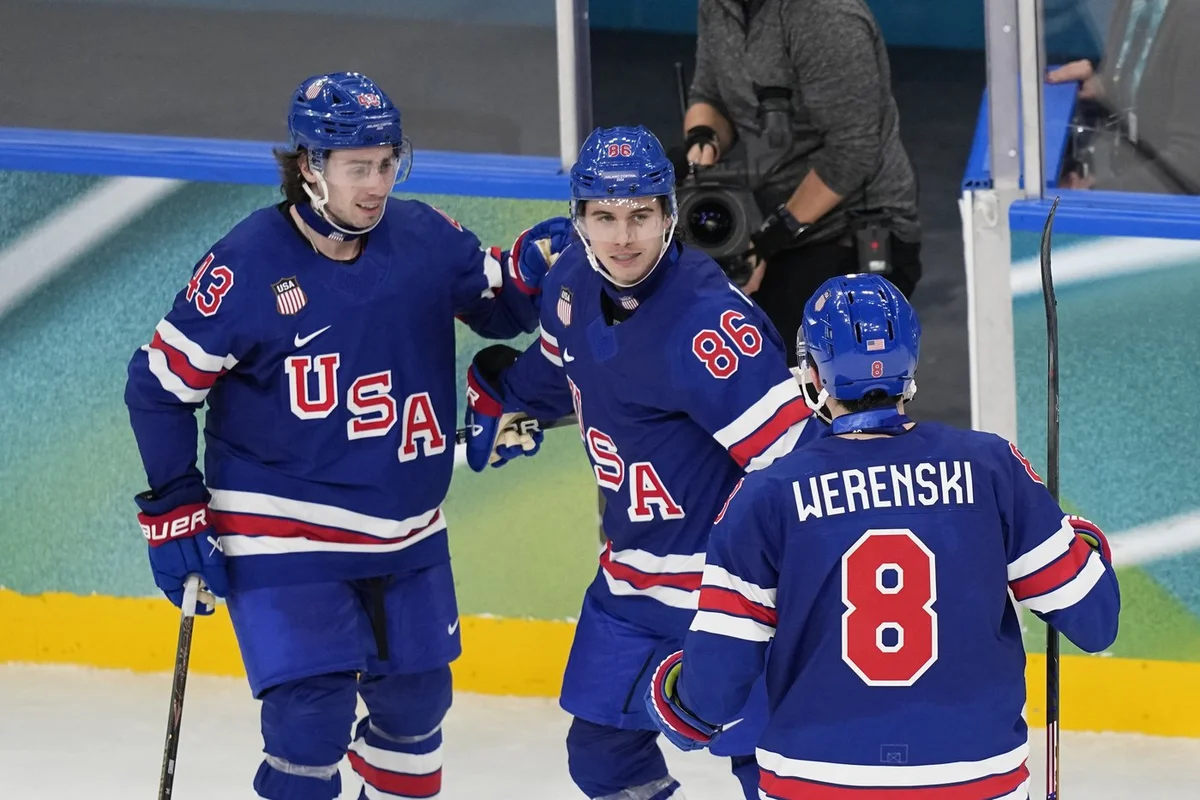
“It happened quick,”
Werenski reflected.
“I really didn’t see much. It was kind of a broken play. I know we had three guys up in the rush. I think it hit off MacKinnon’s skate and came back to me.”
– Zach Werenski, Defenseman
Cognizant of Hughes’ advance, Werenski quickly passed the puck to him.
“I kind of just saw a white jersey on the far ice and just tried to throw it over there as quick as I could,”
Werenski said.
“I got it to the right guy. He’s been hot all tournament.”
– Zach Werenski, Defenseman
Jack Hughes’ Composed Finish Under Pressure
With the puck at his control, Hughes kept his composure in front of Canada’s goaltender Jordan Binnington, who had performed well throughout the tournament. Hughes aimed carefully, avoiding the mistakes Canada had made during regulation, and successfully fired the puck past Binnington to win the gold in sudden death.
“Overtime, anything can happen,”
Hughes said.
“Who’s going to make the first mistake? Just a good paly by Larks and Z getting up the ice. Obviously, Z found me.”
– Jack Hughes, Forward
Historic Achievement for U.S. Men’s and Women’s Hockey
Hughes’ overtime goal came just four days after Megan Keller scored an overtime winner on the women’s side, marking the first time the United States secured both men’s and women’s ice hockey Olympic titles simultaneously. This dual success represents a landmark accomplishment for the nation’s hockey programs at the 2026 Winter Olympics.
Team captain Auston Matthews commented on the significance of Hughes’ goal, highlighting its lasting impact on the team and tournament.
“When Jack scored,”
Matthews said.
“That that moment’s going to stick with me for a very, very long time.”
– Auston Matthews, Team Captain
Implications of Hughes’ Goal for U.S. Hockey and Beyond
Jack Hughes’ game-winning goal not only earned the United States the Olympic gold medal but also exemplified the skill and resilience the team demonstrated throughout the 2026 Winter Olympics. The victory in Milan heralds a rising prominence of U.S. ice hockey on the global stage, following intense competition from traditional powerhouses like Canada.
Looking forward, this achievement is likely to inspire both current and future players, boosting the sport’s popularity and competitive standards in the United States as the NHL and Olympic programs continue to evolve.
