
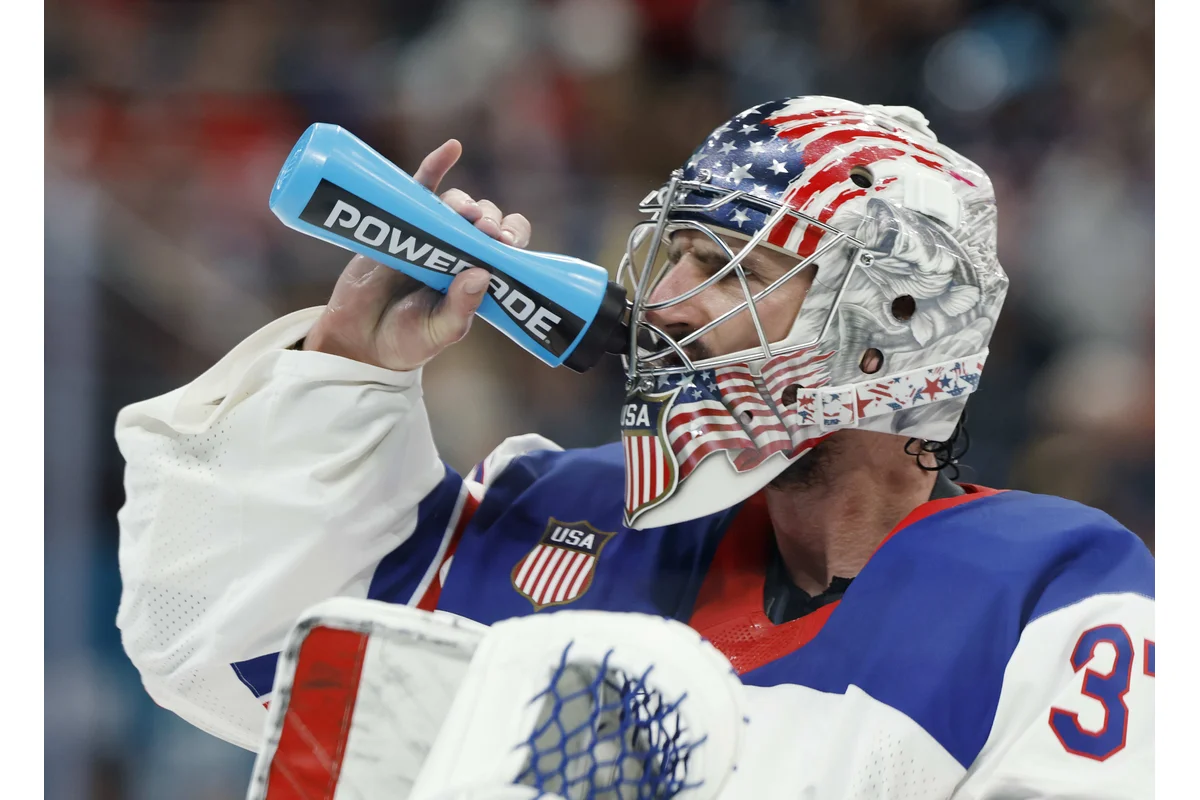
MILAN — On Sunday at the Milan Cortina Winter Olympics, the United States ended a 46-year wait to win the men’s hockey gold medal by defeating Canada 2-1 in an intense overtime battle, largely thanks to goaltender Connor Hellebuyck’s spectacular 41 saves and Jack Hughes’ sudden-death goal less than two minutes into the extra period. This victory marks a significant milestone for U.S. hockey at these Games and cements Hellebuyck’s status as an Olympic hero.
Jack Hughes and Connor Hellebuyck Join Hockey Legends
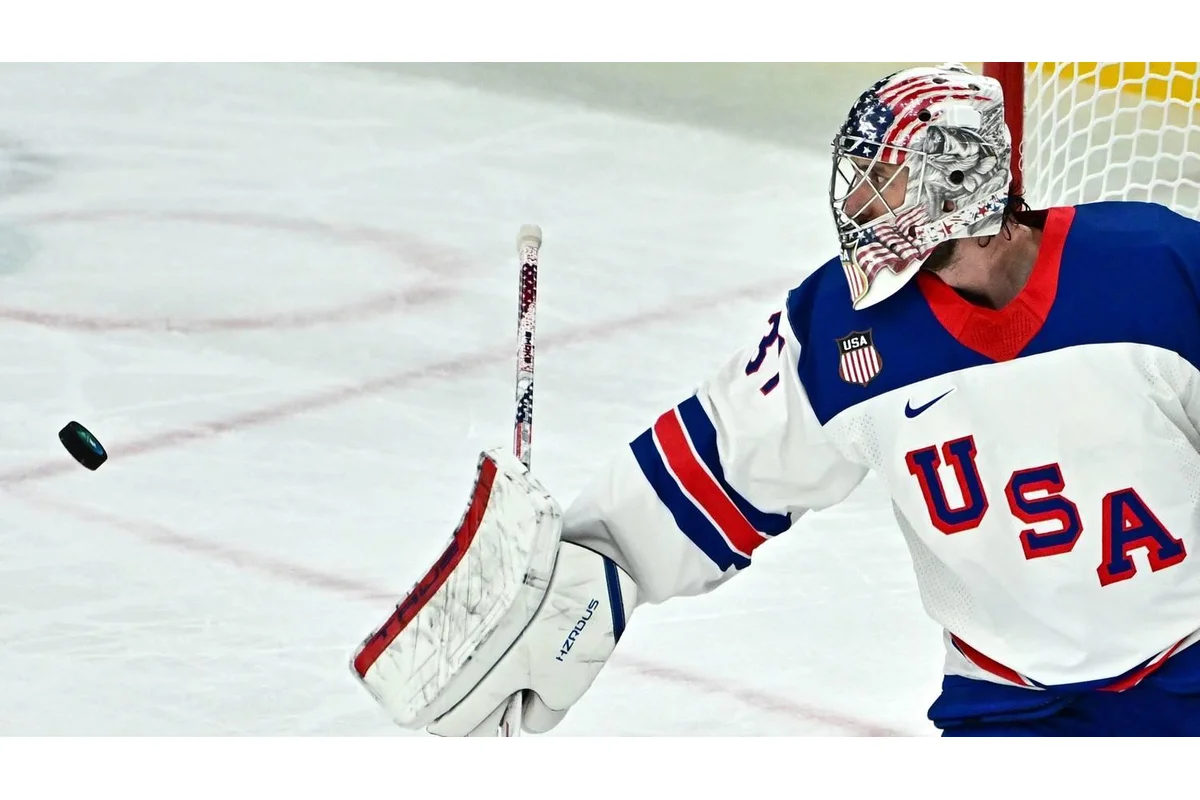
Jack Hughes and Connor Hellebuyck are now being placed alongside revered figures like Mike Eruzione and Jim Craig, who led the 1980 U.S. “Miracle On Ice” team to gold. Hughes, playing as a center for the New Jersey Devils, scored the decisive goal past Canada’s goalie Jordan Binnington during a 3-on-3 overtime rush, assisted by Zach Werenski. Hellebuyck, the Winnipeg Jets goalie, stood tall throughout the game, making crucial saves that kept the Americans in contention despite Canada’s offensive pressure.
American forward Brock Nelson highlighted the memorable nature of Hughes’ game-winner, noting,
“As a kid, when you’re growing up and you’re watching the Olympics, you kind of remember moments. I’m sure this is going to be a moment that younger kids are talking about: ‘You see Jack scoring the OT winner?’”
Nelson added,
“I’m sure that’s a moment that kids are probably going to try to recreate and try to envision themselves in that spot later on in life.”
Comparisons to 1980 Gold Medal Team and Legacy Connections
U.S. defenseman Charlie McAvoy, connecting Hellebuyck’s performance to past greatness, said,
“He channeled his Jimmy Craig tonight.”
McAvoy’s praise linked the goaltender’s exploits to those of Jim Craig, the goalie who played a pivotal role in the 1980 gold-winning team. Adding to the sense of legacy, Brock Nelson’s family has deep Olympic roots—his uncle played on the 1980 Lake Placid team, and his grandfather was part of the 1960 gold-winning squad at Squaw Valley—underscoring how rare and meaningful this victory is, especially as it marks the first American men’s hockey gold earned outside the United States.
Professional Talent Sets This Team Apart
Unlike the amateur status of the 1980 champions, this year’s U.S. roster includes NHL stars like Hughes and Hellebuyck, thanks to the NHL allowing its players to compete for the first time since 2014. This professional experience brought a different dimension to the tournament and lessened the element of surprise in their success. Still, the gold medal connects all four men—Eruzione, Craig, Hughes, and Hellebuyck—in the pantheon of American Olympic hockey heroes.
Jack Hughes Overcomes Setbacks to Deliver Clutch Performance
Jack Hughes’ goal was a high point following a challenging period marked by injuries. Last season, Hughes underwent shoulder surgery ending his NHL season early, and he recently missed five weeks after an accident injured his right thumb. Reflecting on the past two years, Hughes said,
“Last couple years, a lot of things have happened to me.”
His older brother Quinn Hughes, also a teammate on Team USA, praised Jack’s passion and resilience, stating,
“He takes a lot of (gruff). No one loves the game more than him. He’s got so much passion. He’s a gamer. He made it happen.”
The siblings have been standout performers for the U.S. throughout the Games.
Intense Game Where Canada Led in Shots but US Stayed Resilient
Canada controlled much of the action, outshooting the U.S. 42-28, but Matt Boldy scored just six minutes into the game to give the Americans an early lead. Hellebuyck was critical in sustaining that lead, often finding himself in the right spot to deny scoring chances. His reflexes helped neutralize threats from premier Canadian players, including a missed scoring opportunity from Nathan MacKinnon, who skied a shot off the post, and a cautious breakaway attempt by Connor McDavid that failed to convert. Despite conceding a tying goal by Cale Makar, Hellebuyck’s poise kept the U.S. alive through the third period and into overtime.
Hellebuyck Shuts Down Critics with MVP-Caliber Performance
Hellebuyck entered the Games facing criticism for previous playoff shortcomings and a difficult start to the season that required arthroscopic knee surgery in November, shortly following Jack Hughes’ operation. He returned to play three weeks later, determined to silence doubters. The goalie addressed his critics directly, stating,
“Those critics — they can keep writing, but they don’t understand goaltending. They definitely don’t understand my game. … These are the moments that prove it.”
He described his mindset on game day:
“I came into this game, probably one of the biggest of my career, and I really wasn’t that nervous. The second I woke up this morning, I felt I was doing everything right. … It kind of translated.”
Implications and Future Prospects for US Hockey
This gold medal victory is significant not only as an Olympic achievement but also as a confidence-boosting moment for American hockey on the world stage. It demonstrates how the U.S. can compete and win against traditional powerhouses like Canada, even outside of home soil. The performances of both Hughes and Hellebuyck will inspire young players aiming to follow in their footsteps. With NHL talents now participating regularly in future Olympics, American hockey’s prospects for sustained international success appear promising. This landmark triumph will likely energize the sport’s growth across the country while honoring the legacies of past champions.
