
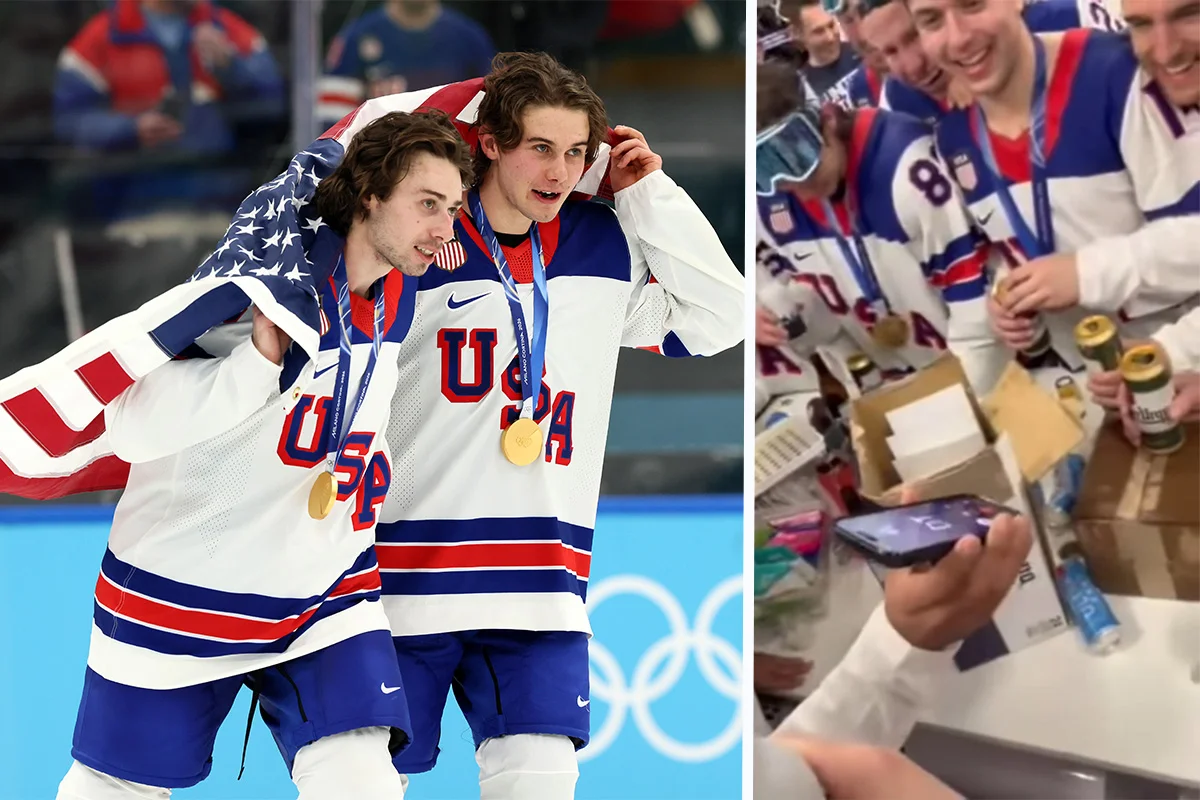
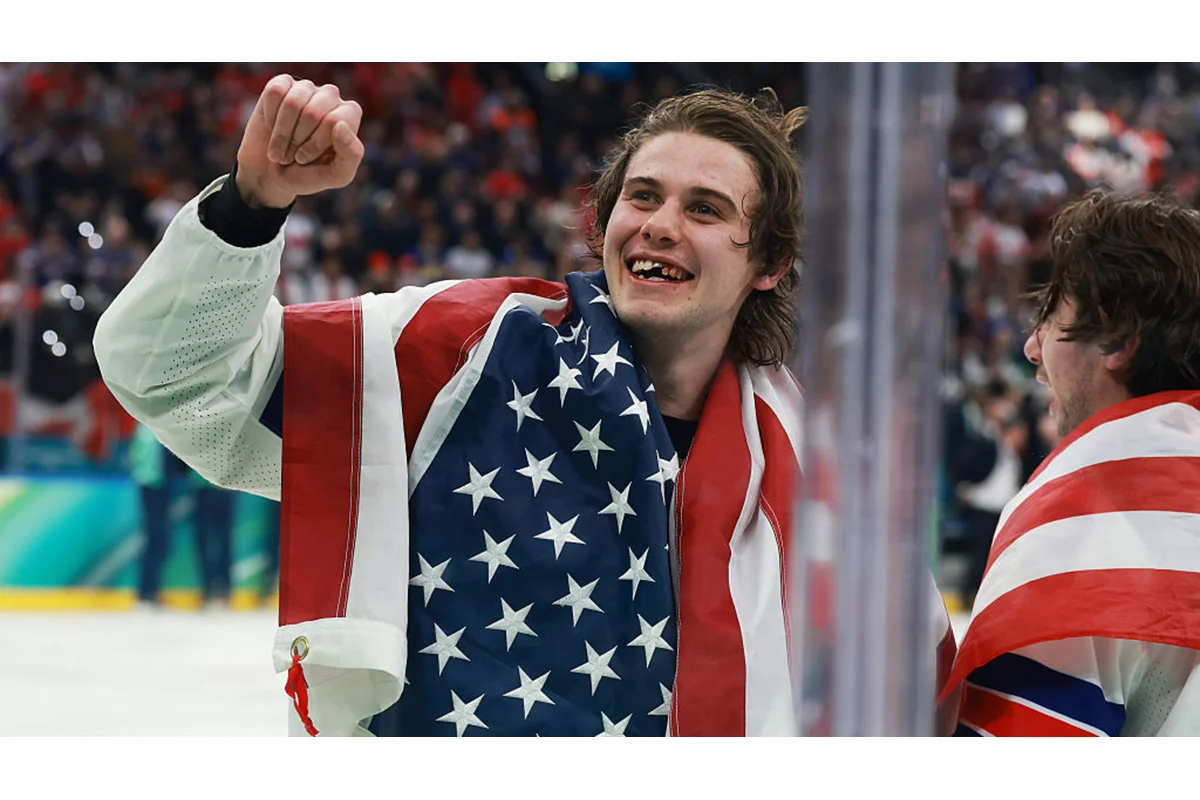
The United States men’s ice hockey team secured a historic gold medal at the Winter Olympics this past Sunday by defeating Canada 2-1 in overtime, ending a 46-year gold medal drought. This dramatic victory was sealed by an overtime goal from New Jersey Devils forward Jack Hughes. Earlier in the week, the U.S. women’s team also captured gold by overcoming Canada 2-1 in overtime, highlighted by Hilary Knight’s late regulation goal and Megan Keller’s game-winning effort. These back-to-back wins marked the first time in U.S. history that both men’s and women’s ice hockey teams won Olympic gold medals in the same games.
Overtime Format Under Scrutiny Following Back-to-Back Gold Medal Games
Both of these gold medal victories came in overtime played under a three-on-three format, which has reignited debate within the hockey community. Unlike the National Hockey League playoffs — where overtime is continuous five-on-five until someone scores — Olympic hockey uses continuous three-on-three overtime during the gold medal rounds. The format is designed to expedite games and minimize scheduling delays, but some experts and coaches argue it changes the nature of the sport at critical moments.
International Ice Hockey Federation Supports Current Overtime Rules
Luc Tardif, president of the International Ice Hockey Federation (IIHF), confirmed in an interview with The Athletic that the federation is committed to maintaining the three-on-three overtime format through the 2026 Winter Olympics. Tardif explained the difficulty of managing 58 total men’s and women’s games within a tight 16-day Olympic schedule.
“It’s the best rules to fit in a tight schedule,”
he said, emphasizing the logistical challenges of condensing the tournament without sacrificing the number of games played.
Detailed Explanation of the Olympic Overtime Structure
The IIHF implemented this overtime structure in 2019 as a response to frequent championship games being decided by shootouts, which many fans view as less satisfying. During preliminary rounds, a five-minute three-on-three overtime period is played, followed by a shootout if the score remains tied. In the qualification playoffs through bronze medal games, the overtime period extends to 10 minutes before resorting to shootouts. For the gold medal game, continuous 20-minute overtime periods proceed until a decisive goal is scored, aiming to avoid a shootout finish while still accelerating game conclusions with fewer players on the ice.
Criticism From Coaches and Former Players
Despite IIHF support, the three-on-three format has faced sharp criticism from notable figures in the hockey world. Canada head coach Jon Cooper dismissed the style as “not hockey,” lamenting that removing four players from the ice fundamentally alters the game. Cooper highlighted that such overtime rules are largely driven by television interests seeking shorter broadcasts and pointed out that this format is not used in the Stanley Cup playoffs.
You take four players off the ice, now hockey’s not hockey anymore. There’s a reason overtime and shootouts are in play — it’s all TV-driven to end games, so it’s not a long time. There’s a reason why it’s not in the Stanley Cup final or playoffs,
said Cooper, h/t Michael Traikos of The Hockey News.
Former Washington Capitals forward T.J. Oshie also weighed in during an appearance on The Jim Rome Show, advocating for the NHL’s style of overtime. Oshie argued that gold medal games should follow the playoff format of continuous 20-minute five-on-five overtime periods, noting that there is sufficient time between games for ice preparation. He contended that ending games with three-on-three skaters creates a different dynamic and suggested Canada might have been advantaged by this style, though the outcome remained uncertain.
It should be just like the Stanley Cup Playoffs for a gold medal. I think it should be bronze medal as well. The games aren’t played on the same day, so you have time for the rink. I understand there’s tv stuff, but I think it should be five-on-five. That’s how you should end the game,
said Oshie.
I don’t know if that would have made a difference, maybe the U.S. would have still won if it was five-on-five, we don’t know that….You want to win as a team, you want to lose as a team. Three-on-three is different. It is not the same. If anything, I would say Canada has the edge on the three-on-three, so that probably should have benefitted them.
IIHF’s Commitment to Current Format Despite Ongoing Debate
While voices within the hockey community express unease and frustration, the IIHF remains confident in the current overtime setup. The organization views the three-on-three format as a balanced solution to the demanding Olympic schedule while maintaining excitement and fairness during critical moments. Whether this format will eventually be reconsidered remains uncertain, but for now, the IIHF is holding firm as the 2026 Winter Games approach.
Jon Cooper on the 3-on-3 OT:
"You take four players off the ice, now hockey’s not hockey anymore. There’s a reason overtime and shootouts are in play — it’s all TV-driven to end games, so it’s not a long time. There’s a reason why it's not in the Stanley Cup final or playoffs"
— Michael Traikos (@Michael_Traikos) February 22, 2026
"I don't think a gold medal game should ever end in 3-on-3 or a shootout."@TJOshie77 on the current Olympic hockey overtime format. pic.twitter.com/T2T8u8BACa
— Jim Rome (@jimrome) February 23, 2026
