
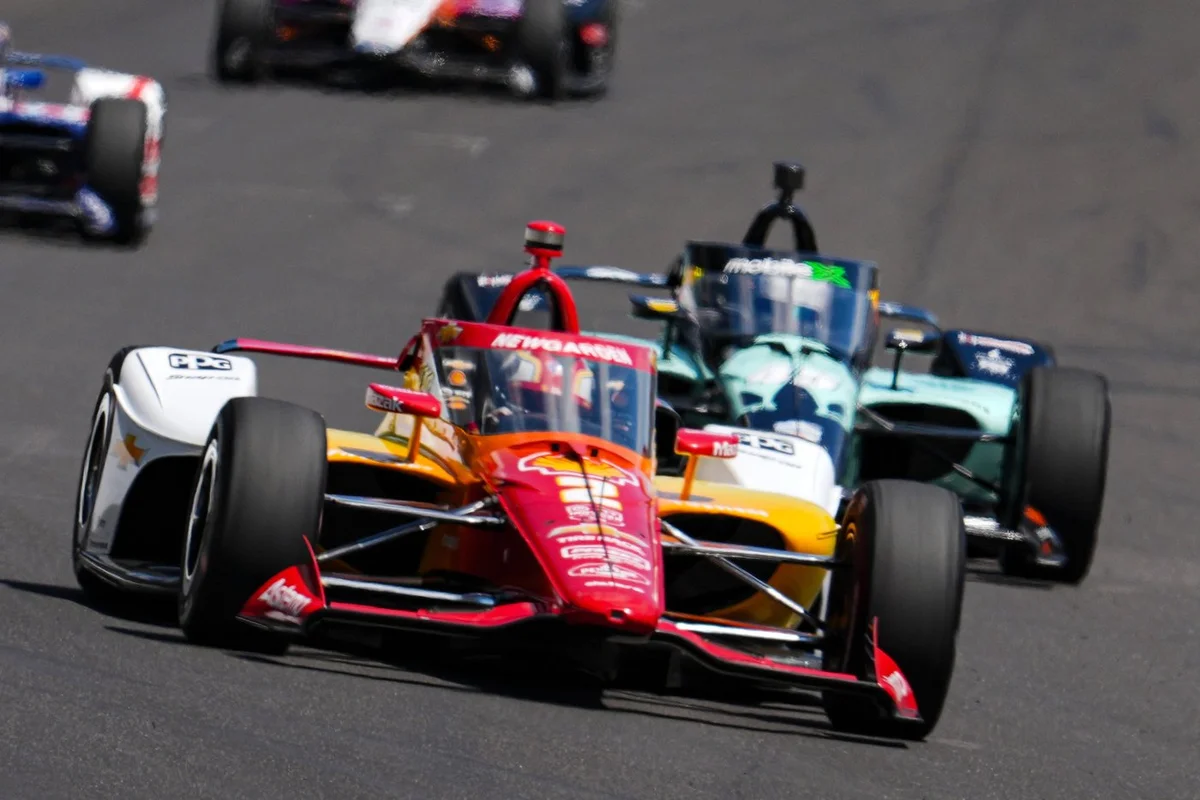
IndyCar has announced that Honda and Chevrolet will continue as the series’ exclusive engine suppliers through the upcoming generation of cars, rules, and engines set for 2028. Alongside the renewed engine contracts, both manufacturers will receive team charters granting them full-season entries beginning with the 2028 NTT IndyCar Series. These charters enable Honda and Chevrolet to directly field their own cars within the series, marking a significant shift in their engagement with IndyCar and offering new opportunities for influence and competition.
The teams that host these manufacturer entries must race full seasons and cannot already hold three charters, which excludes dominant squads like Chip Ganassi, Andretti Autosport on Honda’s side, or Penske and Arrow McLaren for Chevrolet. This ensures the manufacturer charters will be operated through other eligible teams.
Implications of Manufacturer-Owned Charters for Racing and Development
The introduction of charters owned by Honda and Chevrolet opens fresh doors for technology advancement, talent growth, and broader involvement in the sport. Honda Racing Corporation US President David Salters and General Motors Vice President Jim Campbell both expressed enthusiasm about increasing their stakes and presence in IndyCar as part of this new structure.
“We feel that IndyCar makes sense for our products, our associates, and our business strategy,”
Salters stated.
“IndyCar is growing. We evaluate all series on their merit, and staying in IndyCar doesn’t preclude us from other things. We’re here to develop our people and technology, and you can see what we’re doing in IMSA with the No. 93.”
Campbell highlighted the advantages this opportunity provides for Chevrolet.
“It is an opportunity for us that is unique,”
he said.
“The IndyCar charter is new, exciting, and the possibilities are more interesting. You can either run your own team or partner with the existing team; the benefits of this kind of learning at a fast rate, developing people; there are many possibilities there. You know, it’s the ability to learn things as a team that you can drive right to every other Chevrolet team to give them the best chance to win a race or a championship.”
Salters also hinted at a potential collaboration with Meyer Shank Racing, paralleling their IMSA efforts with the No. 93 Acura prototype, while Campbell did not specify any partners for Chevrolet’s charter.
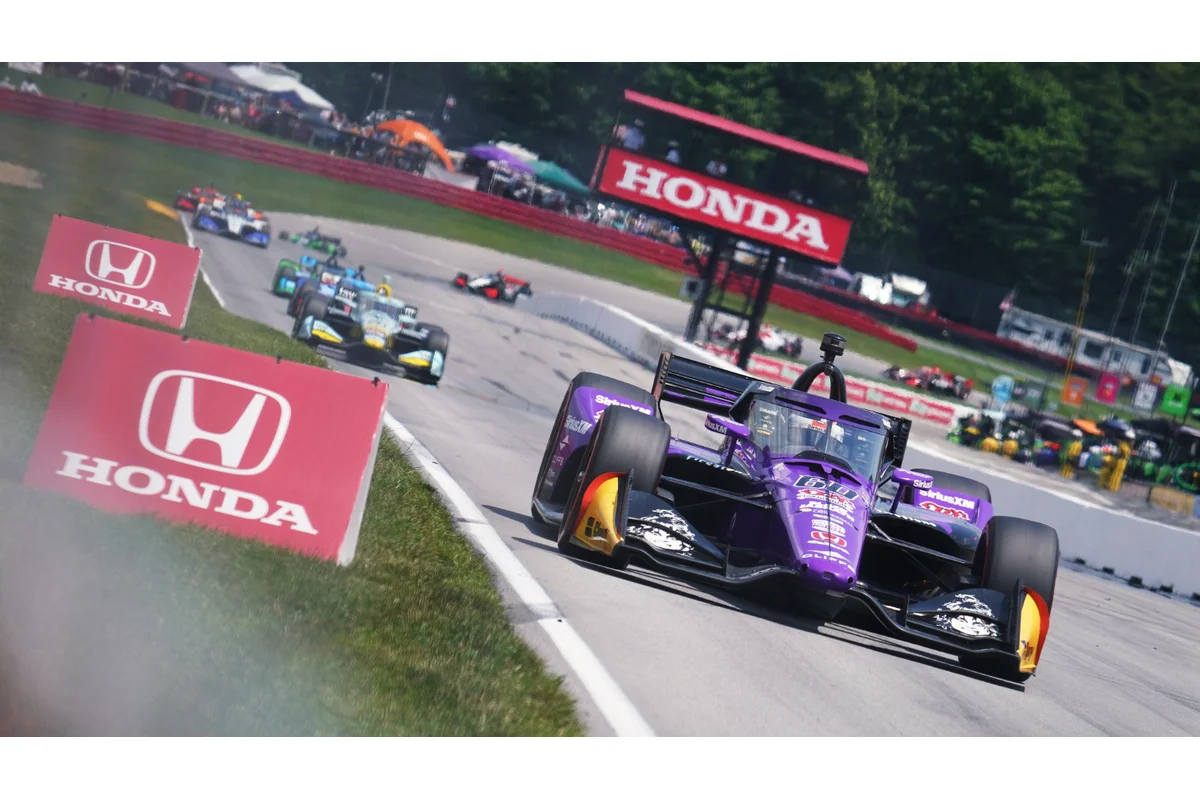
Financial and Strategic Benefits of the Charter Model
Beyond competition, the charters appear to offer considerable business advantages, especially during a time of economic uncertainty and shifting motorsport investments. Racing programs demand substantial funding, and expanding a manufacturer’s footprint can provide critical returns through sponsorships, marketing, and technology transfer.
Under Jon Ikeda’s leadership, Honda Racing Corporation US has expanded its business significantly, with notable partnerships such as the one with Phillips 66 for the No. 93 IMSA Acura. This has led to branded motor oil and new performance parts lines for Honda and Acura vehicles, generating essential revenue streams. IndyCar, with its broadening exposure through Fox Sports, offers an even greater platform.
“Having the ability to run your own car links it further [to the core business], because we really do have the ability to have closer partnerships with people, and the whole thing becomes more of a sustainable business for us to go racing, and for us to involve our fans more and our customers more, that’s important,”
Salters said.
He also emphasized the need for sustainability both environmentally and economically.
“We have to make sure that that business is sustainable, both from an environmental point of view and an economic point of view. As we’re all aware, there are clouds on the horizon of the automotive world right now, so we have to be very cognizant of our position. We have to develop our people and our technology, but we’ve got to make this work as a business.”
Salters added:
“Thanks to Jon [Ikeda] and his team, we look pretty amazing [in reference to the team kit], and you will see some very interesting things on [street] cars in the future. That’s all coming from racing. Racing is for business, and it’s never been more so these days.”
Chevrolet’s Expanded Racing Presence and Brand Synergy
General Motors is simultaneously increasing its involvement across multiple motorsports platforms domestically and internationally, including IndyCar, IMSA, NASCAR, WEC, and Formula 1. This growth reflects a strategic investment in racing that aligns with Chevrolet’s brand identity and product development.
The new charter system strengthens GM’s ties to the Indianapolis Motor Speedway and the series itself, enhancing both technical development and marketing impact. Campbell highlighted the connection between racing success and consumer perception, noting that victories on the track correlate to increased interest and sales off it.
“It’s really connecting what we learn in the racetrack to what we do in our performance parts business, and then the higher performance models for our [dealer] showroom, both on track, on road, and off-road,”
Campbell shared.
“We’ve done quite well over the years, and it’s one of the reasons why we’ve had the confidence of our leadership to continue to invest in racing as Chevrolet and our other divisions.”
He further explained the company’s approach to talent development and brand building.
“We can develop people, which we do, both engineering and business-wise, and racing, we rotate them back and forth between production and racing. And we know that when we win races, when we win championships, we see a lift in the brand opinion of Chevrolet.”
Campbell emphasized the measurable impact of IndyCar involvement on buyer behavior:
“We say this quite closely every quarter, every month: ‘Where is our brand opinion for those that are aware of our involvement in IndyCar for Chevrolet, compared to a general consumer?’ And we’ve received significant lifts in opinion and other ratings. This effect makes people put Chevrolet on their shopping list when they’re in the market for a car or truck. And also, when they’re considering technologies that we have, like Super Cruise and other things.”
Looking Ahead: The Growing Role of Charters in IndyCar’s Future
The introduction of team charters owned by manufacturers like Honda and Chevrolet represents a pivotal evolution in IndyCar’s structure. It not only reinforces the manufacturers’ commitment to the series but also offers a new avenue for integrating racing, product development, and fan engagement.
As both companies prepare for the 2028 season, their active involvement through these charters is expected to drive innovation, deepen partnerships with teams, and elevate the competitiveness of their programs. The changes come at a crucial moment, providing fresh momentum for the series amid economic challenges and increasing global interest in motorsports.
This development signals a strategic alignment of racing performance with business objectives, ensuring that IndyCar remains a vital platform for automotive technology and brand influence as the sport heads into its next generation.
