
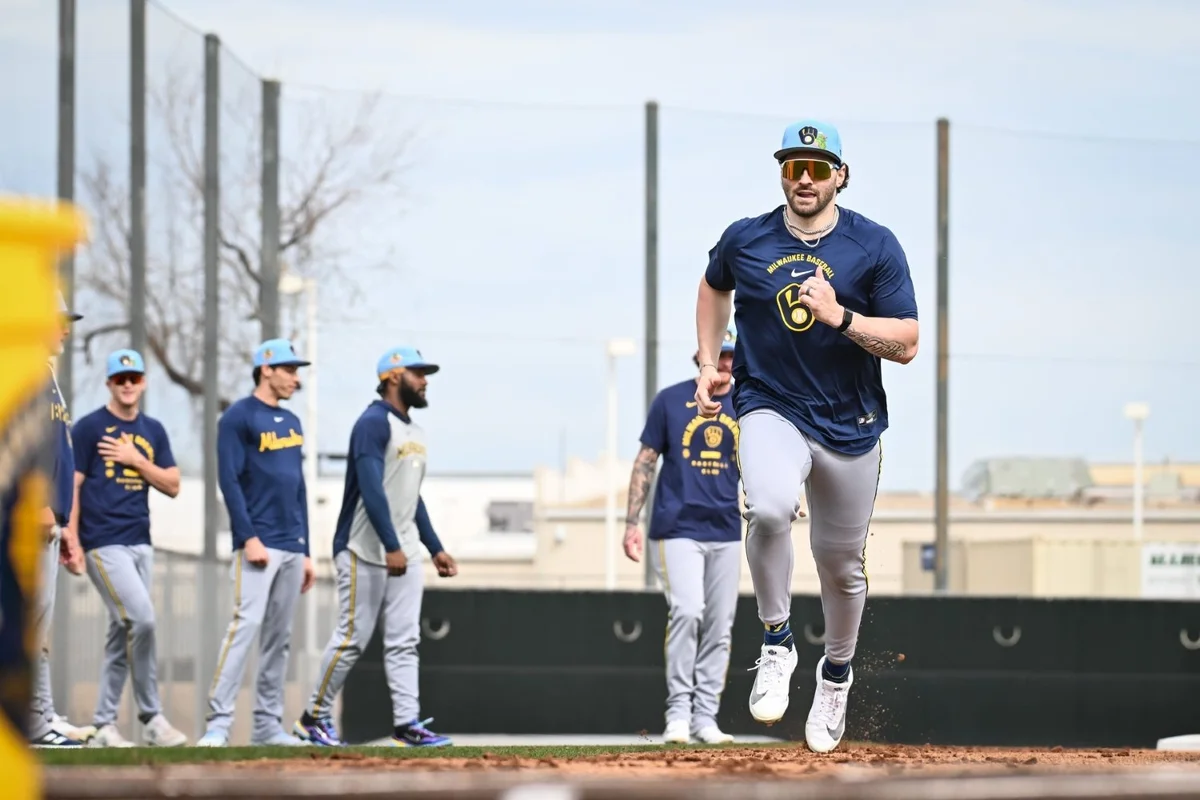
As the Milwaukee Brewers prepare for the 2026 season, significant changes are reshaping their Opening Day roster, underscoring the organization’s strategic direction. With the Milwaukee Brewers 2026 roster evolving just weeks before the season opener at home against the Chicago White Sox, the team is balancing proven talent with emerging prospects to strengthen its lineup and pitching staff.
Major Adjustments in the Infield Following Trades and Signings
Caleb Durbin, a central figure in previous 2026 roster predictions and a contender for the National League Rookie of the Year last season, was expected to start at third base. However, in a move emphasizing future potential, the Brewers traded Durbin to capitalize on the influx of highly regarded infield prospects awaiting their turn. This decision caused a significant reshuffle mere days before the first Cactus League game.
To fill the void left by Durbin, Milwaukee added veteran infielder Luis Rengifo on a one-year, $3.5 million contract. Alongside Rengifo, the infield composition is taking shape with Jake Bauers, David Hamilton, Joey Ortiz, Brice Turang, and Andrew Vaughn. This group reflects a blend of experience and development potential, with Bauers expected to platoon at first base and cover outfield duties while Hamilton steps up as the utility infielder, offering defensive and baserunning improvements over his predecessor Andruw Monasterio.
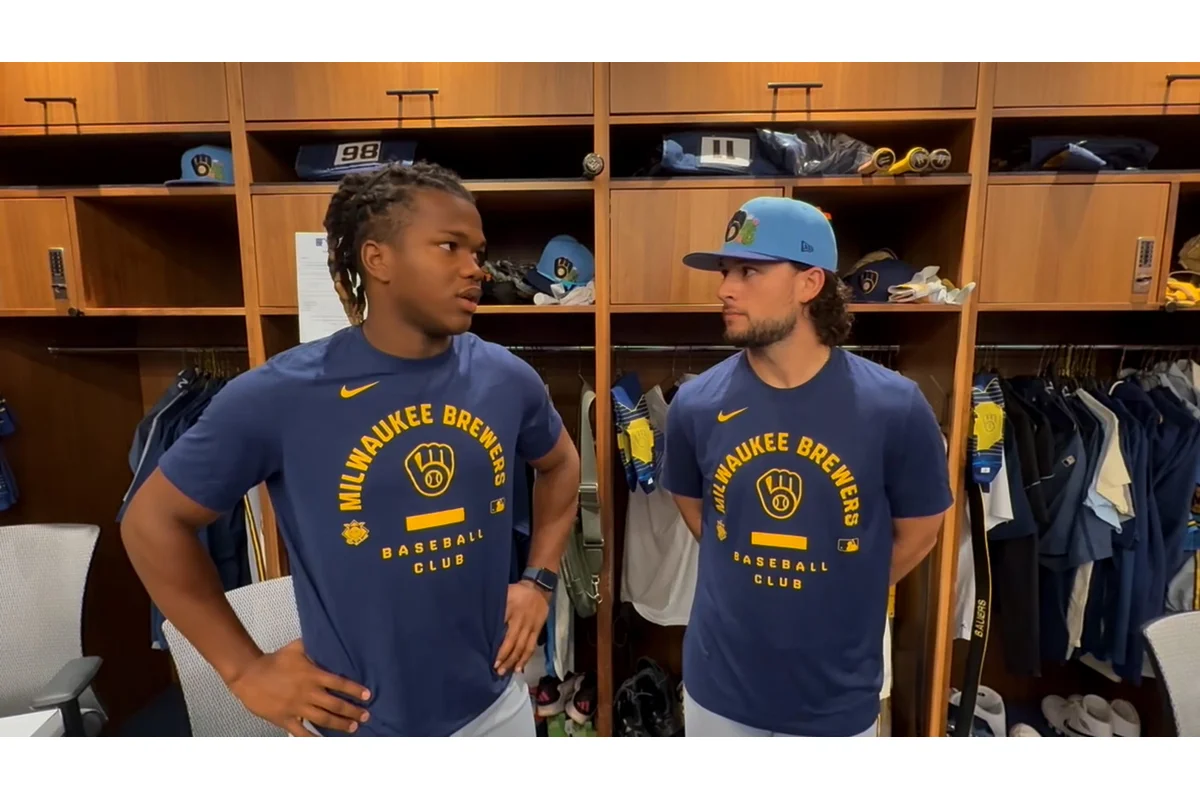
Emerging talent Jett Williams, acquired in the Freddy Peralta trade with the New York Mets, remains a possibility but is more likely to start the season with Triple-A Nashville given his limited minor league experience. Should he perform well early on, an early-season promotion is anticipated based on last year’s pattern with Durbin.
Outfield Composition Remains Fluid But Shows Clear Contenders
The Brewers’ outfield group includes Jackson Chourio and Sal Frelick as undoubted starters, with Garrett Mitchell, Blake Perkins, and Christian Yelich filling out the remaining spots. Yelich will primarily serve as the designated hitter, allowing Mitchell a prime chance to cement himself as an everyday outfielder, though his health remains a critical question following limited game appearances in his MLB tenure.
Center field assignment presents a strategic choice: Mitchell and Perkins offer stronger defense compared to Chourio, yet positioning Chourio in center could enable the Brewers to bolster corner outfield spots with heavy hitters who may not excel defensively. Long-term plans lean toward Chourio as the center fielder due to his expected longer future with the team, while Mitchell and Perkins provide reliable defensive depth. Should injuries arise, Akil Baddoo and Brandon Lockridge stand ready to fill backups’ roles, contingent on early-season form and positional fit. Both players are versatile outfielders, with Baddoo batting left-handed and Lockridge right-handed.
Veteran Presence Bolsters Catching Roles
The catchers’ situation has shifted notably with the recent signing of two-time All-Star Gary Sánchez, who returns to Milwaukee after spending the 2024 season with the team. His addition effectively closes the competition for the backup catcher spot behind William Contreras, who is poised to resume his primary catching duties fully recovered from a finger injury.
Previously, promising prospects Jeferson Quero and Reese McGuire appeared poised to challenge for the backup role, bringing a mix of roster status and major league experience. Sánchez’s familiarity with the Brewers’ coaching staff and proven major league background position him as the logical choice pending health maintenance through Spring Training.
Identifying the Likely Starting Pitching Rotation
Milwaukee’s starting rotation for Opening Day is expected to feature Brandon Woodruff, Quinn Priester, Jacob Misiorowski, Kyle Harrison, and Chad Patrick. These five pitchers have emerged as front-runners among the team’s 40-man roster, overshadowing other candidates with less big-league experience. Notably, highly regarded arms Brandon Sproat, Logan Henderson, and Robert Gasser are anticipated to begin the season in Triple-A, ready to contribute to the major league squad as depth once called upon.
This pitching depth proved vital last season and remains a strategic asset for the Brewers moving forward, ensuring the rotation’s stability while accommodating young talent development.
Relief Corps Emphasizes Left-Handed Specialists and High-Leverage Roles
The Brewers’ bullpen is shaping up as a lefty-dominant unit for the start of the year, with an eight-man group including Trevor Megill, Abner Uribe, Jared Koenig, Aaron Ashby, Ángel Zerpa, Grant Anderson, DL Hall, and Rob Zastryzny. The team may carry only three right-handed relievers, two of whom—Megill and Uribe—are likely reserved for critical, high-pressure game situations.
While the reliever roster appears well-defined, the team could balance left- and right-handed arms further by considering Craig Yoho or Easton McGee, or potentially utilizing starting pitcher prospects like Sproat or Henderson in long relief roles, though that path might hinder their development as starters. The Braves’ bullpen depth stands as a key component to managing the season’s inevitable physical strains and tactical demands.
Broader Implications and What Lies Ahead for the 2026 Season
With the Milwaukee Brewers finalizing a roster that mixes youthful promise with experienced veterans, the strategic decisions made leading up to Opening Day reflect a dual focus on immediate competitiveness and sustainable success. The trade of Caleb Durbin and subsequent acquisition of seasoned players like Luis Rengifo and Gary Sánchez illustrate the organization’s commitment to balancing present needs against a robust pipeline of prospects.
As Spring Training progresses and health remains a pivotal variable, further roster adjustments may occur, particularly if injuries necessitate depth chart changes. Monitoring young players like Jett Williams and the development curve of pitching prospects will be vital to gauging the early impact and potential season-long contributions of these roster moves within Milwaukee’s competitive landscape.
The reshaped Milwaukee Brewers 2026 roster highlights a careful recalibration aimed at maximizing the team’s versatility and depth across all positions, positioning them to respond dynamically to the challenges of a demanding major league season.
