
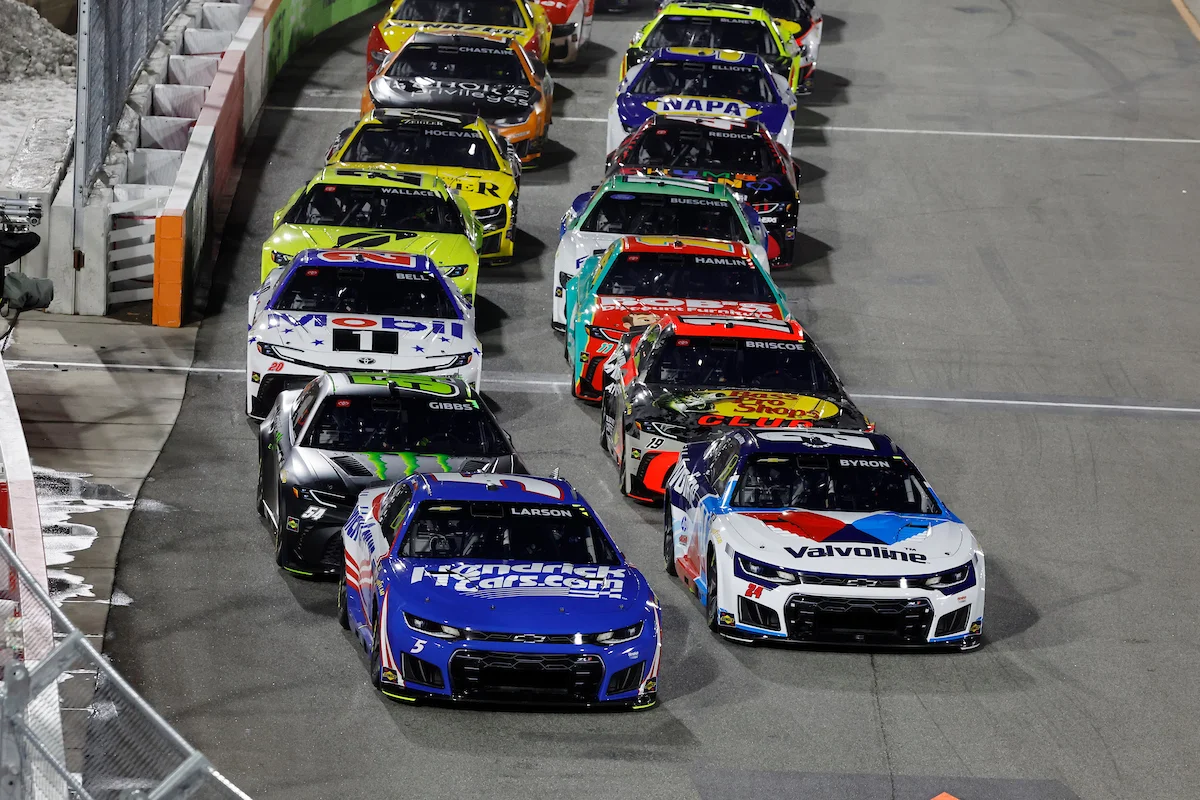
Nascar has undergone dramatic shifts recently, with a turbulent offseason ending in the resignation of commissioner Steve Phelps. Having served as president since 2018 and influencing the sport for two decades, Phelps played a key role in shaping Nascar’s trajectory. Among his final major acts was securing a new media rights deal in December 2023, valued at approximately $7.7 billion, which aimed to boost Nascar’s presence amid a shifting broadcast environment.
In a media rights market where many sports, especially in Europe, are seeing stagnant broadcast revenue, Nascar’s contract value jumped from $820 million to $1.1 billion per year. Yet, this increase came with complexities: for the first time, the flagship Cup Series would be divided across four different broadcasters, fragmenting the viewing experience for fans.
How the Media Rights Are Distributed and What Fans Face
The new agreement marked a milestone in revenue but shifted costs and viewing accessibility toward fans. To watch each race, followers must navigate multiple platforms: the first 14 races air on Fox, followed by five races on Prime Video and TNT Sports each, with NBC showcasing the final 14 events of the season. Practice and qualifying sessions are split between Prime Video during the season’s first half (excluding marquee events like the Clash, Daytona 500, and All-Star Race, all on Fox) and TNT Sports in the latter half.
Separately, the CW network has secured rights to air the second-tier O’Reilly Auto Parts Series over a seven-year span for $800 million, adding another subscription layer for die-hard fans to consider.
This fragmentation demands clear communication strategies, ensuring viewers understand where to find each event amid these varied platforms, which presents a challenge for Nascar as it moves into the second season of this broadcast cycle.
Positive Ratings Start with Fox Broadcasts in 2025
The new media rights agreement hinged on a strong start, and Fox delivered promising numbers during its portion of the 2025 season. The main Fox channel averaged 4.52 million viewers across five races, while FS1 attracted 2.46 million viewers, marking the second-best viewership performance on that channel since 2018.
Concerns had arisen that relying heavily on network television might depress overall audience numbers, but the Fox broadcasts alleviated such worries.
The data point that sticks out during the Fox portion of the season is we had four less broadcast windows in 2025 than we had in 2024 and the average viewers that we had in ’24 and ’25 was exactly the same,
Brian Herbst, Nascar’s chief media and revenue officer, tells BlackBook Motorsport.
So, to go down by four broadcast windows during the Fox package and then average the exact same number of viewers in ’25, that was a pleasant surprise.
Overall, Fox’s average viewership held steady at 3.2 million in 2025 compared with 3.22 million the prior year, reflecting consistency despite fewer broadcasts.
Amazon Prime Video’s Role in Attracting Younger Viewers
Nascar ventured into new territory by placing five races exclusively on the streaming service Prime Video, marking the series’ first exclusive partnership with a digital platform. This move targeted expansion toward younger and more digitally-savvy audiences.
The average viewership on Prime Video was 2.1 million, and more importantly, the median viewer age was 56.1 years—roughly seven years younger than traditional broadcast audiences. This demographic shift was a key success point for Nascar’s strategy.
Brian Herbst notes Amazon’s unexpectedly strong marketing support in promoting Nascar content.
If you think about a standard US consumer in 2025 and they’re not a Nascar fan, and they go on their Amazon Prime app on a Sunday afternoon during the Amazon stretch of races in June and they’re just trying buy paper towels … and they’re presented with a Nascar race first,
Herbst explained.
It was an intention and a goal to show up in unexpected places. [Amazon] did a really good job of doing exactly that, so they brought a lot of innovation from a marketing perspective that we thought would be strong, but they exceeded our expectations.
Innovative Tournament Format Boosts TNT Sports’ Viewership
For the five races broadcast on TNT Sports, Warner Bros Discovery leveraged lessons from its National Basketball Association coverage, where an in-season tournament had been introduced. This spurred the creation of new racing formats designed to increase tension and competitiveness.
The TNT folks … they essentially brought that concept to us after having some success on the NBA side with it,
Herbst said.
But that was a fun opportunity for us to have some rivalries and driver-on-driver storylines.
TNT averaged 2.06 million viewers through its coverage, overcoming initial difficulties. Additionally, TNT introduced an alternative broadcast on its TruTV cable channel dedicated to the tournament, adding fresh storylines and character depth to the sport.
For the first time in Nascar’s history, they had an alt cast on TruTV, one of their cable channels, that was specific to the in-season tournament,
Herbst noted.
It brought an injection of storylines and characters into the sport in July that we haven’t necessarily seen before.
Challenges for NBC During Nascar Playoffs Coverage
Despite the innovations on other networks, NBC’s coverage of the crucial Chase playoffs struggled to maintain past viewership levels. The return of the Chase format itself was an open admission that previous postseason structures had been ineffective in retaining audience interest.
NBC’s average viewership for 2025 dropped below two million for the first time, settling at 1.95 million. Herbst defended the figures by noting they were largely consistent with 2024, though the main NBC channel averaged 2.74 million compared to 2.98 million the previous year, marking a notable decline.
Herbst acknowledged that the move toward streaming and digital consumption was accelerating faster than Nascar had predicted during contract negotiations, emphasizing the need for a measured response.
We’re not going to overreact to something that is in year one of a media rights deal,
he remarked.
We expect to grow from here and, with respect to the playoffs, we’ve been discussing that for the better part of the year. We wanted to gracefully crown a champion in 2025.
Overall Performance of the Media Rights Deal in Its First Year
When evaluating the first year of this media rights pact, Nascar achieved most of its initial goals. The 2025 season’s average viewership was 2.45 million, reflecting a 14.7% decline compared to the previous year, but this decline was anticipated as part of a planned “viewership reset.”
When we modelled out the viewership reset that we were going to expect in the first year of the deal, the number was literally down 14 per cent – so that was the reset we expected,
Herbst explained.
Herbst expressed satisfaction with Fox and Amazon’s performances, while describing cable viewership as “a little softer,” especially in the latter part of the season, though broadcast numbers remained stable overall.
I would say through the first half of the year, very happy with Fox and Amazon numbers, just a little softer on the cable side, in particular in the second half of the year, but the broadcast numbers held up.
He also conceded the cable numbers fell more than desired.
cable numbers are probably down a little bit more than we would like them to be
Herbst admitted, raising a potential concern since only 24 percent of the schedule is now carried on broadcast television, a fraction unlikely to change during the contract’s term.
Focus on Collaboration Among Multiple Media Partners Moving Forward
Despite the audience fragmentation and declining numbers on cable, Nascar remains optimistic about the benefits of managing multiple media partners and enriching the sport’s coverage.
You’re talking to the most biased person to ask that question to,
Herbst responded when asked to rate the first year of the media rights deal.
I think we were really happy with year one, for sure. If you think about bringing on three new media partners in a single year and going from two to five [broadcasters] … that’s frankly a lot of work on the production side, it’s a lot of work on the marketing side, it’s a lot of work on the promotional side.
Cross-promotion between Fox and Amazon was another highlight, though Herbst refrained from assigning a numerical score, likely maintaining caution ahead of the deal’s second year.
Outlook for Nascar’s Media Rights and Fan Engagement
The success of 2025 may ultimately rest on whether Nascar can build upon this foundation to increase audiences and navigate the complexity of its multi-platform presence. The planned return of the Chase playoffs format attempts to reignite viewer excitement as the 2026 season unfolds.
Nonetheless, the division of media rights could also intensify challenges, especially as Formula One’s popularity continues to rise in the United States. While initial expectations have been met, Nascar’s new broadcast arrangement still faces significant hurdles before it can be considered a definitive success.
