
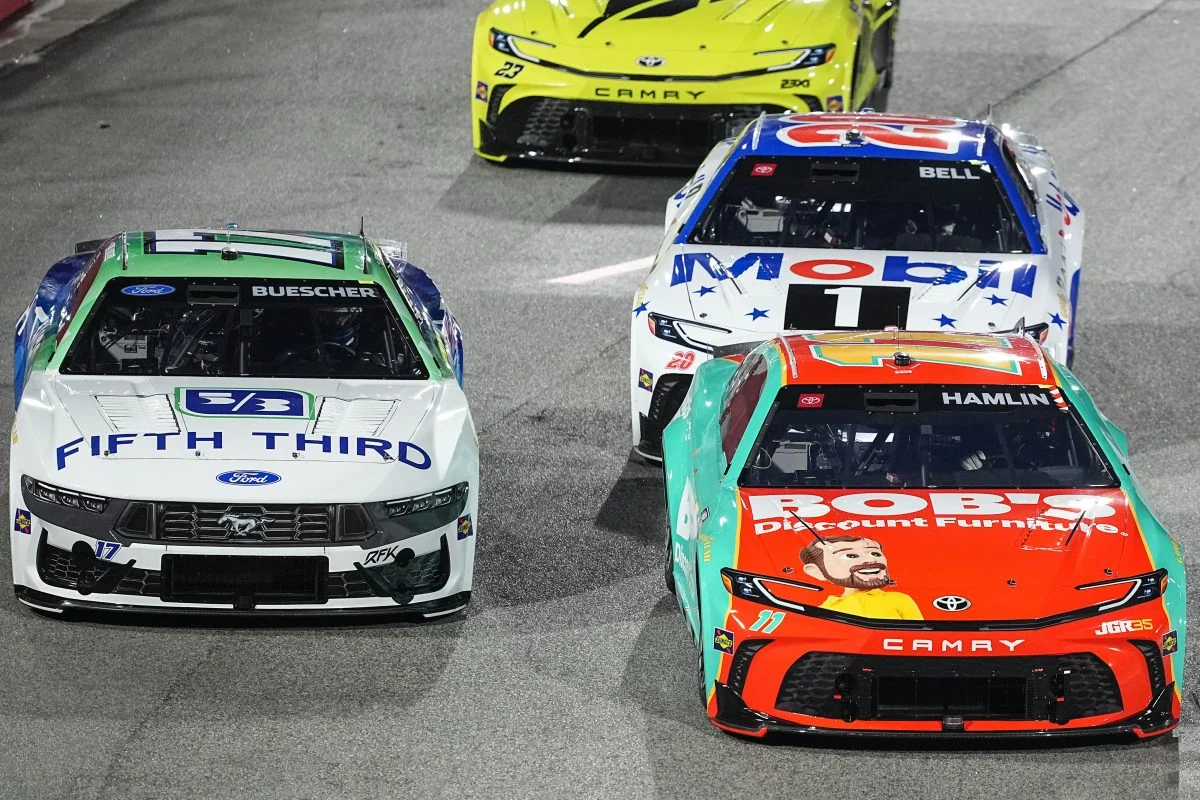
With less than a week remaining before the 2026 NASCAR season is set to begin, reigning Truck Series champion Corey Heim finds himself without a full-time position in any NASCAR national series. Currently, Heim is slated to participate only in a partial schedule with 23XI Racing at the Cup Series level, leaving his long-term future in question amid mounting frustrations.
Heim, a development driver for 23XI Racing, had hoped to secure a more stable role after showing promise, but the team chose to retain Riley Herbst for their third car based largely on sponsorship considerations. Herbst’s rookie season was underwhelming, with a best finish of 14th in 36 races, the lowest among all full-time drivers. In contrast, Heim outperformed Herbst twice in four starts with 23XI Racing during the 2025 season, even leading the team on those occasions.
Blocked Path with Other Teams Compounds Heim’s Dilemma
Initially, it appeared Heim could return to the Truck Series with Tricon Garage if no Cup ride materialized. However, that option was dismissed when Kaden Honeycutt was announced as the new driver for the No. 11 Toyota Truck, signaling that Heim will once again race only a partial schedule in addition to his limited Cup appearances.
Adding to the uncertainty, Joe Gibbs Racing (JGR), known for nurturing Toyota prospects, confirmed no changes for their O’Reilly team in 2026. Despite having two open seats and Toyota prospect Brent Crews moving into a full-time role, JGR retained drivers Taylor Gray and William Sawalich, while veteran Brandon Jones was already secured. This decision left Heim excluded without a full-time opportunity.
Fan Backlash and Speculation About Blacklisting at Joe Gibbs Racing
The announcement from JGR sparked frustration among fans who viewed Heim’s exclusion as unjustified, especially considering Gray’s playoff qualification and Sawalich’s failure to reach the postseason. Heim’s omission fueled rumors of him being blacklisted, allegedly due to past disputes in 2021 with Ty, Joe Gibbs’ grandson, during their ARCA racing days.
Despite Heim’s notable record—including spending the bulk of four seasons in the Truck Series, achieving 12 wins during his championship year, and ranking sixth among all-time wins—he remains overlooked for promotion. Many expected a step up for Heim long ago, yet JGR’s decision signals an ongoing refusal to offer him a full-time ride in a competitive Toyota team.
Potential Career Impact and Risks for Toyota’s Talent Retention
Although Heim is contracted with 23XI Racing, the team is unlikely to block a transfer to JGR given their technical alliance. Nonetheless, Heim’s stalled progression raises concerns about how much longer 23XI Racing can postpone offering him a full-time Cup seat, especially as he is already scheduled for only 12 races in 2026. Prolonged uncertainty could trigger Heim to consider offers from rival manufacturers, risking Toyota’s loss of a promising young driver.
Looking ahead, Hendrick Motorsports, Team Penske, and other teams are projected to open seats as early as 2027, which could attract Heim if Toyota fails to capitalize on his potential soon. Legacy Motor Club also presents a possible landing spot; Heim has previously filled in for them in 2024, and they plan to expand their operations with a third car in the near future.
The current impasse places Toyota in a precarious position. Retaining Heim hinges on resolving internal disputes and providing him viable full-time options, lest one of the sport’s top prospects be lost due to past conflicts rather than performance.
Implications for NASCAR’s Competitive Landscape
Corey Heim’s uncertain status highlights the challenges faced by young drivers in NASCAR’s hierarchical team structures, where politics and sponsorship pressures can overshadow talent and results. His case underscores the importance of team alliances and manufacturer relationships in career advancement, with reputations and past tensions influencing opportunities as much as on-track success.
As the 2026 season nears, Heim’s situation will be closely watched by fans and analysts alike, with potential ripple effects for team strategies, driver market dynamics, and manufacturer competition. The coming months may prove pivotal not only for Heim’s racing future but also for how NASCAR teams manage emerging talent amid increasingly complex alliances.
