
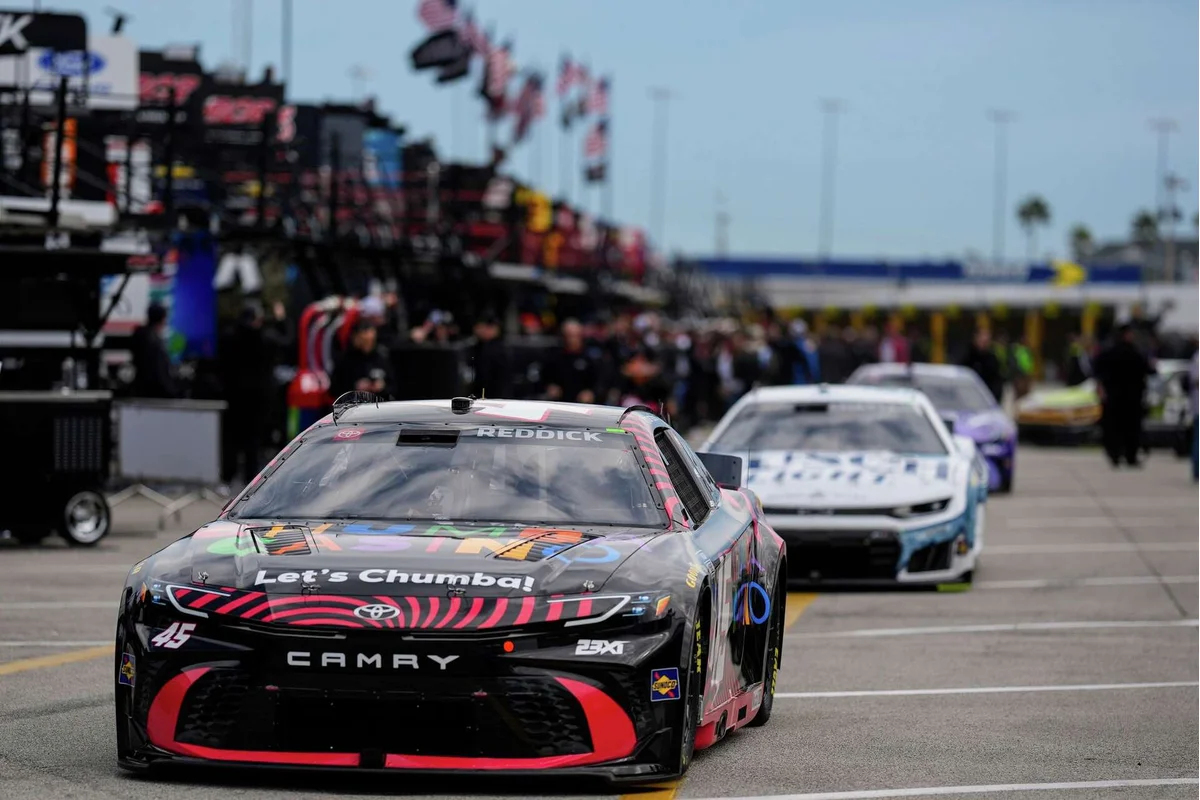
Ford Motor Co. is currently not advocating for NASCAR to adopt hybrid engines, focusing instead on its involvement in other racing platforms to develop that technology. As the 2026 NASCAR season launches with the Daytona 500, the series is emphasizing its traditional strengths, including iconic race locations, to re-engage former fans while maintaining its signature powerful engines. Although NASCAR has begun to explore electric vehicle technology, Ford remains satisfied with the current combustion-centered engine setup prominent in stock car racing.
Shift from Electric Vehicles to Hybrid Models in the Market
While electric vehicles initially appeared poised to dominate the market, recent sales trends show hybrid cars gaining popularity, with fully electric vehicle sales declining somewhat. Hybrid engines use a combination of electric power and internal combustion, striking a balance between efficiency and performance. Ford has incorporated hybrid technology successfully in consumer models such as the F-150 and Maverick, which were the top-selling hybrid pickups in the United States last year. This success raises questions about whether Ford would encourage integrating hybrid technology within NASCAR vehicles.
Ford Racing’s Perspective on Hybrid Engines in NASCAR
Mark Rushbrook, the global director of Ford Racing, explained that Ford competes in various racing series for different strategic purposes and does not feel compelled to implement hybrid powertrains across all. He stated,
“all those different series for different reasons”
and reaffirmed,
“need to be racing hybrid everywhere.”
Reflecting on the topic, Rushbrook added,
“So … probably eight years ago was when we had thought maybe it would make sense to look at hybrid in NASCAR. We don’t believe that today quite honestly, because we’re getting the relevance the tech transfer for hybrid in Formula 1, of course, and in [the World Endurance Championship] hypercar [division]. But we also do full combustion only engines in our vehicles we sell, and that’s what NASCAR is. So at this point, if it’s the right thing for the series — if NASCAR wants to do it, if the other manufacturers want to do hybrid in NASCAR — we’re not against it, but we’re not pushing for it at this point.”
Technical Considerations Limiting Hybrid Application on Certain Tracks
Rushbrook, speaking from Formula 1’s preseason testing in Barcelona, noted that hybrid engine use would only make sense on specific types of racetracks. Because hybrid powertrains rely on regenerative braking to generate electric power, tracks with frequent braking zones are more suitable.
“Hybrid technology would really only make sense on some of the racetracks, like it would make no sense to put hybrid in a vehicle at Daytona or Talladega,”
he emphasized. He continued,
“So [on] a short track or a road course, hybrid makes technical sense, but not high on our priority list for NASCAR to do that.”
Implications for NASCAR’s Engine Future
Ford’s measured stance reflects uncertainty about the timing and feasibility of hybrid powertrains becoming standard in NASCAR. While the automotive industry advances hybrid technology in consumer products and other racing series, NASCAR remains rooted in its tradition of full-combustion engines, especially given the unique demands of its high-speed oval tracks. Moving forward, decisions about hybrid adoption will likely depend on NASCAR’s willingness and the consensus among manufacturers. This cautious approach suggests that hybrid engines may see selective application rather than a wholesale transformation in stock car racing in the near term.
