
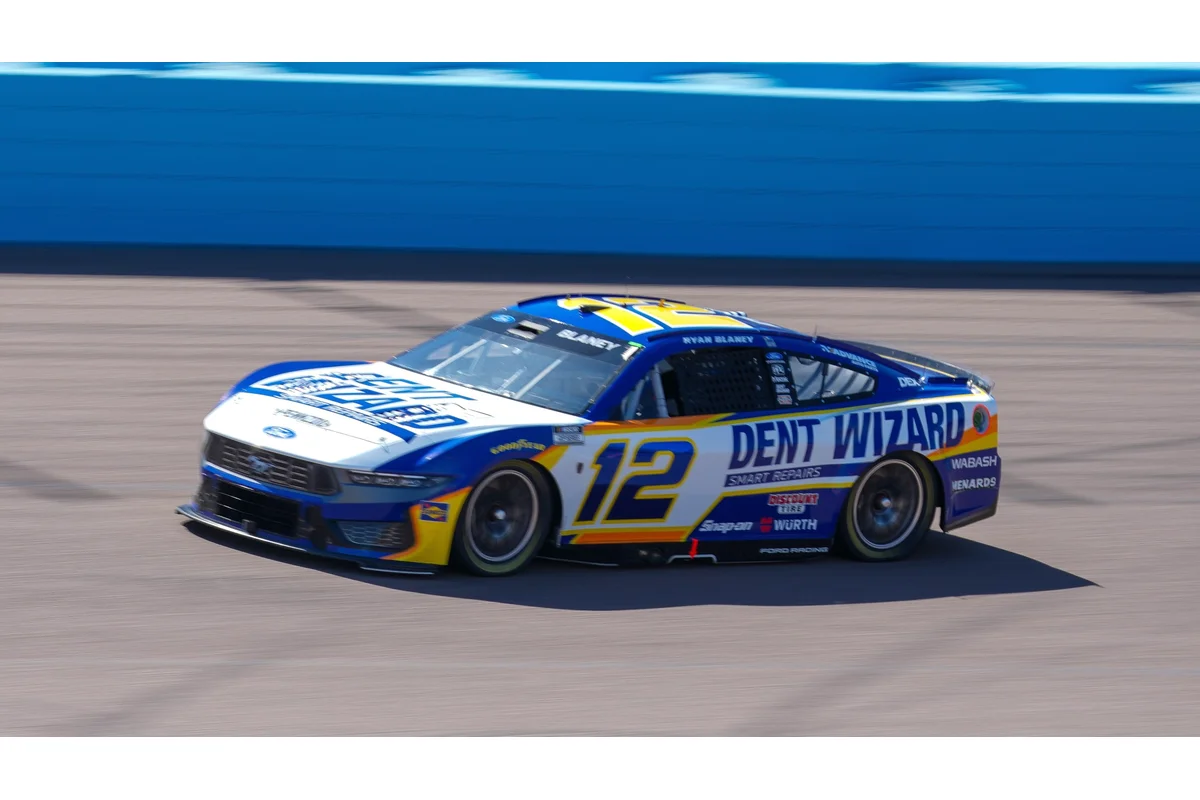
Ryan Blaney claimed victory at the Straight Talk Wireless 500 held at Phoenix Raceway in Avondale, Arizona, delivering a significant win not only for himself but for the NASCAR industry. This race, conducted under NASCAR’s new 750-horsepower package paired with the seventh-generation car, showcased the progress made in the sport’s car and tire development, reaffirming faith in both the track and competition format.
Blaney’s win was especially remarkable given that he had to overcome obstacles on pit road which relegated him to starting from the back of the field. His ability to methodically move through the pack highlights both his driving skill and the improvements in the current rules package, something that wasn’t achievable in earlier years of the NextGen car at this track.
How Technical Upgrades Fueled a Competitive Race
The advancements in car power and tire performance played a crucial role in this event. The seventh-generation car previously struggled with insufficient horsepower and excessive grip due to aerodynamic factors. NASCAR’s meticulous tuning of the short track package contributed to a more dynamic race, as the added horsepower allowed drivers to manage their speed and tire wear more effectively.
Blaney praised the tire, saying,
“It was a great tire. The added horsepower was good. We’re creeping up on it. Hopefully we get a little bit more going forward.”
He elaborated,
“I thought it wore really good. You could make it angry and pay a penalty for it at the end of the run. I thought that added horsepower stepped that up, too. You could really buzz the right rear if you weren’t careful.”
This balance created intense competition, with cars maneuvering across the track surface while managing tire health—a critical component given the spec car regulations limiting variations in equipment.
Strategic Choices on Tires Decided the Final Outcome
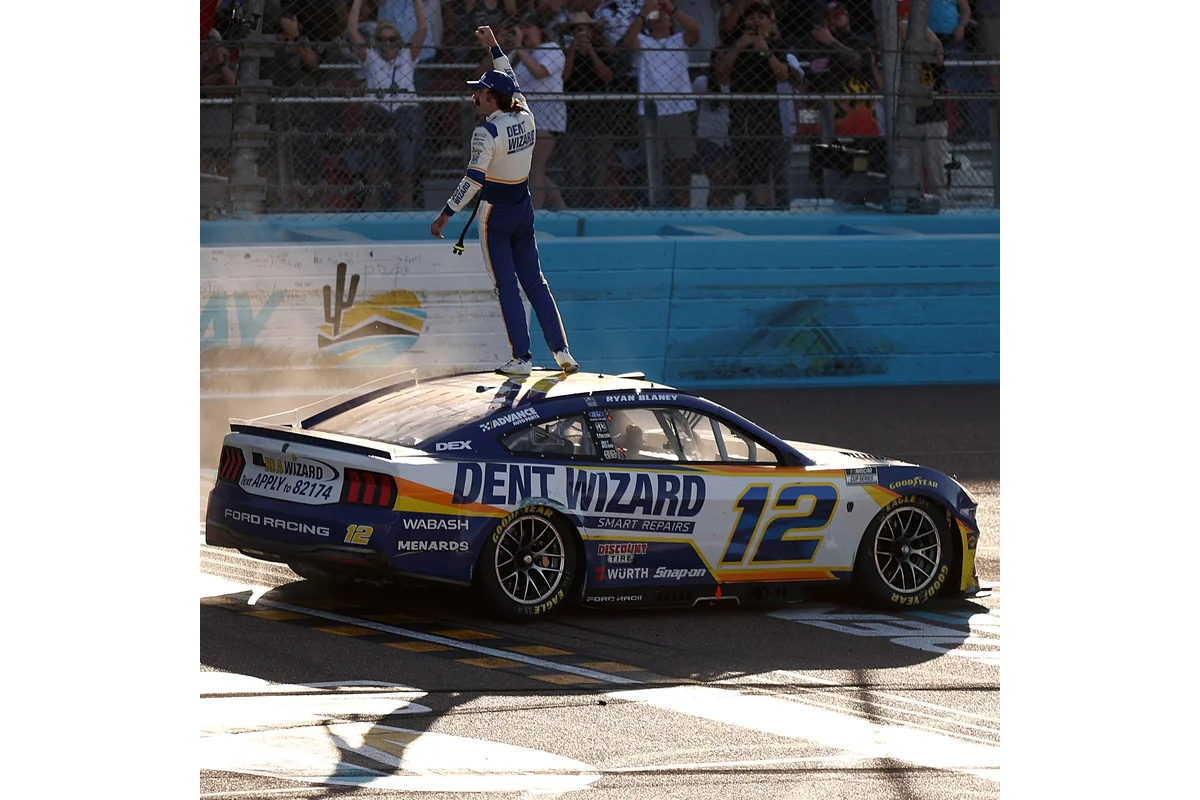
The closing laps saw strategic diversity as crew chiefs debated between taking two or four tires during the last pit stop. Though ultimately the two-tire choice prevailed with Blaney’s victory, Christopher Bell came close to overtaking him, had he been able to pass Kyle Larson a lap earlier or if the race had extended by just one lap.
“I thought the racing was great,”
Bell said.
“The horsepower was really, really necessary and I would love to keep bumping it up. This really put it in the drivers’ hands and the teams’ hands. You saw Blaney be able to work his way back a couple of times. I ended up in the back once and the cream was able to rise to the top.”
He added simply,
“More horsepower is a lot better.”
Multiple viable pit strategies reflect the healthy state of competition and tactical depth in the sport at this level.
Handling Tire Failures and Race Challenges
Despite some tire blowouts that triggered several cautions, these issues largely stemmed from teams pushing the boundaries of allowed tire air pressures in pursuit of speed. Denny Hamlin commended Goodyear’s tire performance, noting,
“This tire is great. It really allows the drivers and teams to be in control of their destiny. It’s always going to be a battle of how far can you push it. I thought the racing was great and overall, a lot of cautions because restarts, and people getting into each other. That’s part of it.”
Blaney shared a similar perspective on tire failures, stating,
“As far as the tire failures go, that’s just people pushing air pressure. When tires wear out a lot, people are going to push air pressure. How low can we get? You’re going to see blowouts. What’s the basement without having a problem?”
This highlights the inherent risks drivers and teams accept when seeking competitive advantages within technical limits.
Final Laps Showcase Tactical Battles and Emerging Talent
In the race’s crucial moments, Blaney and Ty Gibbs opted for two tires to maintain position in clean air, a move that paid off when Blaney secured the lead. Bell’s four-tire choice was gamble that nearly succeeded under slightly different circumstances. The fact that nearly ten teams had legitimate strategies to contend for the win underscores a growing parity and unpredictability in races featuring the NextGen car.
Blaney’s drive through the field twice during the race demonstrated not only his individual skill but also the strength of Team Penske’s operation. His victory also carried a personal milestone: it was his first win following the birth of his son.
Reflecting on the personal side of racing, Blaney said,
“Looking forward to getting home tonight and seeing them. It just changes your perspective. Whenever I get home Sunday nights and see her and him, it just completely changes everything.”
He added,
“For days like today, it’s just the cherry on top. Really, really lucky to have a healthy son and a healthy wife. Hopefully we can do it at some point where they’re here. Yeah, pretty cool.”
Significance of Blaney’s Victory and Future Prospects for NASCAR
This race at Phoenix not only validated the ongoing technical adjustments to the cars and tires but also highlighted the increasing competitiveness within NASCAR’s top tiers. With multiple teams having the tools and strategies to fight for the lead, fans can expect more unpredictable and exciting contests going forward.
Blaney’s win solidifies his standing as a top driver and signals a growing strength for Team Penske. Meanwhile, ongoing development by NASCAR and Goodyear suggests the sport will continue to evolve, delivering both challenging and compelling racing that tests driver skill, team strategy, and equipment durability alike.
