

On February 9, 2026, Tuscaloosa County Circuit Court Judge Daniel Pruet ruled against Charles Bediako in his lawsuit challenging NCAA eligibility rules, officially barring the former NBA G League player from continuing his college basketball career at Alabama. This ruling concludes a highly publicized dispute that lasted for nearly three weeks, during which Bediako, a 7-foot center, briefly returned to the Alabama roster under a temporary restraining order.
Bediako’s case centers around his return to college basketball after two full seasons playing professionally in the NBA G League, where he earned approximately $530,000. Despite his initial return to Tuscaloosa to complete his degree within his original five-year eligibility window, the NCAA cited his draft declaration, professional contracts, and expiration of eligibility as grounds for ruling him ineligible.
Background of Bediako’s Eligibility Controversy
Charles Bediako originally played 68 games at Alabama across the 2021–22 and 2022–23 seasons before declaring for the 2023 NBA Draft. After spending two seasons in the G League, he re-enrolled at Alabama in late 2025, seeking to resume his college basketball career. However, the NCAA denied his eligibility due to his prior professional status and the norms governing collegiate athletics eligibility clocks.
On January 20, 2026, a judge issued a temporary restraining order allowing Bediako to participate in college games while his eligibility case proceeded. During a five-game stretch, Bediako averaged 10 points, 4.6 rebounds, and 2 blocks per game. Nevertheless, Alabama suffered two losses during this period and dropped out of the Top 25 rankings.
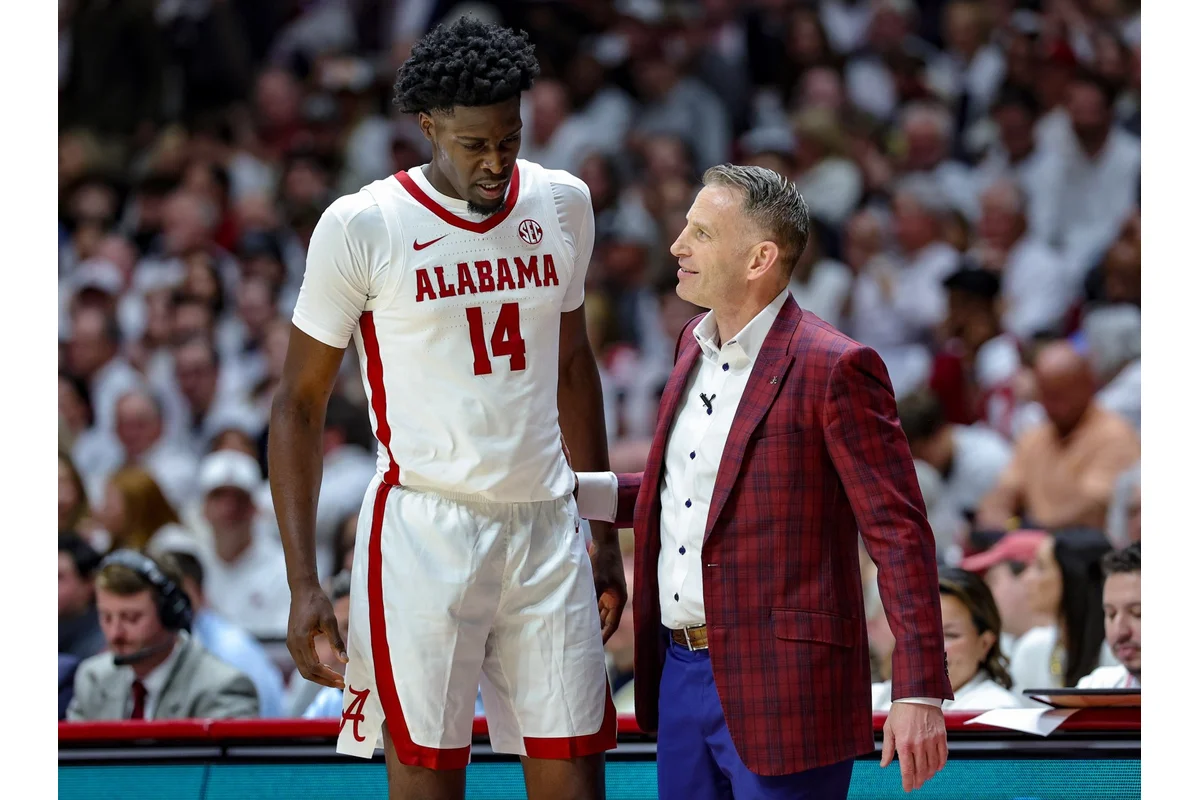
At the February 6 injunction hearing, Bediako’s attorney, David Holt, emphasized his client’s commitment to education, stating that Bediako’s return was motivated by completing his degree. Meanwhile, NCAA attorney Taylor Askew warned that allowing eligibility in this case could lead to a flood of similar lawsuits, threatening the stability of eligibility standards in college sports.
Perspectives from NCAA and the Southeastern Conference
The NCAA, supported by the SEC Commissioner Greg Sankey, argued forcefully for upholding existing rules. Sankey submitted an affidavit underscoring the importance of eligibility regulations in preserving college sports’ integrity and educational mission.
I respectfully ask the Court to uphold the NCAA eligibility rules challenged in this case, which are essential to the integrity of college sports, to the educational mission they serve, and to the opportunities they provide for current and future student-athletes.
— Greg Sankey, SEC Commissioner
Fan Reactions Favor Court Decision
The ruling resonated strongly with college basketball fans nationwide, many of whom took to social media to voice their support for maintaining clear eligibility standards. Several fans applauded the decision as a necessary step to preserve college athletics for true student-athletes rather than those with prior professional experience.
Absolutely the right call. It’s still in 💩 hole, but it’s a step in the right direction,
— fan comment
Not good enough make them forfeit every game he played in.
— fan comment
Good, keep grown men out of this sport,
— fan comment
This is how it should be. Rare W from the NCAA 👏.
— fan comment
Even the NCAA president Charlie Baker released a statement endorsing the court’s ruling, warning against professional athletes attempting to reverse their pro status and compete at the college level, a trend he views as detrimental to younger student-athletes.
Common sense won a round today. The court saw this for what it is: an attempt by professionals to pivot back to college and crowd out the next generation of students. College sports are for students, not for people who already walked away to go pro and now want to hit the ‘undo’ button at the expense of a teenager’s dream. While we’re glad the court upheld the rules our members actually want, one win doesn’t fix the national mess of state laws. It’s time for Congress to stop watching from the sidelines and help us provide some actual stability,
— Charlie Baker, NCAA President
Implications for Other Players and the Future of Eligibility Rules
Bediako’s case highlights an evolving and contentious landscape in college sports eligibility, where players with prior professional experience explore paths back to collegiate play. For instance, James Nnaji was recently permitted to return to Baylor basketball after a professional stint overseas. Similarly, former UCLA guard Amari Bailey, who has played in the NBA, is rumored to be considering a college basketball comeback.
Such cases underscore the challenges facing the NCAA as it balances maintaining traditional eligibility standards with the reality of modern athlete career paths. The debate raises questions about how to fairly integrate athletes who seek to resume college sports after competing professionally, without compromising opportunities for current student-athletes.
What Lies Ahead for Charles Bediako
Although the ruling ends Bediako’s NCAA playing career this season, Alabama head coach Nate Oats confirmed that Bediako will remain at the university to continue his education on scholarship. Oats has expressed strong support for Bediako’s academic progress and personal commitment.
Charles went to school here for four years. I’ve got a relationship with Charles. That’s why the whole thing made sense. He’s within his five-year window. He’s trying to get his degree. Yeah, if Charles is unable to keep playing… Charles is in school; he’s gonna remain in school. He wants to get his degree,
— Nate Oats, Alabama Head Coach
Though his hopes of returning to competition this season are dashed, Bediako’s continued enrollment allows him to pursue his academic goals despite the setback on the basketball court.
NEW: Former pro Charles Bediako has been denied a preliminary injunction against the NCAA and will no longer be eligible to play for Alabama this season.https://t.co/CWLx9qaYvp https://t.co/0Yo650Ilfw pic.twitter.com/ttzqTyY4a7
— On3 (@On3) February 9, 2026
