
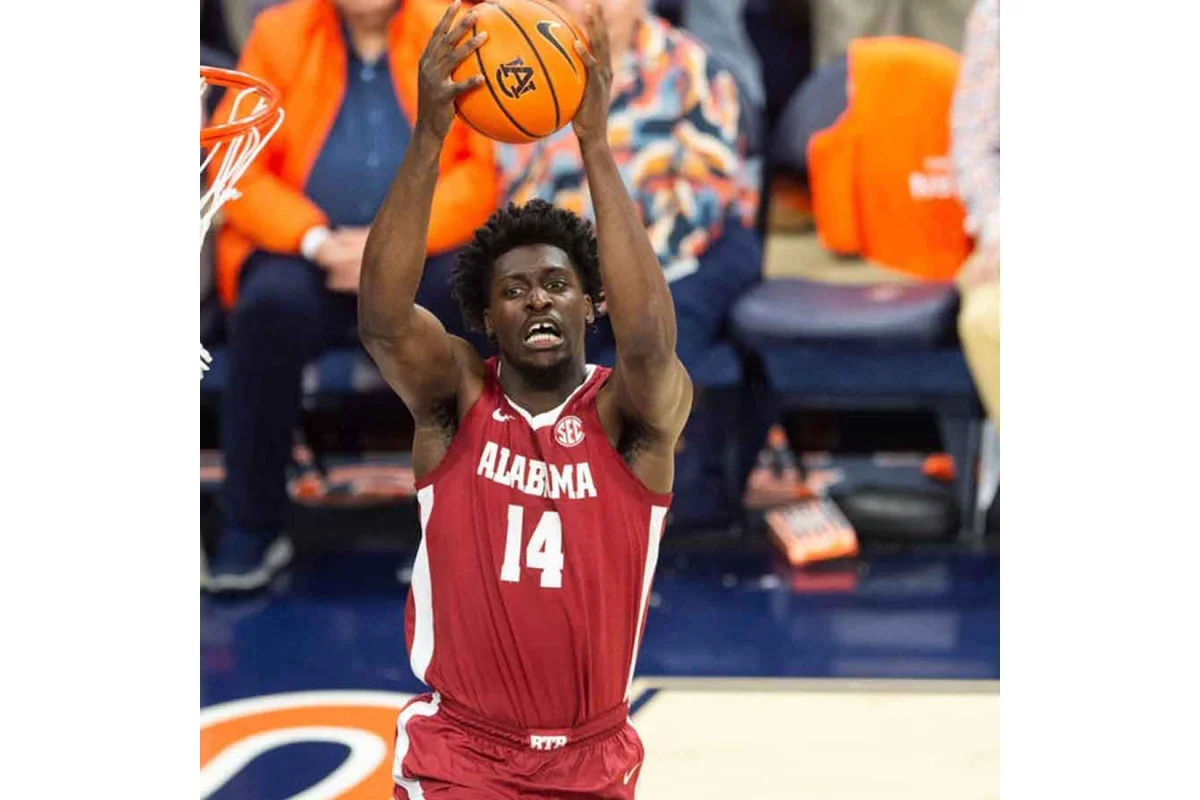
On Monday, Alabama circuit judge Daniel Pruet sided with the NCAA in a pivotal eligibility case involving 23-year-old Alabama basketball center Charles Bediako. The ruling ended Bediako’s NCAA eligibility and overturned a temporary restraining order (TRO) that had allowed him to participate in five games this season, raising significant questions about college basketball’s eligibility rules and their enforcement.
The ruling came in Tuscaloosa after a previous TRO had been granted by another judge who later recused himself upon revelation of a conflict of interest due to donations to Alabama’s athletic department. Pruet agreed with the NCAA’s position that Bediako violated eligibility rules tied to his prior college play, NBA Draft involvement, and the deadline that separates collegiate basketball from professional status.
How Bediako’s Case Unfolded and NCAA Regulations Explained
The NCAA initially denied Bediako’s eligibility request in January, based on long-established regulations. Legal representatives for the NCAA emphasized that Bediako had previously played college basketball from 2021 to 2023, then left for the NBA Draft knowing the rules required forfeiting college eligibility if a player remains in the draft process past a set late-spring deadline.
Extensive information gathering confirmed that the NCAA’s position was consistent with its policy: a player who participates in college basketball and stays in the NBA Draft beyond the deadline relinquishes NCAA eligibility. The seriousness of this rule was underscored by SEC commissioner Greg Sankey, who submitted a sworn affidavit opposing one of his member institutions, thereby influencing the court’s decision.
Consequences for Alabama Basketball After Bediako’s Ineligibility
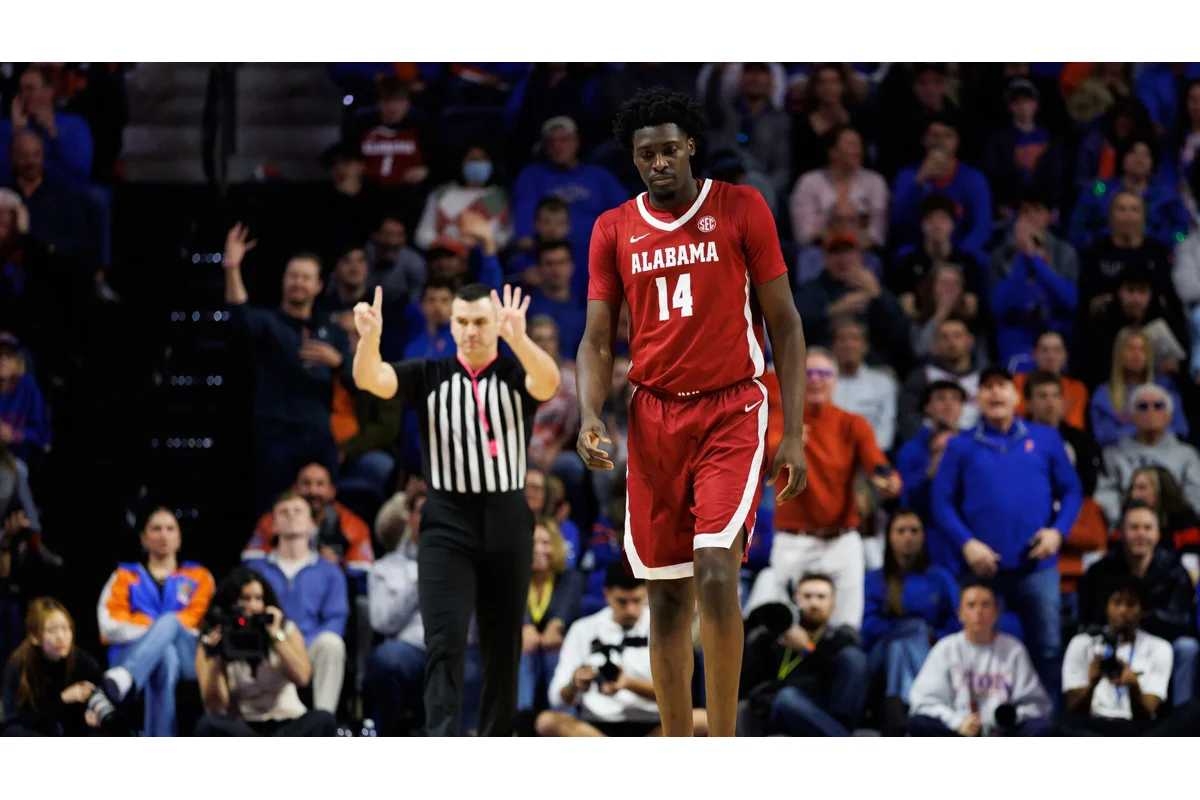
With this ruling finalized and no opportunity for appeal, Charles Bediako’s collegiate career has come to an end. Alabama must continue its season without him despite his significant contributions, averaging 10.0 points, 4.6 rebounds, and 1.4 blocks in the five games played upon return. He is expected to rejoin the G League, having recently competed for the Motor City Cruise.
Alabama, which was not a direct party in the lawsuit, has no further options to contest the NCAA’s decision. Bediako and the university previously lost an initial waiver request this past January, and with only one semester of eligibility remaining for Bediako, the legal proceedings are effectively closed at this stage.
Impact on Alabama’s Record and NCAA’s Potential Response
It appears unlikely that Alabama’s games with Bediako on the roster will be vacated retroactively. The initial TRO prevented the NCAA from imposing any penalties on Alabama, Bediako, the coaches, or other student-athletes linked to his participation. The ruling included specific language that barred such sanctions during the TRO’s active period:
“…further restrained from threatening, imposing, attempting to impose, suggesting, or implying any penalties or sanctions on Mr. Bediako or the University of Alabama or its coaches or other student-athletes as a result of Mr. Bediako’s participation in Division I athletics.”
Despite the TRO’s retroactive nullification, severe NCAA sanctions appear improbable. However, the NCAA Tournament selection committee may consider Alabama’s situation when evaluating and seeding teams, potentially influencing perceptions within college athletics based on this controversy, which has elicited widespread discomfort among stakeholders.
Differences Between Bediako’s Case and James Nnaji’s Eligibility at Baylor
Questions have arisen comparing Bediako’s ineligibility with another high-profile case involving James Nnaji, who was permitted to play for Baylor after entering the NBA Draft. There are three key distinctions in their situations:
- Nnaji received full NCAA clearance prior to playing.
- Nnaji had never played college basketball before enrolling at Baylor in December 2025.
- His eligibility was granted due to a technicality: having never played college basketball and never signing an NBA contract.
This contrast highlights ongoing dissatisfaction with how eligibility criteria are inconsistently applied, fueling debate over who qualifies for college basketball. Bediako’s challenge exposed critical concerns about allowing players to move freely between the NBA, G League, and college ranks during the calendar year, threatening roster stability and impacting opportunities for other players, including high school recruits.
Alabama’s Performance and Team Challenges Heading Into March
Alabama’s season has been inconsistent, with a 16-7 record featuring notable victories against St. John’s, Illinois, Kentucky, and Auburn, alongside unexpected home losses and blowout defeats to Florida and Arizona. The absence of Bediako creates a notable gap in the frontcourt, compounding existing injury issues for the team.
Several key frontcourt players have experienced setbacks: seven-foot Noah Williamson is sidelined, backup big man Keitenn Bristow has missed 12 games, and 6-foot-11 junior Taylor Bol Bowen has also faced injuries. Most recently, starter Aiden Sherrell suffered a knee injury during Alabama’s win over Auburn.
Despite these challenges, Alabama boasts a fast guard duo in projected NBA Draft lottery pick Labaron Philon and sophomore Aden Holloway, among the quickest in college basketball. However, the frontcourt instability remains the biggest obstacle preventing Alabama from securing a top-10 ranking this season.
Insights from Alabama Coach Nate Oats on the Eligibility Dispute
In a radio interview covered by Mike Rodak of 247Sports, Alabama head coach Nate Oats expressed strong disappointment with the ruling and the NCAA’s handling of the case. Oats said he did not believe the matter should have required court intervention, citing numerous examples of other college players with professional experience who have been deemed eligible.
“I didn’t think it ever should have gotten to court,”
Oats stated.
He further argued the NCAA’s inconsistent eligibility application was frustrating, especially compared to how overseas professionals and G League players have been treated. Oats highlighted perceived preferential treatment for European international players over Americans and expressed hope that future legal challenges would eventually force change:
“…Disappointed in the ruling. Disappointed in the system — both the NCAA, the courts, the whole thing, just with all the inconsistencies with who’s eligible and who’s not. It just seems like the European international players are being given preferential treatment over the Americans. It moreso happened today. Hopefully, at some point, somebody is going to win a ruling like this. It wasn’t here today. At some point somebody will win one and change the system. Because that’s how it has to get changed in the NCAA. They don’t make changes on their own, typically.”
Oats did not directly acknowledge the central issue that differentiates Bediako’s case: he was the only former college player to try to reverse an NCAA eligibility disqualification after leaving for the NBA Draft. Meanwhile, the NCAA has granted eligibility to many former overseas professionals, a situation that has intensified calls for clearer, more consistent bylaws.
SEC commish Greg Sankey pens an affidavit in favor of the NCAA/against Charles Bediako (and, in effect, Alabama) in advance of Friday’s big hearing in Tuscaloosa. NCAA will use this as courtroom ammo. Also notable because of the SEC QB eligibility cases at Ole Miss and Tennessee. pic.twitter.com/L88Jz3yoxK
— Matt Norlander (@MattNorlander) February 5, 2026
Tonight’s Hard Hat Award winner presented by @mcabeeinc: Charles Bediako #RollTide | #BlueCollarBasketball pic.twitter.com/pNIWfoxTby
— Alabama Men’s Basketball (@AlabamaMBB) February 7, 2026
