
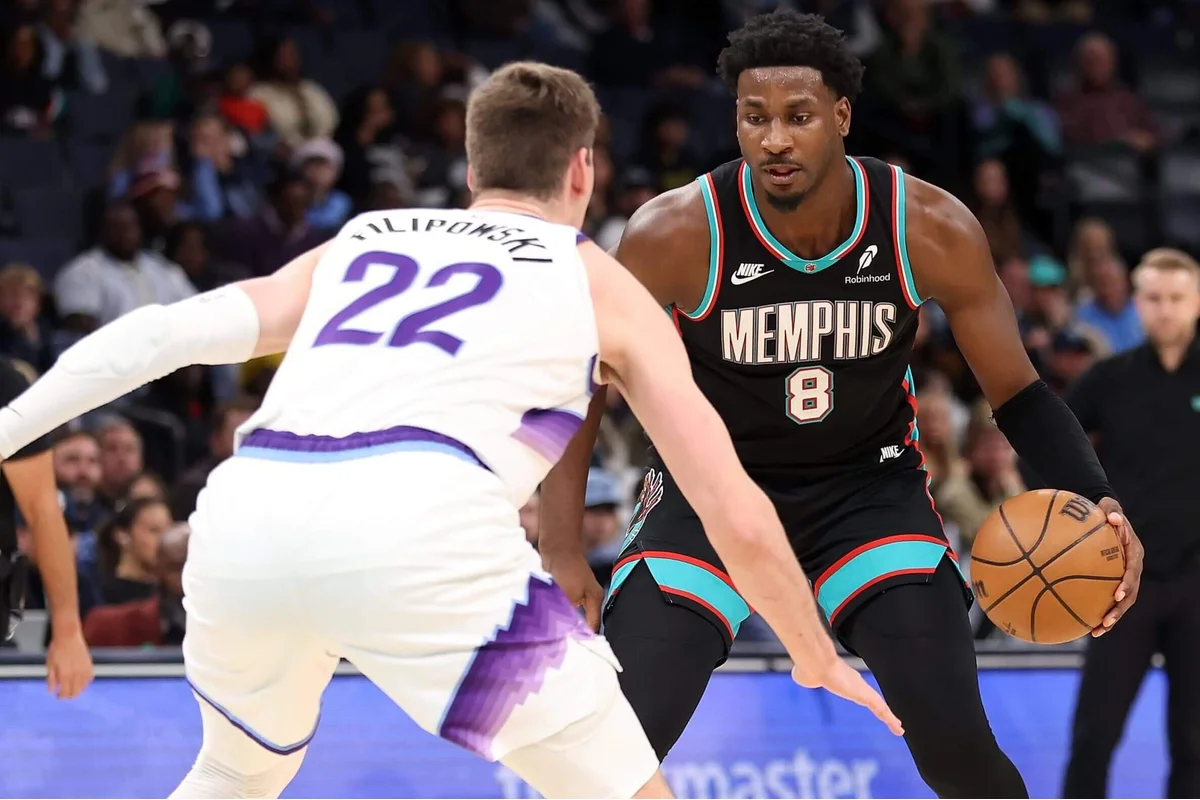
The Boston Celtics have been actively seeking to strengthen their frontcourt through trades, ultimately acquiring Nikola Vucevic. Before finalizing that deal, the team considered adding Jaren Jackson Jr., a standout player from the Memphis Grizzlies, as a key asset. However, Jackson Jr. was unexpectedly traded to the Utah Jazz on Tuesday, along with Vince Williams Jr., Jock Landale, and John Konchar, in exchange for Walter Clayton Jr., Kyle Anderson, Taylor Hendricks, Georges Niang, and three future first-round draft picks.
Jackson Jr. is recognized as a two-time NBA All-Star and former Defensive Player of the Year, known as one of the league’s top frontcourt players. Despite his defensive prowess, he struggles with rebounding and does not match up well against elite big men, making him less ideal for teams without a traditional center. The Celtics already possess several athletic power forwards, so although Jackson Jr. would enhance their talent, he would not perfectly complement their existing roster.
Limitations in Jackson Jr.’s Playing Style and Fit with the Celtics
Offensively, Jackson Jr. has potential to space the floor, but his career three-point shooting percentage stands at just 35%, which is modest for a player expected to stretch the defense. He is not the type of player who can reliably score in the paint without additional playmaking support. Furthermore, he has a tendency to commit ill-timed fouls and has struggled to maintain consistent court presence during crucial playoff moments. While a very good player, Jackson Jr. has yet to establish himself as truly elite— a concern given the expectations connected to his contract.
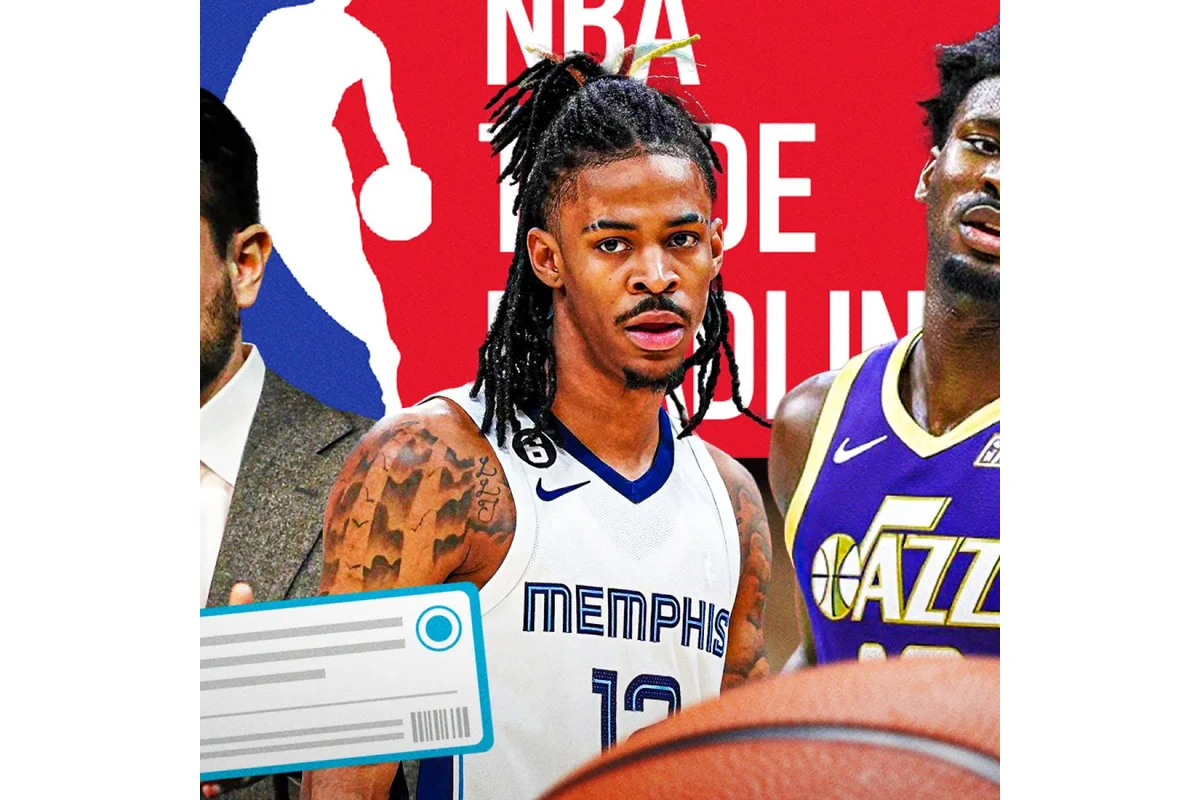
Financial Implications of Jaren Jackson Jr.’s Contract for the Celtics
This season, Jackson Jr.’s salary of $35 million would have been manageable for the Celtics by leveraging assets like Anfernee Simons and Sam Hauser. The critical issue arises with his upcoming four-year, $205 million extension, which includes a $52 million player option for the 2028-29 season. Such a steep financial commitment is unprecedented for someone who has never been named to an All-NBA team.
The current collective bargaining agreement (CBA) emphasizes avoiding superstar contracts that don’t align with top-tier production, and it discourages concentrating massive salaries in a so-called “Big Three.” For the Celtics, adding Jackson Jr. alongside Jayson Tatum and Jaylen Brown would have resulted in over $154 million committed to just three players next season. By 2028-29, that figure could balloon to $184.06 million. Including Derrick White’s salary above $30 million, the team edges dangerously close to the luxury tax apron with only four players, which challenges the team’s ability to build vital roster depth.
Why Passing on Jackson Jr. May Help Celtics Maintain Flexibility
Committing large sums to three stars requires confidence that those players are the ideal core. Given Jackson Jr.’s mixed fit and contract demands, the Celtics’ decision to sidestep his acquisition—losing out to the Utah Jazz and their general manager Danny Ainge’s earlier move—appears prudent. The Celtics avoided potential financial strain that could hinder building a competitive and balanced roster in the long term.
BREAKING: The Memphis Grizzlies are trading star forward Jaren Jackson Jr., John Konchar, Jock Landale and Vince Williams Jr. to the Utah Jazz for Walter Clayton Jr., Kyle Anderson, Taylor Hendricks, Georges Niang and three future first-round picks, sources tell ESPN. pic.twitter.com/ax6oQpZx0S
— Shams Charania (@ShamsCharania) February 3, 2026
