
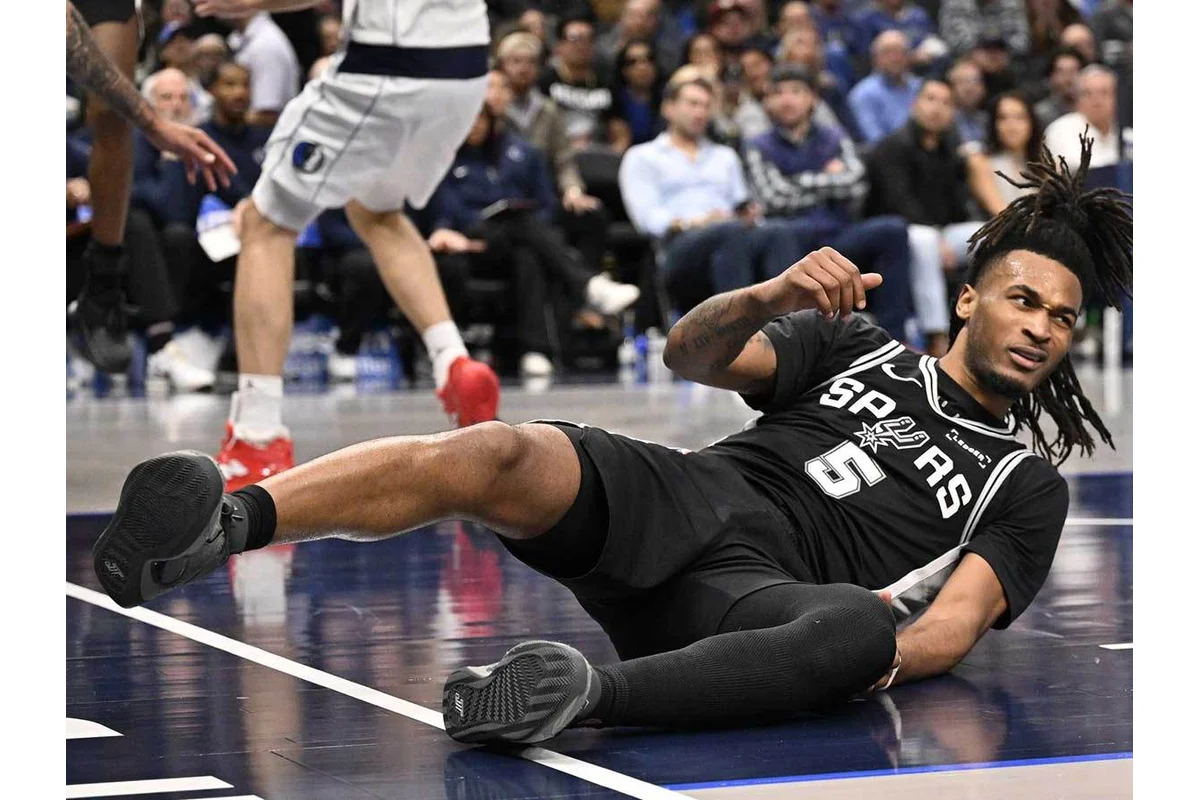
The San Antonio Spurs, positioned to finish the season with an impressive 55 wins, face significant challenges with guard Stephon Castle’s shooting performance. Now in his second NBA year, Castle has taken on a larger role and shown promise as a playmaker, yet his shooting difficulties remain a persistent concern.
While Castle possesses the ability to look like an all-star when his shot falls, his overall shooting efficiency is troubling. He is converting only 27.9% of his three-point attempts over 4.1 attempts per game and shooting 72.3% from the free-throw line. These numbers underline a critical weakness in his offensive game.
Exceptional Foul Drawing Ability Offsets Some Shooting Limitations
One bright spot in Castle’s game is his rare skill in drawing fouls, especially in transition. At just 21 years old, he leads the league in free throw attempts in fast-break situations, demonstrating a keen sense of timing and craftiness. This aptitude mitigates some of the damage caused by his poor shooting numbers.
“Highest Foul Drawing Frequency In Transition For The 2025-26 NBA Regular Season (Min. 50 Total Transition Possessions) :1. Stephon Castle — 32.0%2. Giannis Antetokounmpo — 28.6%3. DeMar DeRozan — 27.8%4. Paolo Banchero — 26.7%5. Zion Williamson — 25.5%6.… https://t.co/ww1PdztZrP pic.twitter.com/oOPaGMZfHT” — Stat Defender
To leverage Castle’s strengths, Spurs coach Mitch Johnson has shifted him more frequently into the point guard role, a move designed to lessen the impact of his inconsistent shooting. This strategy, however, requires shooting guard De’Aaron Fox to play out of his natural position. Despite this adjustment, Castle has improved his passing ability, enhancing his value on the court.
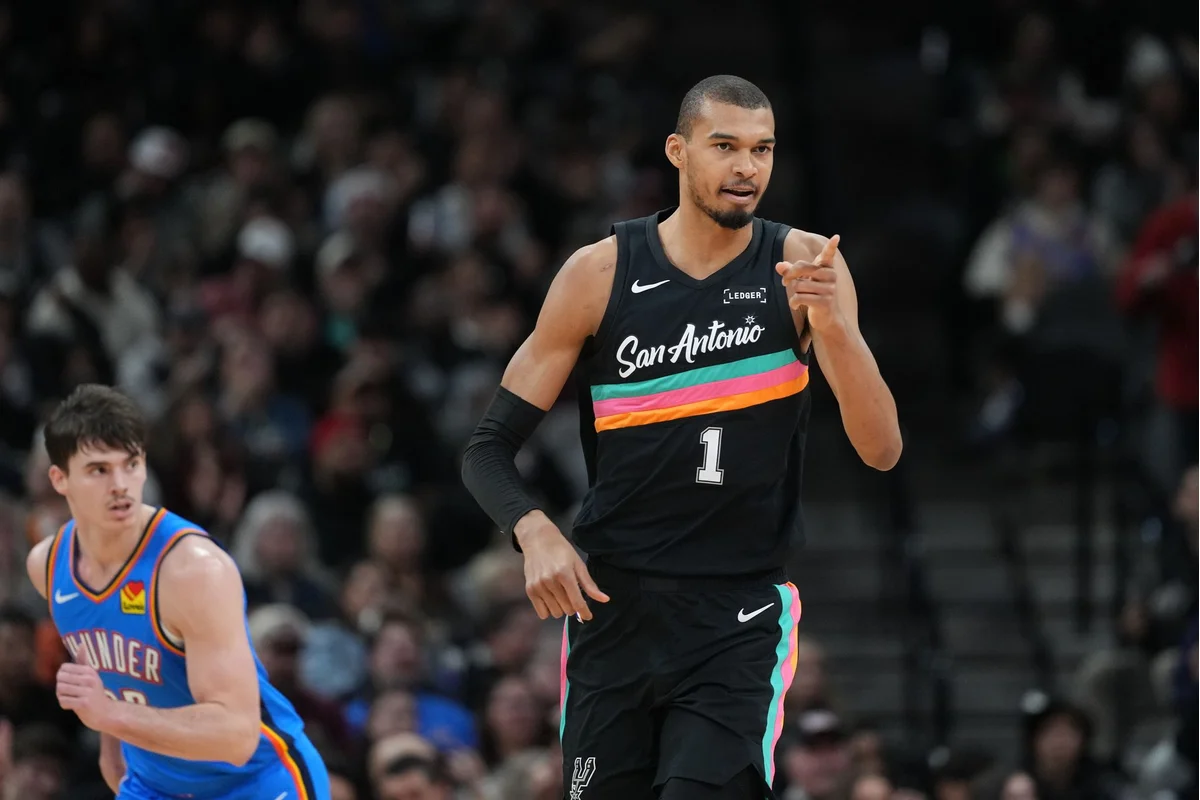
Still, if Castle cannot become a reliable shooter, it will limit both his individual potential and the Spurs’ overall ceiling as a team.
Long-Term Prospects: Castle Likely to Remain a Weak Shooter
Although some wing players have succeeded despite shaky shooting, it remains doubtful that Castle will develop into a dependable shooter. He is frequently compared to Jimmy Butler of the Golden State Warriors, a player who has built his career on strong on-ball skills complemented by an effective mid-range shot. Castle, however, lacks a dependable jumper to fall back on.
It is anticipated that the Spurs will eventually move Castle away from point guard toward a small forward role. His size is suitable for the three position, where poor shooting is more common and somewhat more manageable tactically. The challenge lies in the Spurs’ roster construction as they also rely on Dylan Harper and Fox, neither of whom currently provide reliable floor spacing.
This situation places additional pressure on Harper to evolve into a capable shooter. Otherwise, the Spurs may find themselves limited in how often they can deploy all three guards—Fox, Castle, and Harper—together without crippling their offense.
Fortunately for San Antonio, Victor Wembanyama offers essential floor spacing as a center, softening some of these spacing concerns.
Complexities of Integrating Fox, Castle, and Harper Simultaneously
While starting Fox, Castle, and Harper together is possible, doing so carries risks for player development and team dynamics. If Harper remains a bench player years from now, his progress and potential ceiling could be stunted. Between the three, Harper is considered to have the highest upside, while Castle’s versatility allows him to cover multiple positions but might prevent him from emerging as a clear star.
For Fox, relegation to a bench role could mean underperformance relative to his contract expectations, making Castle the more logical candidate to come off the bench if the three are unable to coexist as starters. Still, Castle’s future would be much brighter if he could develop at least an average three-point shot that would enable him to thrive alongside Fox and Harper.
There is skepticism about this occurring, though a more practical model may be for Castle to emulate former Spurs stars Tony Parker and Dejounte Murray, who were never exceptional long-range shooters but became highly effective through mid-range scoring and solid spot-up shooting.
Castle’s current best-case shooting scenario is demonstrated by his 32.3% success rate on spot-up three-pointers, better than his overall percentage. However, unless he makes meaningful gains as a shooter, his fit within the Spurs system will remain a major question.
Highest Foul Drawing Frequency In Transition For The 2025-26 NBA Regular Season (Min. 50 Total Transition Possessions) :
1. Stephon Castle — 32.0%
2. Giannis Antetokounmpo — 28.6%
3. DeMar DeRozan — 27.8%
4. Paolo Banchero — 26.7%
5. Zion Williamson — 25.5%
6.… https://t.co/ww1PdztZrP pic.twitter.com/oOPaGMZfHT— Stat Defender (@statdefender) February 4, 2026
