
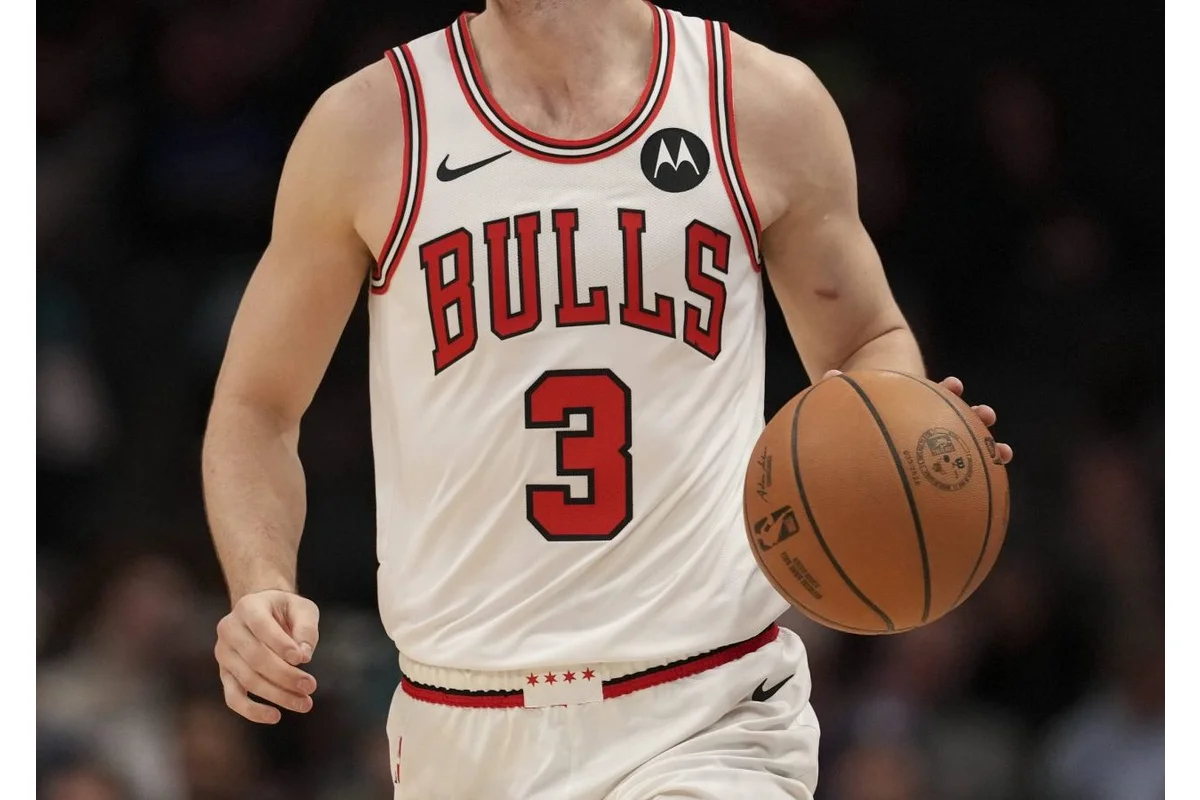
The Chicago Bulls faced the Denver Nuggets on Saturday at the United Center in their first outing since a flurry of trades at the NBA deadline, demonstrating energy and effort that defied typical rebuild expectations. The Bulls, integrating seven new players, battled hard and maintained competitiveness throughout most of the game despite eventually losing 136-120 to a strong Nuggets team.
This fresh mix of talent reflects the Bulls’ resistance to embracing a conventional “rebuild,” even as they adapt to a rapidly changing roster and strive to find cohesion on the court. Guard Collin Sexton, one of the new arrivals, encapsulated the team’s mindset as they adjusted to the new dynamic in Chicago.
Fresh Faces Fuel Early Competitiveness Against the Nuggets
Saturday’s game revealed promising signs from several Bulls newcomers. Matas Buzelis, exemplifying tenacity, persistently wrestled for rebounds against Denver’s towering Jonas Valančiūnas during a dead-ball timeout, symbolizing the youthful energy infused into the squad. Buzelis led the Bulls with 21 points, including four successful three-point shots. Sexton contributed 17 points in his Bulls debut after being acquired from the Charlotte Hornets alongside Coby White, while Guerschon Yabusele, formerly of the New York Knicks, chipped in 12 points with four three-pointers.
Despite the Bulls leading by seven heading into the fourth quarter, the Nuggets unleashed a decisive 24-4 scoring run early in the period, shutting down Chicago’s offense almost entirely. The Nuggets’ Nikola Jokić dominated, achieving a triple-double with 22 points, 14 rebounds, and 17 assists, surpassing Oscar Robertson for the all-time triple-double record at 182 in his career.
Team Struggles Persist in Eastern Conference Play-In Battle
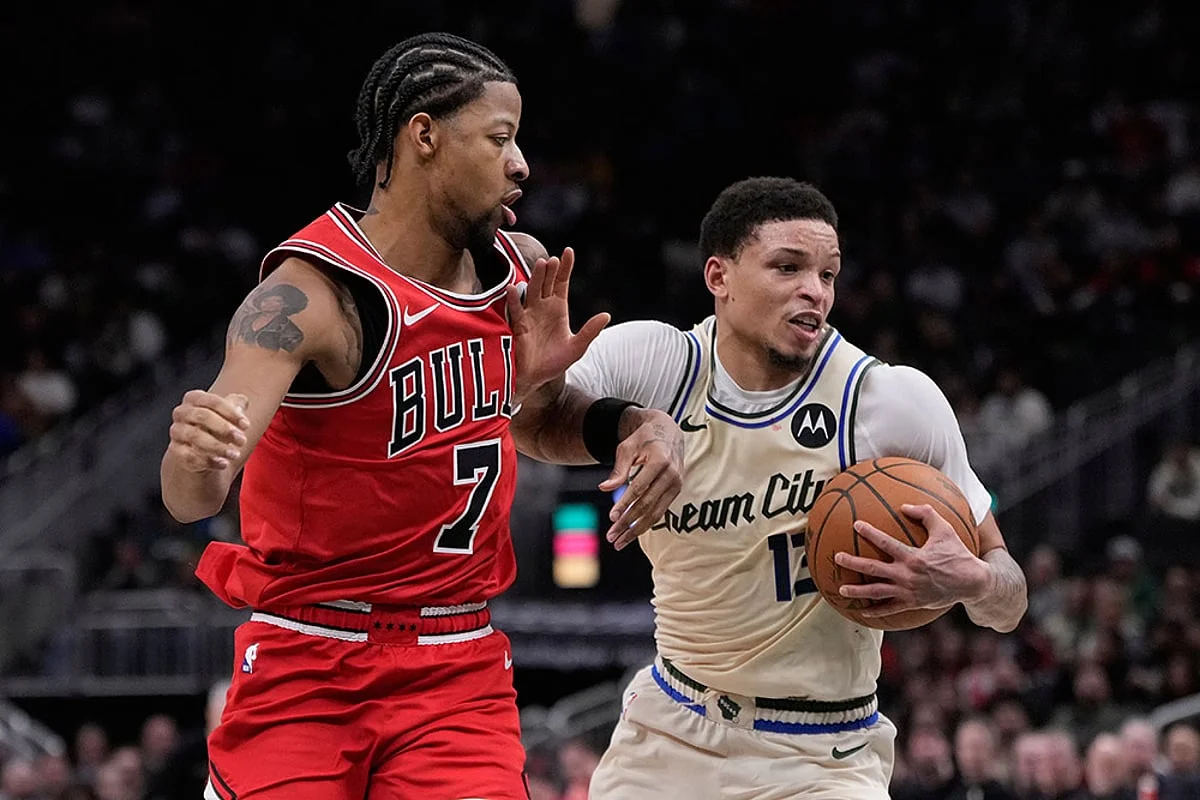
Chicago’s record now stands at 24-29 following a difficult stretch in which they have lost seven of eight games. Their defensive woes continue, conceding 130 points or more in three of their last four contests, leaving them a game behind the Charlotte Hornets for the 10th seed in the Eastern Conference. This position places their chances of qualifying for the play-in tournament in jeopardy.
Head coach Billy Donovan acknowledged defensive weaknesses but offered understanding given this was the first occasion the newly constituted Bulls lineup had played together. He stressed in particular the challenges of integrating seven new players midseason.
Bulls Players Embrace New Opportunities and Leadership Roles
Despite roster turnover, the Bulls squad maintains a commitment to winning and competitive intensity. Sexton reflected positively on the chemistry after just one practice, noting the group’s quick adaptation and readiness to compete.
“We definitely can be very special,”
Sexton said.
“I feel like for us to have one walk-through and to go out there pretty much jelling and making the right reads and doing this together. … It was super fun. At the end of the day, I know something good is coming.”
?Collin Sexton, Guard
Known for his outgoing personality, Sexton has taken on the role of team motivator, emphasizing unity as the Bulls prepare for a mini road trip which includes games against the Brooklyn Nets and Boston Celtics in the coming week, before the All-Star break ushers in the second half of the season and decisions on roster composition will intensify.
Adjusting to New Realities as Veteran Presence Shifts
Coach Donovan remarked on the unusual feeling of entering a locker room that has changed drastically. Veteran Nikola Vučević, a long-standing leader, is no longer present, forcing remaining players like Isaac Okoro to assume new roles and rearrange the team dynamic.
“The first guy I see is Vooch, and he’s not there,”
Donovan said.
Matas Buzelis, suddenly thrust into a more central offensive role, acknowledged the difficulty of losing teammates who had served as mentors.
“It’s tough, of course, but at the end of the day you’ve just got to accept what happens,”
Buzelis said.
“That’s just what it is. I’m happy to see these guys here. I think we’ve got something special and we can make it work, but it’s tough, losing all my brothers.”
?Matas Buzelis, Forward
“It is what it is, and you’ve got to accept it. … Those guys are always going to be part of my circle. They impacted me as a player. I’m never going to forget the relationships I’ve built with them over the years. They were great vets to me.”
?Matas Buzelis, Forward
Management’s Commitment to Competitiveness Over Tanking
While the Bulls are clearly rebuilding in terms of roster youth and experience, both players and management reject the idea of tanking to improve their draft position. Donovan emphasized that the coaching approach aims at winning each game rather than deliberately losing.
“We’ve got to get much better defensively,”
Donovan said, recognizing the team’s current shortcomings but focusing on growth and effort rather than surrender.
“Coach made it a point to say that if we want to win, then that’s what we’re going to do,”
guard Rob Dillingham noted.
“I want to win. I don’t play games to lose.”
?Rob Dillingham, Guard
Dillingham, acquired from the Minnesota Timberwolves in the deal for Ayo Dosunmu, demonstrated potential with nine points and four assists in 22 minutes, contributing to the newly assembled Chicago squad’s efforts to gel quickly.
Historical Perspective on Tanking and Team Identity
The current resistance to tanking echoes past Bulls attitudes toward losing intentionally, notably during the 1985-86 season. Back then, Michael Jordan famously accused the team of tanking, frustrated by management-imposed minutes restrictions as he was recovering from a broken foot. The team’s chairman, Jerry Reinsdorf, publicly dismissed tanking as unacceptable.
“That’s losing, and I don’t like losing on purpose,”
Reinsdorf said.
“I don’t ever want to be party to losing on purpose. Losing breeds losing, and pretty soon you’re losing respect for yourself.”
?Jerry Reinsdorf, Chairman
Jordan’s opposition to losing even prompted a confrontation with management during his comeback from injury, as he asserted the franchise was undermining its chances. General manager Jerry Krause’s response underscored the organizational priority over any single player.
“Jerry Reinsdorf is running this franchise,”
Krause said.
“No one player is bigger than the franchise, no matter who he is.”
?Jerry Krause, Former GM
This episode, despite its controversy, helped define the Bulls’ competitive culture as the franchise grew around Jordan’s transcendent talent.
Current Bulls Embrace Winning Mindset Amid Uncertainty
Four decades later, talk of deliberately underperforming to improve draft status still circulates. However, the current Bulls roster resists this, determined to compete in every contest despite the challenges of roster turnover and transition.
“We want to win every game,”
Buzelis affirmed.
The team’s evolving composition, with young players like Sexton, Buzelis, Dillingham, and others gaining increased responsibilities, signals a commitment to building a competitive core while rejecting the easy path of surrendering games for future assets.
