
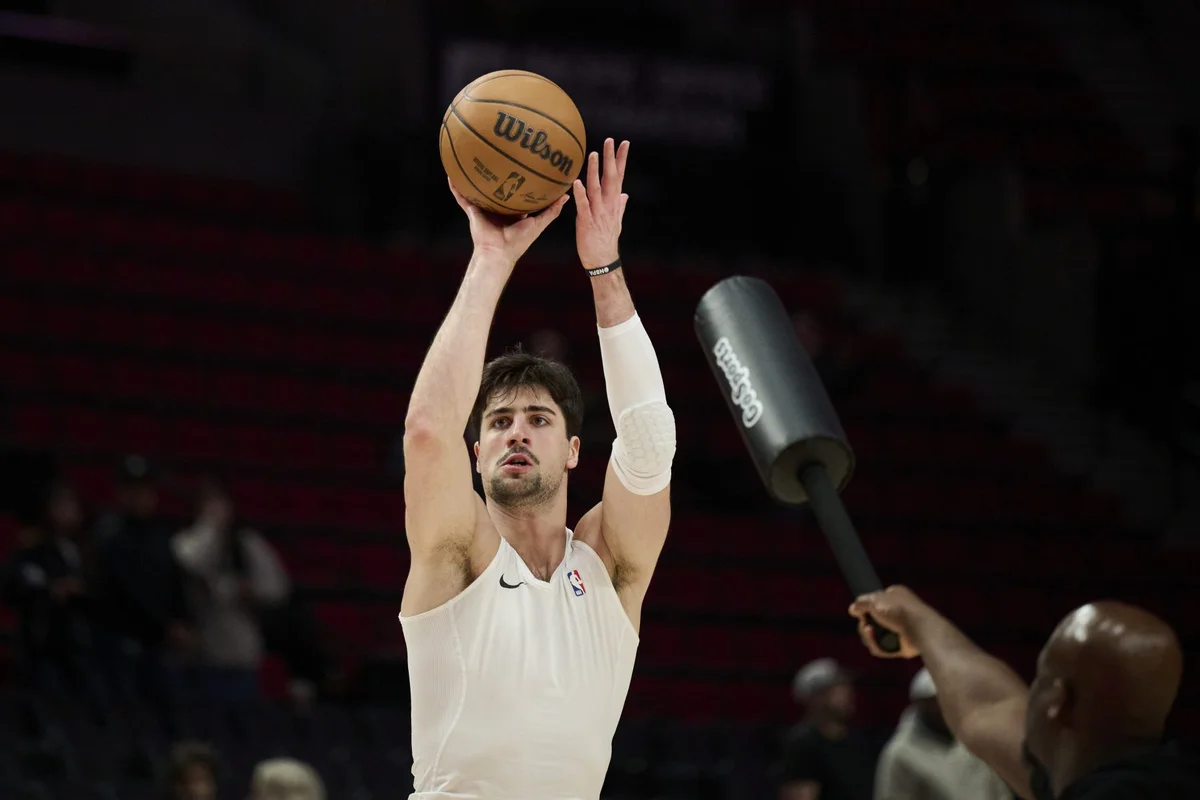
In early January, Deni Avdija commanded headlines with a 41-point performance leading the Portland Trail Blazers to a victory over the Houston Rockets. His scoring included 28 points from field goals and 13 from free throws, highlighting a season-long pattern that has ignited widespread debate. This “Deni Avdija basketball controversy” centers on his frequent trips to the free-throw line, which critics argue reflect a strategic, though contentious, playing style.
Avdija’s reliance on free throws has drawn immediate reactions online and among rival players. Rockets forward Tari Eason succinctly attributed Avdija’s difficulty to defend to “Zebras,” referring to referees, underscoring how officials factor into the controversy. This approach, which some view as exploiting officiating for extra points, has made Avdija a lightning rod for both praise and scorn.
Free Throws Are Fueling Both Success and Criticism
Avdija ranks second in the NBA for free-throw attempts per game and third for free throws made this season. This production has vaulted him into contention for the Most Improved Player award and secured his first All-Star reserve selection, even surpassing stars like LeBron James and Kevin Durant in fan voting. The success of the Trail Blazers, eyeing their first postseason berth since 2021, is intricately tied to Avdija’s play.
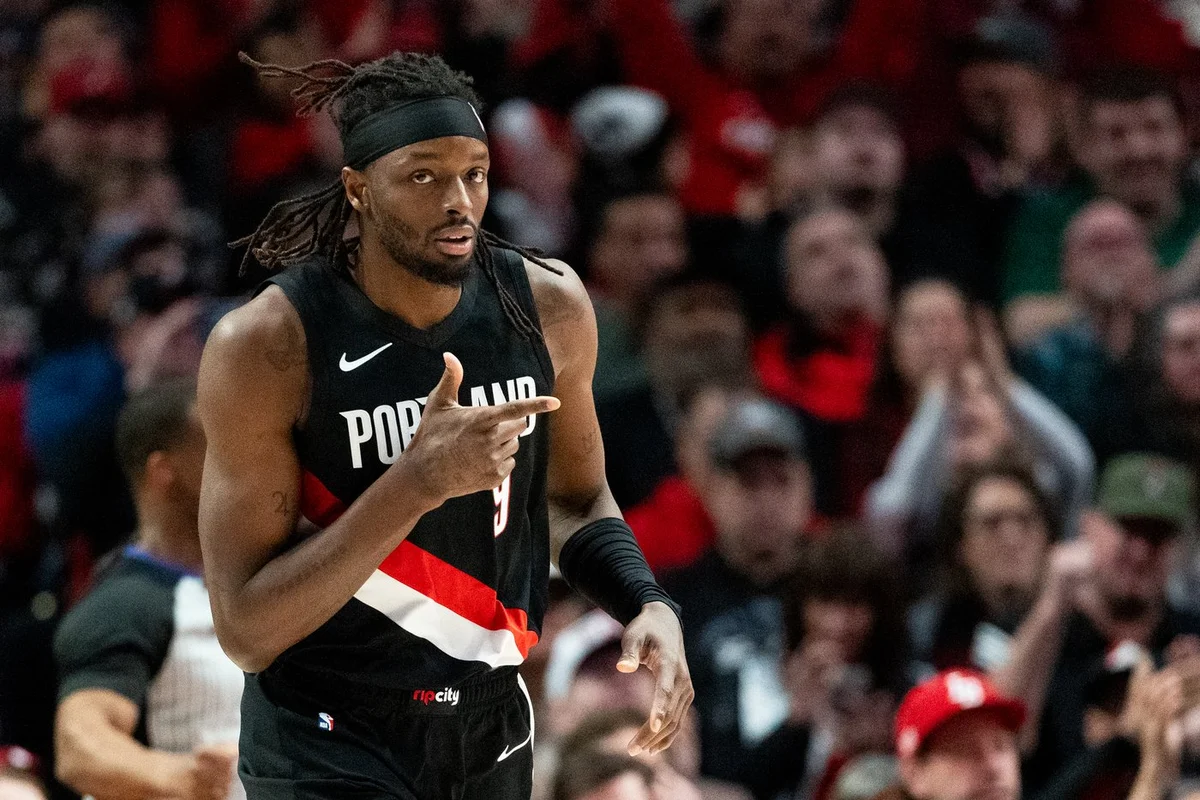
Yet, increased visibility has magnified scrutiny. Since joining Portland in 2024 as a point-forward, Avdija’s aggressive, sometimes theatrical style—diving into contact and drawing fouls—has been mocked by fans. Unlike celebrated floppers such as James Harden or Shai Gilgeous-Alexander, Avdija’s tactics ignite harsher criticism, often devolving beyond basketball into questions about his identity and origins.
The Intersection of Basketball and Geopolitics
Avdija’s background as an Israeli and his documented service in the Israel Defense Forces (IDF) complicate the discourse. Born on a kibbutz in northern Israel, Avdija enlisted in April 2020 during the NBA’s pandemic pause, fulfilling mandatory military service before his NBA career took off. This fact is public knowledge but has gained charged political significance amid Israel’s recent military actions in Gaza.
As tensions escalate globally over Israel’s bombing campaigns in Gaza, Avdija has become a symbolic target online, accused in extreme terms linking him personally to broader conflicts. These accusations have included labels such as “terrorist” and even “genocidal,” transforming him from athlete to proxy in an international debate on the violence against Palestinians. However, there is no evidence implicating Avdija in any war crimes, and his military service preceded the current hostilities.
Understanding Military Service Versus Individual Responsibility
Critics who view all IDF service as inherently criminal blur critical distinctions between systemic violence and personal accountability. Serving in a military does not equate to committing war crimes, and applying such broad judgments overlooks the complexities of individual action within state institutions. This nuance is essential to avoid collapsing accountability into chaos.
Avdija’s case exposes how an athlete’s nationality can become ammunition for political blame. While some channel their frustration at US foreign policy and continuing funding of Israel’s military into direct attacks on Avdija, the real power structures lie far above him. His role within basketball and his limited personal involvement in political matters separate him from the broader state decisions fueling conflict.
National Pride and Silence Amid Tragedy
Avdija openly identifies as a Zionist, embracing support for modern Israel, and has expressed pride in representing his country. In a March 2025 interview with Israel Hayom, he stated, “I love Israel,” framing his national allegiance as a source of honor and responsibility. He also remarked,
“not everyone understands 100% what’s happening in Israel,”
adding that he tries to explain it “from the right good side.”
This declaration of loyalty invites criticism given his public silence on the mass civilian casualties resulting from Israeli military actions in Gaza. With images of destroyed neighborhoods and the deaths of Palestinian children widespread on social media, calls for meaningful responses or acknowledgments from Avdija intensify. His continued support for Israel amidst the conflict frustrates many and blurs the line between sportsmanship and political endorsement.
Avdija’s Response to the Political Backlash
In a profile by The Athletic, Avdija conveyed his frustration with how his basketball career becomes entangled with his nationality. He said,
“I’m an athlete. I don’t really get into politics, because it’s not my job,”
adding,
“I obviously stand for my country, because that’s where I’m from. It’s frustrating to see all the hate. Like, I have a good game or get All-Star votes, and all the comments are people connecting me to politics. Like, why can’t I just be a good basketball player? Why does it matter if I’m from Israel, or wherever in the world, or what my race is? Just respect me as a basketball player.”
Avdija’s statements reflect a desire to separate his sports career from geopolitical controversies while asserting his national identity.
However, this stance also captures a broader dilemma where athletes seek the benefits of nationalism without facing accountability for the actions of their countries. Whether Avdija personally supports or opposes Israel’s policies remains unclear, but backlash is a predictable consequence of public figures engaging—implicitly or explicitly—with contentious issues.
Comparisons in Sports: Patriotism and Dissent
Other athletes have demonstrated the complexity of balancing national pride with criticism of their countries’ actions. For instance, after representing the United States at the recent Winter Olympics, freestyle skier Hunter Hess expressed mixed feelings about the political climate. Hess said,
“It brings up mixed emotions to represent the US right now … It’s a little hard. There’s obviously a lot going on that I’m not the biggest fan of, and I think a lot of people aren’t. I think for me it’s more I’m representing my friends and family back home, the people that represented it before me, all the things that I believe are good about the US,”
illustrating a nuanced engagement with patriotism amid national conflict.
Hess’s thoughtful distancing from politics does not inherently make him a better athlete, just as Avdija’s political tone deafness does not diminish his basketball skills. The anger over the Gaza crisis and the US’s role in funding it remains a vital conversation that should not be trivialized into basketball banter.
The Larger Stakes Beyond the Court
The “Deni Avdija basketball controversy” serves as a reminder that sports often become a battleground for complex social and political disputes. While free throws and fouls provide easy targets for debate, conflating these with issues of genocide and war risks obscuring urgent human rights crises. The immediate backlash toward Avdija as an individual distracts from holding accountable those responsible for systemic violence.
As the Trail Blazers strive for a postseason appearance and Avdija continues to develop as a player, the intersection of his athletic identity with international conflict will likely remain a polarizing issue. How the NBA community and global audiences navigate this tension could shape conversations about sports, politics, and personal responsibility in the years ahead.
Ultimately, this controversy reveals the dangers in oversimplifying complex realities. Criticism is warranted, but it should be precise and contextual—not reduced to a contest over free throws or player conduct. The stakes extend far beyond the game, demanding that we keep the focus on the broader humanitarian impacts rather than the drama on the court.
2026 NBA East All-Star reserves: Donovan Mitchell, Jalen Johnson, Karl-Anthony Towns, Pascal Siakam, Norman Powell, Scottie Barnes, Jalen Duren.
— Shams Charania (@ShamsCharania) February 1, 2026
