
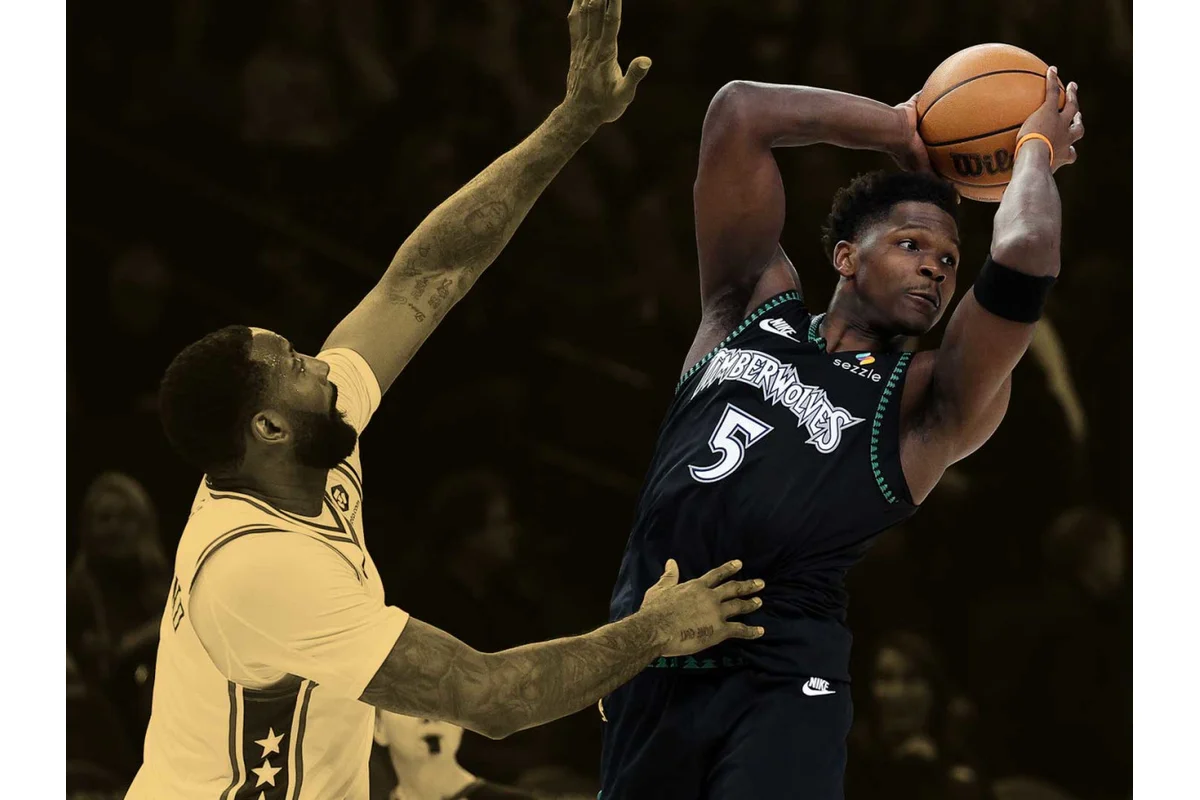
Anthony Edwards remains the standout figure within the Minnesota Timberwolves organization, embodying both their hope and challenge as the team navigates the 2025-26 NBA season. At 24, Edwards is entering a pivotal phase of his career, a period when elite players often reach their prime. His contributions are central to the Timberwolves’ performance, influencing their position in the Western Conference and their playoff prospects.
Despite his undeniable offensive talent, Edwards carries a significant responsibility for the team’s overall execution, especially on defense, where consistency remains elusive. This balance shapes the Timberwolves’ trajectory as they aim to build on recent consecutive trips to the Western Conference Finals.
Assessing Team Progress and Defensive Challenges
The Timberwolves stand sixth in the Western Conference as they return from the All-Star break, mirroring last season’s finish. Head coach Chris Finch expressed tempered expectations during a recent press conference, highlighting that the team feels they should be further along in development. He pointed out inconsistent defense and a lack of fully leveraged bench depth as areas needing improvement, despite a relatively healthy roster and new acquisition Ayo Dosunmu bolstering reserve strength.
Finch remarked,
“So, I don’t know if we’re better. We’ll measure that at the end of the season. But we know what we need to be when we are a good team. And sometimes we deviate from that.”
When pressed on Edwards’ defensive commitment during this critical late-season stretch, Finch noted,
“Absolutely. I mean this is 26 games, one-third of your season left. This is the time — he has the capacity to be the best two-way player in the league. And when he is playing that way we are a whole other team, defensively. So he has really got to lean in and lead us in that way.”
Defensive Struggles Highlighted in Recent Matchup
Despite Finch’s emphasis on defense, Edwards often struggles to maintain focus on that end of the court. In the Timberwolves’ first game back from the break against the Dallas Mavericks, Edwards’ defensive lapses were evident throughout the first half. Several notable plays included him being beaten off the dribble by smaller guards, neglecting assignments in the corners, and failing to box out effectively, which resulted in easy scores for the opposition.
A notable instance came when Edwards gave a slight shove to Naji Marshall just after a shot release, creating a three-point play opportunity for the Mavericks. Such miscues continued: Khris Middleton used a spin move to score easily over Edwards, and the Mavericks took advantage of the Wolves’ defensive shortcomings for multiple baskets in transition and half-court sets.
Commentator Richard Jefferson summed it up during the broadcast:
“He thought he was going to get more of a contest than he did.”
Nevertheless, the Timberwolves held a 12-point lead at halftime, benefiting from their own offensive firepower and opponent’s poor shooting. Edwards contributed 20 points during his 18:51 minutes on the court but remained inconsistent defensively.
The Impact of Edwards’ Defensive Engagement on Team Performance
The inconsistency of Edwards’ defensive effort has been a persistent theme throughout his career but has grown more pronounced as the Timberwolves strive for a championship-caliber identity. This season, statistical analysis shows the Wolves allow 6.6 more points per 100 possessions when Edwards is playing than when he is on the bench — the largest gap of his career. This reflects his influence on the team’s defensive efficiency and highlights the risk associated with defensive lapses.
Offensively, however, Edwards compensates, as the Wolves score 6.1 more points per 100 possessions with him on the court. His overall net rating remains negative (-0.5), indicating that the defensive inconsistencies significantly reduce his positive offensive impact.
The juxtaposition of offensive brilliance and defensive underperformance creates a paradox, complicating the Wolves’ bid to achieve a more balanced and successful team dynamic.
Edwards’ Role in Shaping Team Identity and Playoff Outlook
It is an accepted maxim in the NBA that a team often takes on the personality of its superstar. This idea helps explain why the Timberwolves have managed surprising wins against top Western Conference teams like the Oklahoma City Thunder and the San Antonio Spurs while struggling against lower-ranked opponents. Edwards’ defensive intensity fluctuates alongside the stakes of the contest, oscillating between noticeable lapses in less high-profile games and exemplary performances in critical moments.
This duality was clear in the final quarter of the Mavericks game, where Edwards energized a previously stagnant offense. After being subbed in with nearly seven minutes remaining and the Timberwolves leading 96-88, Edwards quickly hit a step-back three-pointer and followed with a series of impressive moves, sinking floaters and finishing strong around the rim.
While not all of these plays occurred during official “clutch” time — defined as the final five minutes of a close game or overtime — they showcased his evolving ability to perform under pressure and helped the team regain control in the closing moments.
Marked Improvement in Edwards’ Clutch Offense
Last season, Edwards’ clutch performances raised doubts, as his shooting percentages and overall team results in those moments left room for improvement. However, coming into the current season, coach Finch identified enhancing Edwards’ ability to execute reliable offensive moves in high-pressure scenarios as a top priority.
“We have got to get Anthony to different spots on the floor, where he feels comfortable with a go-to move,”
Finch said during the preseason.
Edwards has delivered on this mission, showing significant strides in his footwork and shot selection. He has developed a versatile offensive arsenal that includes midrange pull-ups, turnaround jumpers, step-back threes, and aggressive drives to the basket. This diverse skill set forces defenders into difficult choices, increasing his effectiveness in crucial moments.
In clutch situations this season, Edwards is shooting 75% on two-pointers and approximately 36.7% from three-point range, resulting in a 59.5% overall field goal percentage and a 69.5 true shooting percentage—the highest among players with a similar volume of attempts. The Timberwolves hold an 11-9 record in clutch games when Edwards is on the floor, underscoring his growing influence in tight contests.
After the Mavericks game, Finch praised his star player’s dedication. “Ant was awesome,” he said, explaining how Edwards
“put the work in during the summer; no doubt about it. It was the one thing he wanted to do this year, was to get himself a repeatable shot, in the midrange most likely. Be able to get to it time and again and clean.”
Finch emphasized,
“Generally he has tried, up until this season, to close with the three-point shot. And now he is mixing it up, getting to his clean midrange, to the rim, he can take his three, too. So, he knows. He is using the clock for the most part, really smart, taking his time to go. He is aware when they are coming to double and wait, he has got a good feel on when to invite that, and that initiates the offense too.”
Room for Growth in Defensive Focus and Accountability
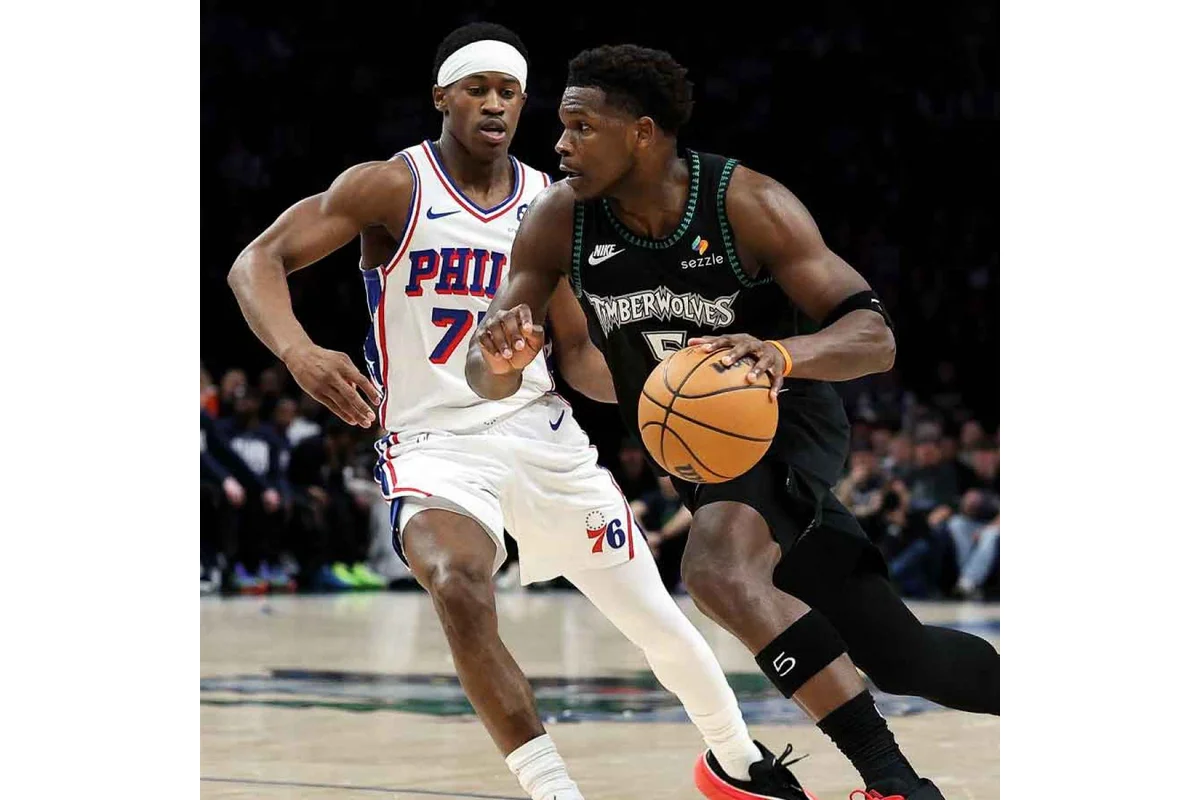
Despite offensive advances, Edwards’ defensive issues remain a concern. This was apparent in a subsequent loss to the Philadelphia 76ers, where key players Rudy Gobert and Naz Reid were unavailable. The 76ers capitalized on the Timberwolves’ lack of defensive pressure, shooting an impressive 56.8% from three-point range, facilitated by so-called “short closeouts” — defensive players failing to fully contest shooters.
When asked about the defensive breakdown, Edwards exhibited accountability, saying,
“Most of the time it was me.”
Such candidness is characteristic of him but raises questions about the team’s ability to consistently enforce accountability and improvement.
Coach Finch’s reluctance to discipline Edwards publicly or reduce his playing time is understandable, given that Edwards is the franchise’s cornerstone and primary draw for fans. According to sources, Edwards accepts the criticism privately and maintains a strong relationship with the coaching staff, along with teammate Julian Randle allied in their commitment to the system.
Significance of Edwards’ Development for Timberwolves’ Future
Anthony Edwards has made remarkable progress every season, refining different facets of his game. However, the Timberwolves’ aspirations for a championship hinge on his emergence as a truly elite two-way player, excelling equally on offense and defense. Until he consistently demonstrates that level of defensive engagement, the team’s ceiling will remain limited despite offensive firepower.
As Minnesota enters the vital final stretch of the regular season and looks ahead to a challenging playoff journey, Edwards’ growth as a leader and on-ball defender will likely determine the Timberwolves’ fate. His ability to balance offensive brilliance with defensive discipline is crucial not only for team success but for cementing his legacy within Timberwolves history alongside greats like Kevin Garnett.
