
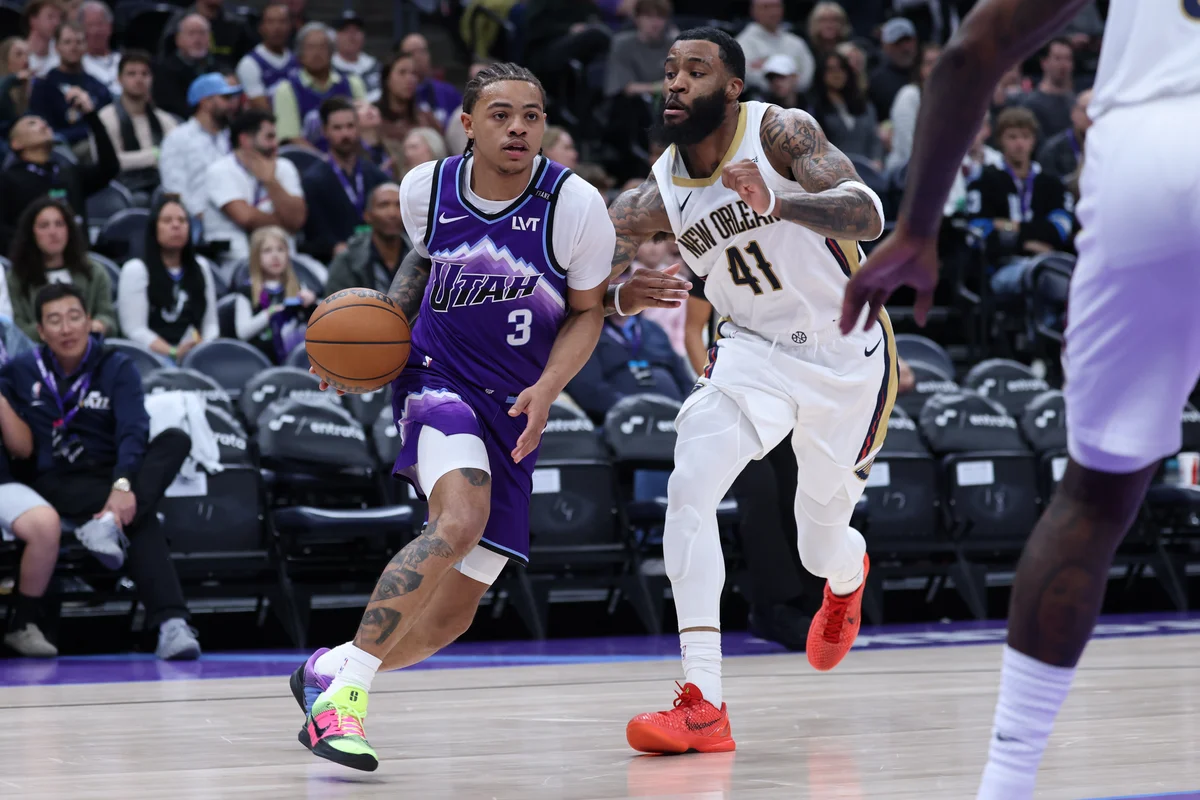
Keyonte George returned to the Utah Jazz lineup on Saturday against the New Orleans Pelicans, marking his first game back since February 7. His return brings hope amidst the team’s difficult stretch late in the season, although the Jazz fell 115-105 to the Pelicans in this matchup.
Despite George’s presence, the Jazz are still facing challenges, as evidenced by their current reliance on two-way players to fill starting roles. With 22 games left this season, the team is navigating a period defined by experimentation and tough matchups.
Keyonte George’s Recovery and Performance Update
George had a turbulent start to February, initially sidelined by a sprained left ankle. When he returned on February 7, he unfortunately injured his right ankle after just 13 minutes of play. This sequence left him frustrated due to his inability to contribute consistently on the court.
To be completely honest, there was a little frustration,
George said. “I just love the game, these guys, the locker room and everybody on staff. They feel like family to me, so when I can’t give everything that I feel like I can give, I don’t know.
I just didn’t know how to feel on game days…I didn’t know what to do with myself.
During his sidelined period, George avoided excessive basketball viewing to maintain his mental health, choosing instead to watch the television series Scandal. He even gave a nod to the show’s protagonist, saying, “Shout out Olivia Pope,” referencing Kerry Washington’s character.
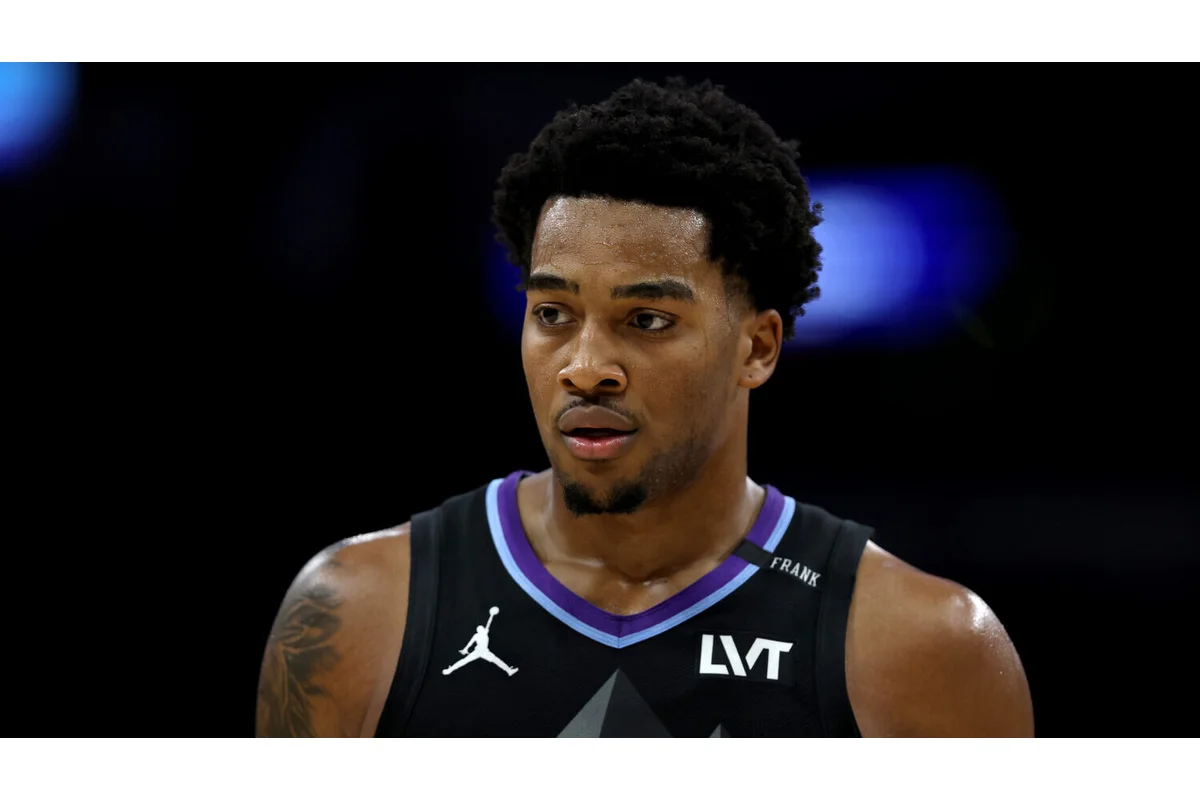
Upon his return, George was limited to around 23 minutes of playtime, during which he scored 17 points and provided four assists. The team’s coaching staff plans to continue restricting his minutes between 20 and 24 for the near future to ensure a full recovery. George reported feeling strong and free of soreness during his return game.
Two-Way Players Have Increased Roles Amid Team Rotation
Adding to the Jazz’s challenges, the starting lineup featured a significant presence of two-way players including Blake Hinson and Elijah Harkless, who contributed 28 minutes off the bench. Alongside them were Ace Bailey, Kyle Filipowski, and Cody Williams, reflecting the depth testing underway as the team evaluates its roster.
This extended playtime for two-way contract players reveals the Jazz’s strategy to develop emerging talent during a tough phase of the season. Such opportunities for young players are relatively rare and can be critical for their growth and for the team’s long-term plans.
As shown by the Oklahoma City Thunder’s approach with Lu Dort, who rose from a two-way contract to becoming an All-Defensive First Team starter on a championship team, these chances can uncover valuable contributors.
They’re understanding and continuing to form their NBA identity,
Jazz head coach Will Hardy said regarding the two-way players. “EJ is probably a little bit further along than Blake, just based on some opportunity, and his identity seems to be relatively clear in this moment.
I think that Blake gives us some great spacing offensively, and I think when Blake plays off the catch, he’s been dangerous for us.
The current usage of these players will have lasting implications for roster decisions, including which athletes deserve increased playing time, those who may earn standard contracts, and others who might not remain with the team. This phase serves not only the immediate competitive goals but also shapes the Jazz’s future lineup construction.
Looking Ahead: Balancing Recovery and Developing Talent
Keyonte George’s return provides a boost to the Utah Jazz, yet the team continues to face a challenging final stretch this season. Managing George’s recovery carefully will be vital to maximizing his impact while nurturing the potential of two-way players like Blake Hinson and Elijah Harkless remains a priority for the coaching staff.
As the remainder of the season unfolds, how the Jazz balance veteran health and rookie development will influence their competitiveness and roster strategies moving forward. The experimentation seen in recent games reflects the organization’s forward-looking approach during a phase of transition and rebuilding.
