
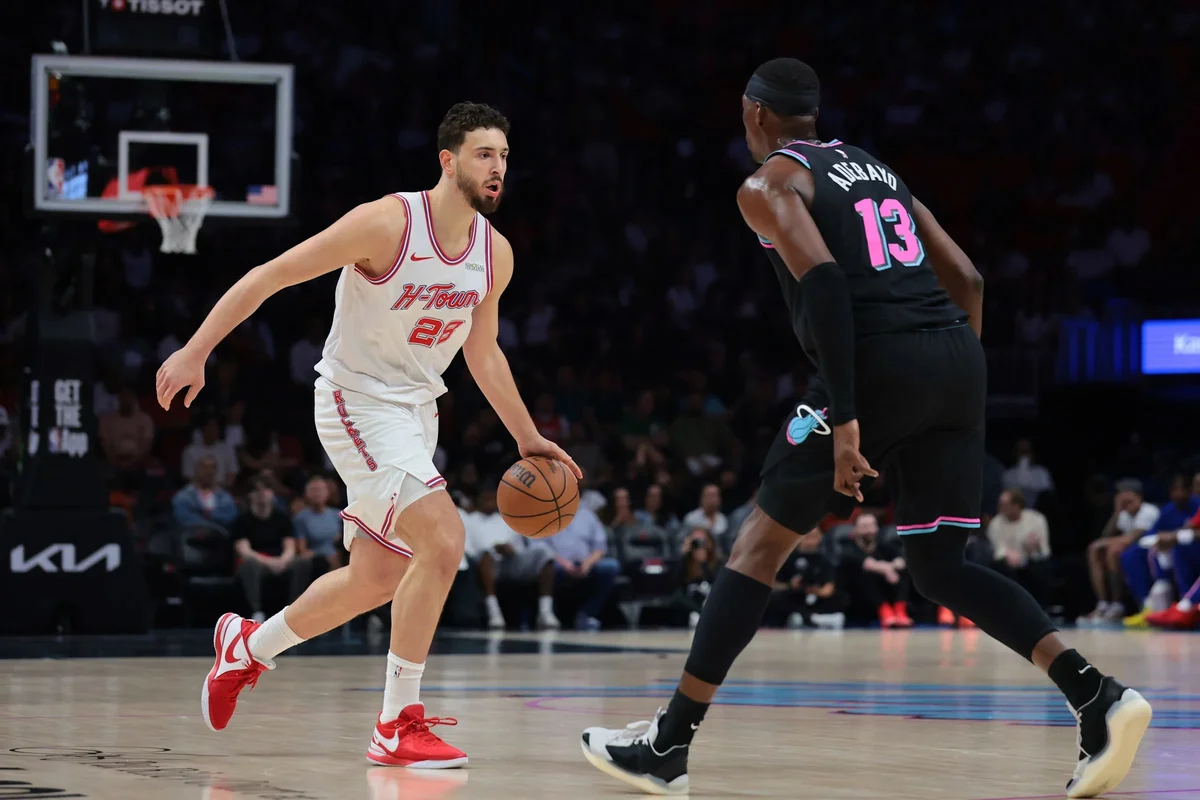
Houston Rockets center Alperen Sengun struggled through another difficult outing on Saturday against the Miami Heat, raising concerns about his ongoing inefficiency. Despite logging 35 minutes, the 23-year-old Turkish player managed just 13 points, six rebounds, and three assists, shooting 42.9% from the field while committing four fouls in a 115-105 loss.
This performance has reignited discussion around whether Sengun’s inefficient play is an issue the Rockets can address internally or if it reflects deeper limitations in his style and role on the team.
Evaluating Whether Sengun’s Efficiency Issues Reflect Coaching or His Style
Watching Sengun on the court reveals a unique player who blends the physicality of a center with the playmaking of a point guard. Averaging 20.2 points, 9.1 rebounds, and 6.3 assists per game this season, his creative passing and scoring ability earned him a spot in the All-Star game as an injury replacement.
However, Sengun’s game comes with notable flaws that have accompanied him since before his NBA draft. His defensive limitations stem from a lack of athleticism, which makes it difficult for him to effectively guard perimeter players or challenge shots near the basket with explosive contests. Unlike tall and long defensive specialists such as Marc Gasol, Brook Lopez, or Tim Duncan past his prime, Sengun lacks the wingspan and quickness to rely solely on positioning and reach.
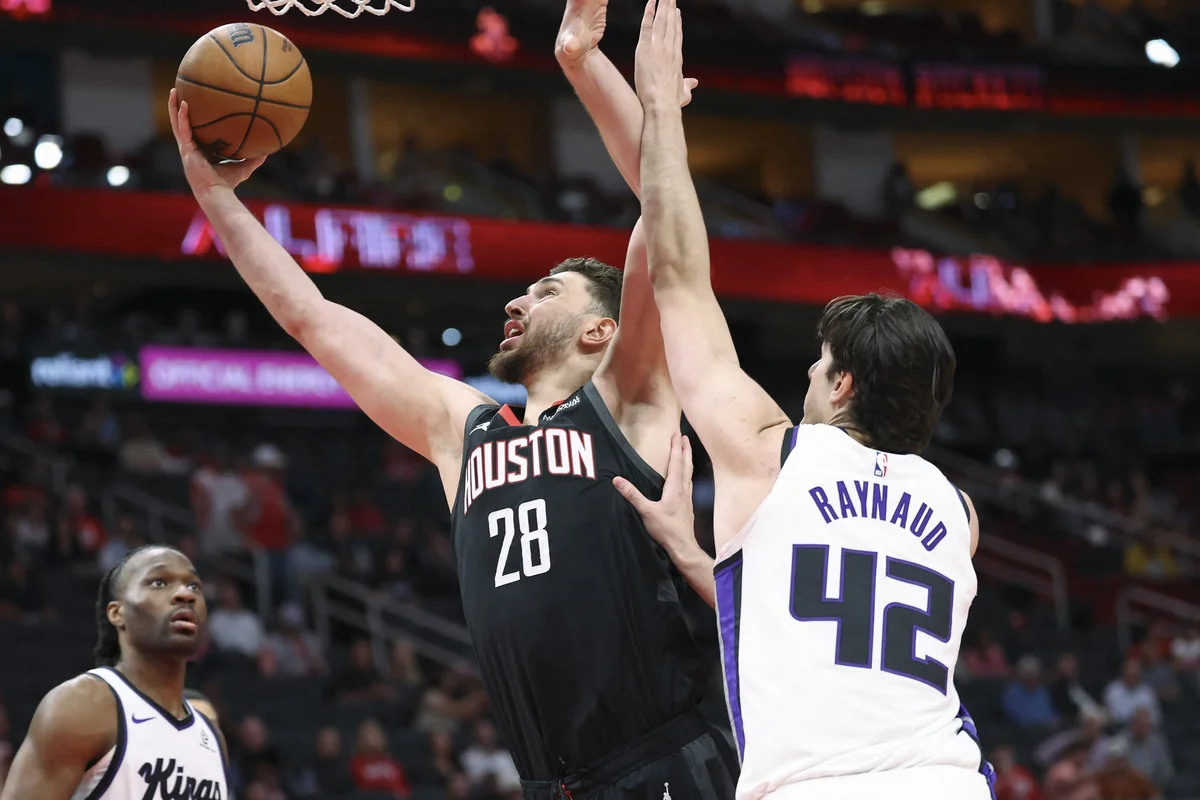
Another critical shortcoming is his inconsistent shooting range. Although he showed potential with a 5-of-8 performance from three-point range in the first game of the season, his overall three-point shooting percentage remains low at 29.2% on 1.8 attempts per game, with most of those attempts classified as wide open. These deficiencies complicate Houston’s roster construction and offensive spacing, especially when pairing him with other non-shooters like Amen Thompson. Even collaboration with Jabari Smith Jr., who has battled injuries, has not sufficiently alleviated this spacing problem.
Understanding the Statistics Behind Sengun’s Inefficiency
Sengun’s inefficiency is particularly notable considering his role as a post-up specialist. Since returning from injury, his effective field goal percentage (eFG%) has dropped to 49.3% over 24 games, with a season average of just 51.6%. This places him 32nd among NBA players with a usage rate above 25% and over 30 minutes per game, ranking below expectations given his proximity to the basket on most shots. Notably, players like Cade Cunningham and Devin Booker trail him despite their differing shooting profiles.
A large part of Sengun’s problem stems from his tendency to over-complicate scoring attempts. He frequently pump-fakes when defenders are not close and opts for difficult baby hooks when simpler bank shots would suffice. His intense drive to reach the rim leaves him off-balance at the moment of shooting, which hampers his finishing efficiency.
Despite these issues, Sengun’s touch around the basket is still respectable. He takes 9.8 shots per game within eight feet of the rim—the fourth-highest in the NBA—and converts at a solid 59.3% rate. From mid-range (8 to 16 feet), however, his shooting drops dramatically to 40.7%, one of the lowest marks among players with comparable volume, only surpassing Anthony Davis and Paolo Banchero in inefficiency.
Potential Adjustments to Improve Sengun’s Performance
Sengun’s scoring struggles partly arise because he is often forced to take contested longer-range shots when routes to the basket close, a situation that also contributes to his 3.2 turnovers per game. This pattern raises the question of whether changes in Houston’s offensive system are necessary to unlock his full potential.
Coach Ime Udoka faces the challenge of creating more offensive diversity to prevent the Rockets from relying heavily on isolation plays by Sengun and Kevin Durant. Currently, Houston ranks fifth in the league for isolation possessions but manages only middling efficiency in these sets. The absence of a reliable starting point guard further complicates efforts to generate creative offensive looks.
To capitalize on Sengun’s unique skills without overburdening him, Houston’s coaching staff needs fresh strategies that emphasize ball movement and spacing. Given Sengun’s limitations, he is unlikely to ascend into the NBA’s elite tier, but targeted adjustments could reduce his inefficiency and allow him to reach the highest level feasible for his game. Fans and analysts alike anticipate that changes might need to come with a future coaching regime rather than under Udoka’s current direction.
