
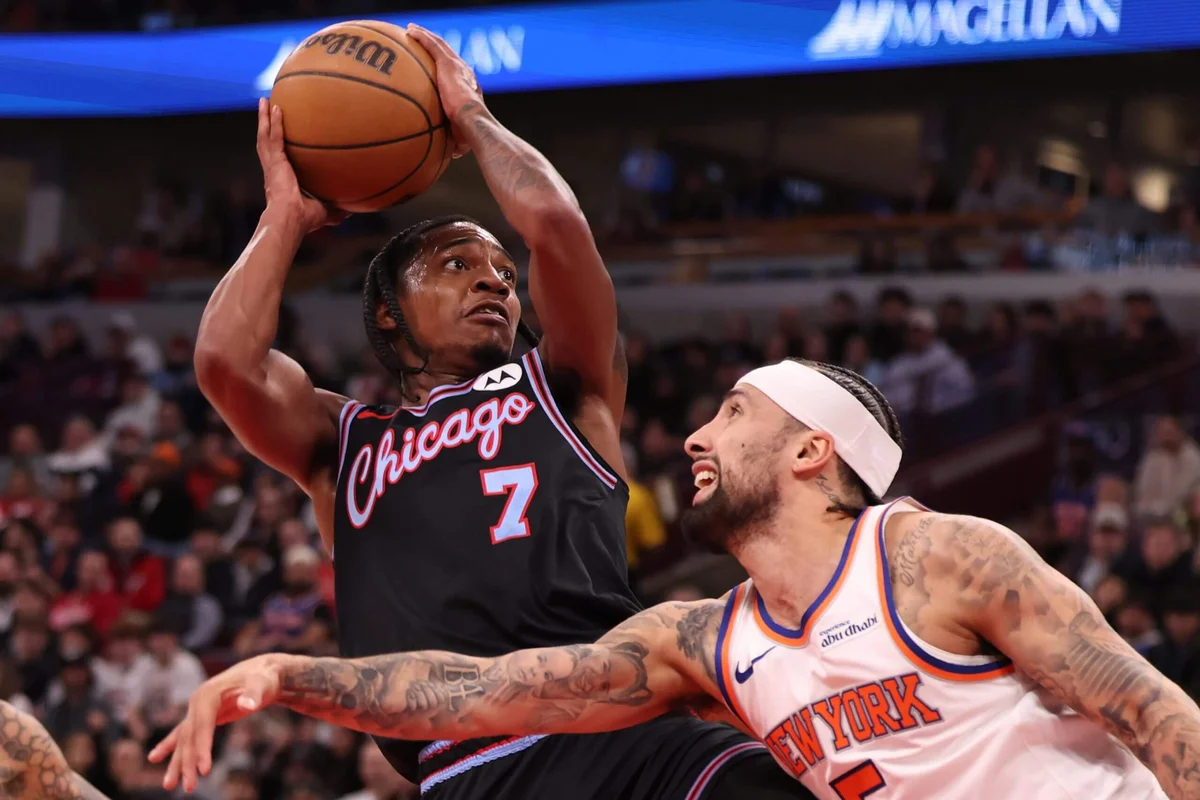
SAN FRANCISCO — Rob Dillingham has not been shooting the ball well since joining the Chicago Bulls, a problem linked to a concealed wrist injury. The team and Dillingham are aware of the issue, which stems from two ganglion cysts on his shooting wrist. Coach Billy Donovan explained before the Bulls’ 130-124 overtime victory over the Golden State Warriors that the team cannot work on improving Dillingham’s shot until the cysts are treated.
Donovan described the injury in what appeared to be an offhand comment, unaware that this detail had remained hidden from public view for nearly five weeks. This revelation sheds light on the growing difficulties the Bulls face with injuries among their most critical trade deadline additions.
Details on the Wrist Condition Affecting Shooting Performance
“It’s nothing majorly serious, but he’s had some wrist issues that are going to need to get resolved in the offseason,”
Donovan stated.
“He doesn’t feel right all the time shooting the basketball. I think that he’ll be fine once that clears itself up, but it’s been something that he’s been battling and dealing with.”
Upon closer inspection, the ganglion cysts on Dillingham’s shooting wrist are visible. Although the cysts are harmless medically, they significantly reduce his wrist’s range of motion, impairing the flexing and snapping motions essential for effective jump shots. To manage the discomfort and avoid injury during games, Dillingham has worn wrist wraps—alternating between black and white—though these provide little more than psychological reassurance.
Team’s Prior Medical Attempts and Game Impact
Dillingham arrived in Chicago at the trade deadline already carrying the cysts. The Bulls’ medical staff tried several injections to alleviate the condition, but these efforts failed to produce lasting improvement. Because the cysts did not endanger his ability to play, the team has omitted listing him on the injury report despite the pain and loss of shooting effectiveness.
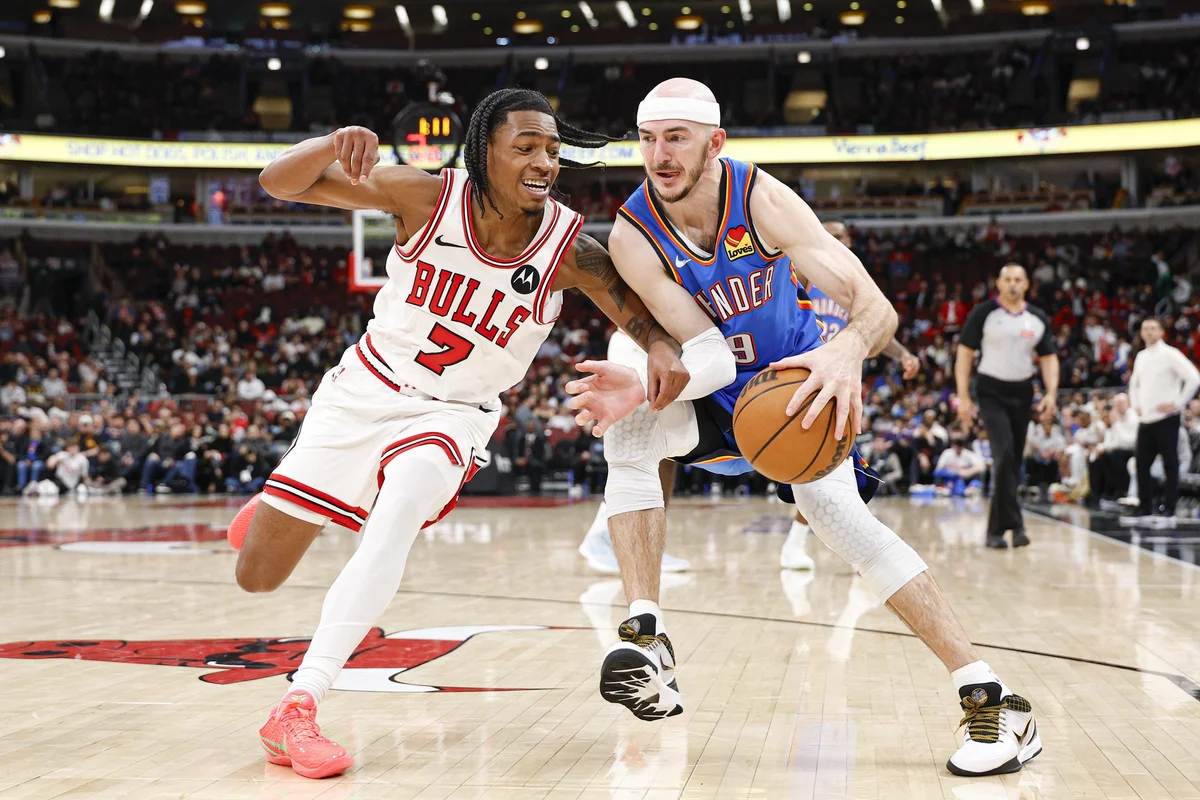
On the court, the consequences are clear. As a rookie, Dillingham made 33.8% of his three-point shots. With Minnesota Timberwolves, that rate dropped to 28.8% over 47 games. Since joining the Bulls, his shooting has declined further, with only six made three-pointers on 29 attempts, a 20.7% success rate. In the game against the Warriors, he hit just one of three attempts from beyond the arc.
Whether this decline is permanent remains unknown. The Bulls currently lack a reliable way to pinpoint the root cause or decide if the injury is fixable until after the cysts are drained or removed.
Additional Injury Problems Compounding the Bulls’ Roster Challenges
The recent game highlighted critical absences on both sides, with the Warriors missing stars Steph Curry and Jimmy Butler, and the Bulls sidelined key players including Isaac Okoro, Collin Sexton, and Patrick Williams. However, the Bulls face broader issues beyond individual absences.
Of the seven players acquired during the trade deadline, only four—Jaden Ivey, Anfernee Simons, Collin Sexton, and Rob Dillingham—are considered potential cornerstones for the future, but all are dealing with injury setbacks. Simons suffered a fractured wrist during Boston Celtics training camp that worsened shortly after joining the Bulls, resulting in an extended absence with no return date confirmed. Although he traveled to Golden State with the team, he remains unable to play.
Ivey’s health also presents uncertainty. After playing limited minutes early with Chicago, he was sidelined from a game on February 19 due to a coach’s decision, following a series of knee examinations. His recovery from a severe fibular fracture sustained last season with the Detroit Pistons continues to be slow, and it remains unclear whether he will return this season or participate as a restricted free agent this summer.
Bulls’ Risky Trade Deadline Decisions and Roster Uncertainty
Despite these injuries, Chicago’s front office committed to these acquisitions ahead of the trade deadline, conducting medical evaluations in time to alter agreements if necessary. Still, the Bulls received no compensation for absorbing the injured players, effectively acquiring burdensome assets from Eastern Conference rivals such as the Pistons and Celtics.
Furthermore, Sexton suffered a nerve bruise in a recent game against the Sacramento Kings, forcing him to miss the following contest, though this is not expected to be long-term.
The Bulls had clear goals following the trade deadline: to lose as many games as possible while using the remaining schedule to evaluate roster talent for Chicago’s future. With a 3-11 record since the deadline, they appear on track to meet the losing objective. However, injuries have severely compromised their ability to assess the new players’ true potential and fit for the team’s long-term plans.
Coach Donovan admitted limited opportunity to evaluate prospects like Ivey and Simons fully, leaving the Bulls’ future direction fraught with uncertainty and risk as they navigate this challenging stretch.
