
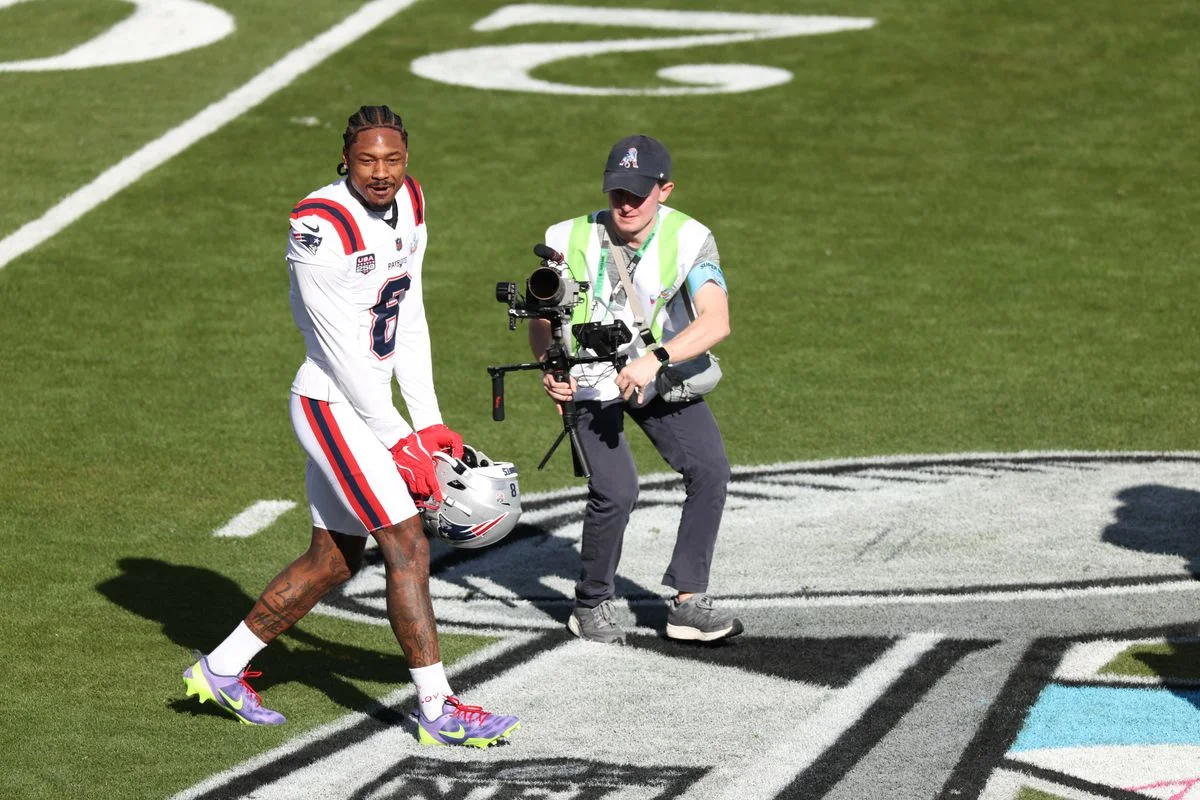
Stefon Diggs, the wide receiver for the New England Patriots, once again faced backlash after choosing to turn his back to the American flag during the National Anthem at Super Bowl LX. This incident occurred at Levi’s Stadium as singer Charlie Puth performed ‘The Star-Spangled Banner’ before a packed audience, reigniting debate around Diggs’s actions amid ongoing national conversations about the anthem. The reaction was swift and vocal, underscoring the divisive nature of the gesture.
Details of the Anthem Incident and Public Reaction
During Charlie Puth’s rendition, Diggs was seen jumping up and down while facing the stands instead of the field or flag, drawing immediate criticism from fans. Following the performance, Diggs walked directly to the Patriots’ bench and shot intense looks toward the crowd. The confrontation unfolded shortly before the halftime show, which featured artist Bad Bunny and was also a subject of commentary by former President Donald Trump.
Several NFL viewers expressed their disapproval across social media platforms. One user on X described Diggs’s behavior as
“Totally disrespectful, hopefully coach will have a serious discussion with that player! ! !”
Another added,
“Least deserving person to be there tbh.”
Despite the negativity, observers noted that Diggs’s gestures appear more habitual than politically motivated, differing from protests like Colin Kaepernick’s kneeling.
Consistency in Diggs’s Anthem Behavior and Past Incidents
This was not the first time Diggs turned away from the flag during the National Anthem. In the Patriots’ AFC Conference Championship victory over the Denver Broncos at Mile High Stadium, CBS cameras caught him facing the crowd instead of the flag as singer Nathaniel Rateliff performed. This earlier incident also ignited criticism from viewers who labeled his actions as disrespectful. Comments ranged from mockery, such as
“Stefon Diggs turning his back to the anthem and flag is hilarious. What a moral high ground he has,”
to confusion and frustration expressed by others questioning the purpose of his behavior.
Pre-Game Leadership and On-Field Performance
Prior to the controversial anthem moment on Super Bowl Sunday, Diggs provided an energetic pre-game speech aimed at motivating his team. Urging teammates to unite and execute with passion, he said,
“Bring it in tight. Bring it in tight now,”
rallying the squad around a shared goal. His message stressed the importance of winning over merely participating, encapsulated in his statement,
“90% of them motherf—— said, ‘I want to win a Super Bowl, not just go.’”
Since joining the Patriots with a notable contract last March, Diggs has become a vocal leader in the locker room. Alongside quarterback Drake Maye, his reliable receiving has proved pivotal throughout the postseason, tallying 11 catches for 73 yards and a touchdown heading into the Super Bowl.
Impact of Diggs’s Anthem Actions and Future Implications
Stefon Diggs’s repeated choice to turn his back during the anthem continues to fuel debate about respect and expression in sports. While some interpret the gesture as a routine rather than a protest, the visible displeasure among fans reveals its emotional resonance. As a key figure in the Patriots’ roster and a vocal leader, Diggs’s behavior draws significant attention, potentially influencing team dynamics and public perception.
The ongoing controversy reflects broader tensions within the NFL and American sports culture regarding patriotism and activism. How teams, fans, and league officials respond in the future could shape the boundaries of player expression during nationally symbolic moments like the anthem.
