
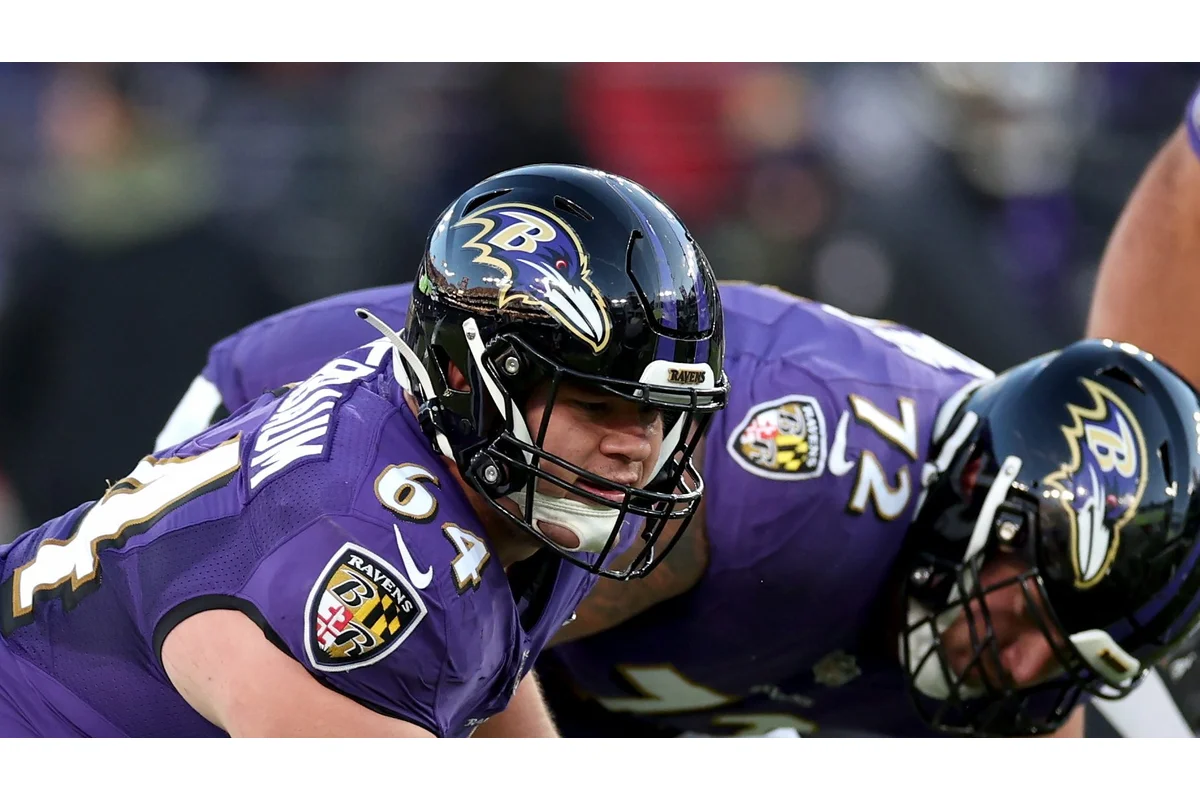
The Baltimore Ravens are at a critical juncture as they enter contract negotiations with center Tyler Linderbaum, whose performance has made him a valuable asset. Reports from Daniel Popper of The Athletic suggest that Linderbaum, 26, is projected to command a four-year deal worth approximately $71 million. This figure closely trails the $72 million contract of Kansas City Chiefs’ center Creed Humphrey, highlighting the competitive market. A commitment at or above this range would firmly establish Linderbaum among the top-paid centers in the league, underlining his importance to the Ravens’ roster and game plan.
Evaluating Linderbaum’s Strengths and Areas for Improvement
Tyler Linderbaum, selected in the 2022 first round, brings a unique combination of athleticism, versatility, and strength to his role, particularly as a run blocker. Popper emphasizes Linderbaum’s capability to execute difficult angles and excel in dynamic situations such as outside-zone runs, pulling, and screen plays. While not considered elite in pass protection, Linderbaum possesses keen awareness to diagnose defensive stunts and deceptive movements, providing functional consistency in this area.
Despite occasional challenges when defenders penetrate close to his chest and inconsistencies in his initial contact, Linderbaum’s pass protection is serviceable, while his run blocking ranks among the league’s best. The Ravens leverage these strengths to complement their offensive approach, using his run game dominance to support a team built around mobility and quick decision-making.
How Baltimore’s Offensive Strategy Maximizes Linderbaum’s Impact
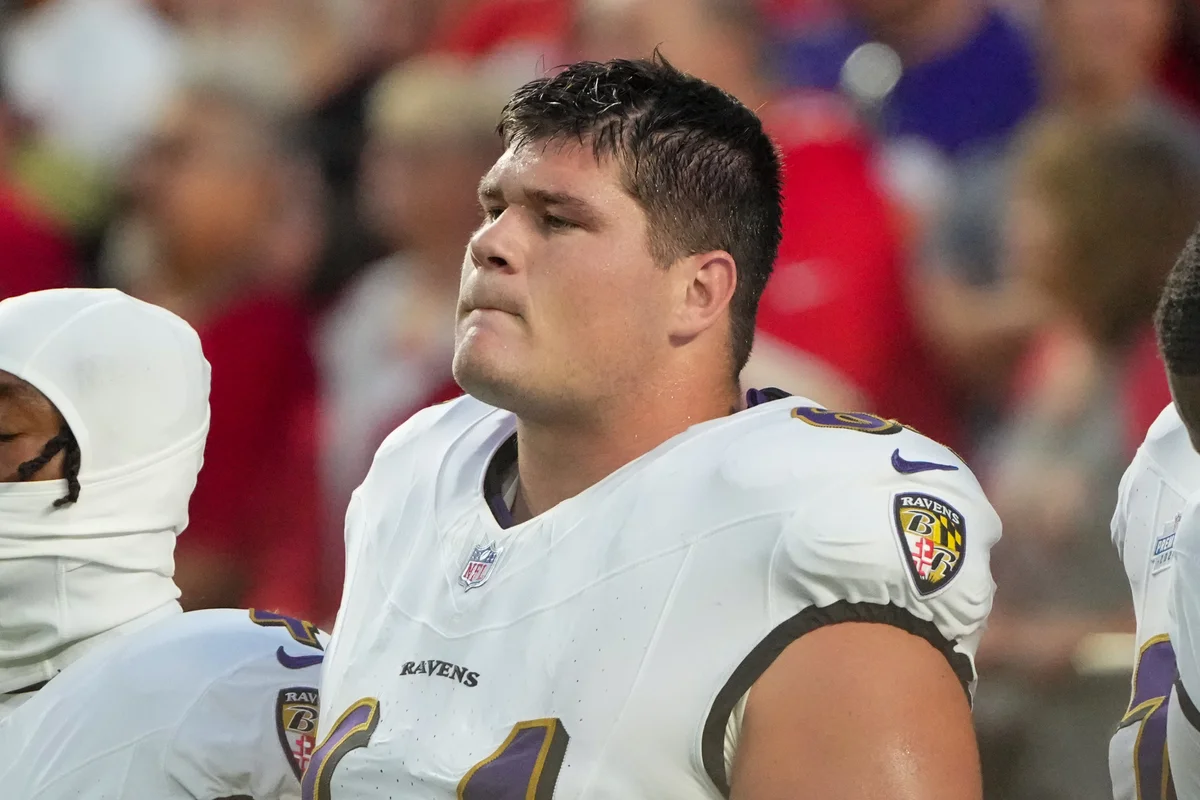
The Ravens’ offense, heavily oriented towards the run and led by mobile quarterback Lamar Jackson, is tailored to optimize Linderbaum’s skill set. Jackson’s style reduces the center’s pressure to excel as an impenetrable pass protector since the quarterback often opts to evade pressure by extending plays or scrambling. This strategy allows wideouts more room to separate and Jackson to capitalize on his elusiveness.
Linderbaum’s role as a powerful run blocker remains vital. Rather than relying on sheer size to physically dominate defenders, he uses technique grounded in leverage and positioning to open running lanes. This approach fits the Ravens’ offensive identity, where physicality meets agility at the line of scrimmage.
Unconventional Techniques Drive Linderbaum’s Success Despite Size
Contrary to the typical image of a dominant run blocker—usually massive linemen exceeding 330 pounds—Linderbaum thrives through exceptional technique, honed in part from his background as a high school wrestler in Iowa. Standing 6-foot-2 and weighing 305 pounds, he is considered somewhat undersized for an interior lineman. Still, his quickness, leverage, precise hand placement, and strong leg drive allow him to win engagements even against larger defenders.
This athleticism is consistently reflected in plays where Lamar Jackson finds opportunities in the pocket’s middle, controlled by Linderbaum’s presence and reliability.
Giants Head Coach John Harbaugh Emerges as Potential Challenger
Among teams that could challenge the Ravens in retaining Linderbaum is the New York Giants, whose head coach John Harbaugh—a former Ravens assistant—has closely followed Linderbaum’s rise. Harbaugh aims to bring a similar toughness to New York’s roster and views Linderbaum as a key piece for that vision.
However, the Giants’ salary cap, around $7.7 million according to Spotrac, limits their immediate ability to offer a deal comparable to Baltimore’s expectations. With this gap, Harbaugh would need to restructure multiple contracts swiftly to create sufficient space.
Contract Restructuring and Cap Space Create Complex Negotiation Landscape
On the Baltimore side, the challenge is equally significant. Owner Steve Bisciotti has publicly expressed a desire for quarterback Lamar Jackson to restructure his contract to generate additional cap space, signaling the urgency to accommodate a sizable deal for Linderbaum. Although the Ravens face competition from teams with more flexible cap situations, general manager Eric DeCosta is positioned to negotiate a contract that aligns with team goals and salary constraints.
Should these negotiations stall, the Ravens risk entering a scramble mode as the free agency period progresses, potentially losing a key contributor to their offensive line.
Implications for the Ravens’ Future Offensive Stability
Linderbaum’s contract negotiations represent more than just a financial decision; they embody the Ravens’ commitment to maintaining an offensive identity built on run dominance and quarterback mobility. His ability to blend wrestling-honed techniques with athleticism underpins the team’s strategy and Lamar Jackson’s success.
Securing Linderbaum at a competitive salary would reaffirm Baltimore’s intent to protect its core players and continue executing a dynamic offense. Conversely, failure to do so would disrupt continuity on the offensive front and force the organization to rethink its approach moving forward.
Daniel Jeremiah joked on his conference call today that pretty much every team in the league seems to think they are fixing their O-line issues by signing center Tyler Linderbaum. Says if he could switch jobs with anyone for the next couple months, it would be Linderbaum's agent.
— Adam Hill (@AdamHillLVRJ) February 20, 2026

