
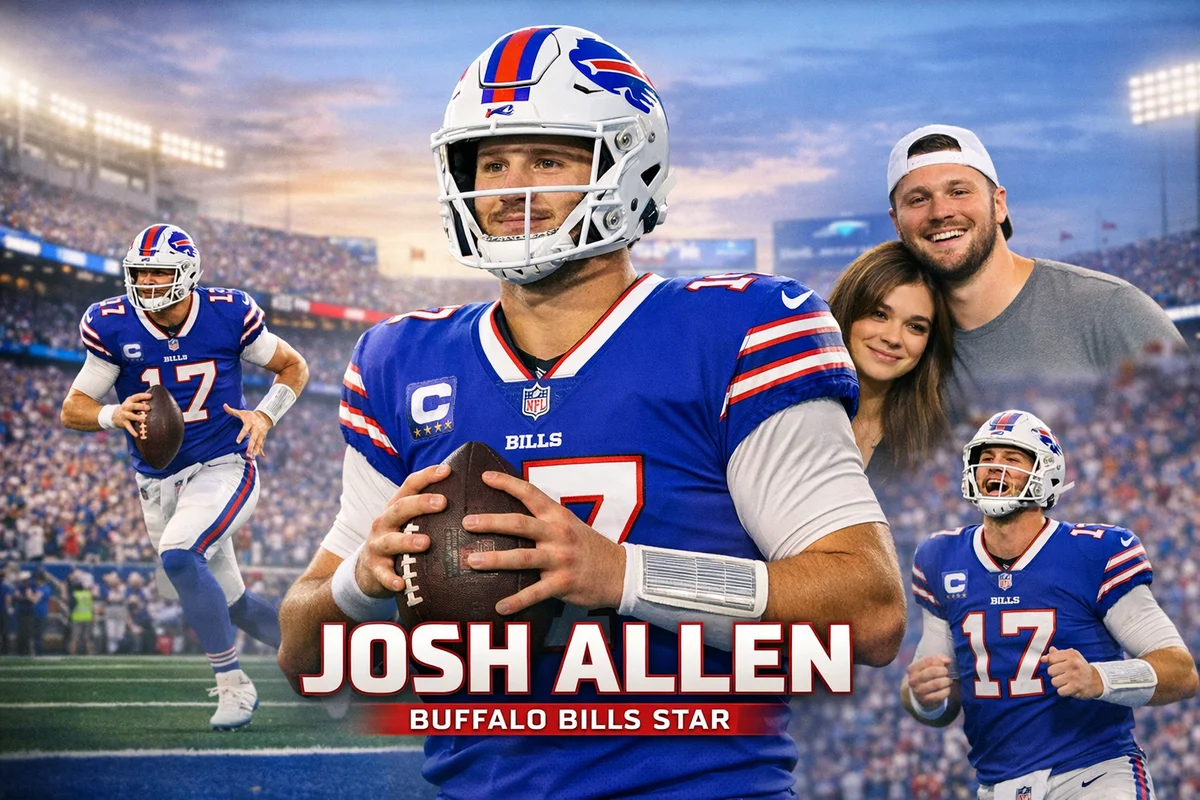
At the 2026 NFL Combine in Indianapolis, Brandon Beane, president of football operations and general manager of the Buffalo Bills, offered a detailed look into the organization’s strategy for assembling the Buffalo Bills 2026 roster. Beane outlined the team’s approach to the draft, cap management, new coaching influences, and roster construction aimed at building a competitive squad for the upcoming season.
Draft Strategy and Player Evaluation for the 2026 Class
Beane emphasized the importance of thorough evaluation for draft prospects, noting that he leverages a variety of scouting opportunities including the combine, Senior Bowl, college Pro Days, and the 30 official visits allowed per NFL team.
“Sometimes that’s just breaking bread, sometimes it’s on the whiteboard, sometimes it’s watching plays and you just pick up so many things,”
Beane explained, highlighting the significance of multiple interactions with players to form a comprehensive judgment.
Assessing the 2026 draft class specifically, Beane identified it as less top-heavy compared to the anticipated 2027 class. Although it is early to assign firm first-round grades, he expressed confidence in the depth across the class and the potential to find valuable contributors in later rounds.
“I definitely think there will be players day two and day three that can help us in various roles, whether it’s compet[ing] for a start [or] a really good backup,”
Beane said.
“… We’ll find good players with that first round pick as well. You just don’t know if you’re technically going to be selecting out of your first round. It’s early to know that.”
In preparation for draft night, Beane stressed the importance of constructing a detailed and flexible draft board. He remarked,
“It’s really important to build your board right the next couple of months and let it speak to you what you need to do.”
The Bills’ draft tactics include an aggressive stance when necessary. Beane described scenarios where trading up to secure highly-rated players is justified, especially given the drop-off from a top 10 grade to mid-first round selections.
“You’ve got a grade that you would say, ‘That’s a top 10 grade,’ and you’re at pick 18 to 20, and you’re going, ‘Man, there’s a big drop from there,’”
he said.
“That’s when you start to get aggressive and say, ‘I need to go up and use some assets.’”
Conversely, if the desired prospects are no longer available, Beane revealed the plan to seek assets by trading back.
“That’s the point where you start saying, ‘What assets can we gain to go back,’”
he said. Recognizing his tendency toward aggressiveness in such negotiations, Beane relies on trusted advisors to check his decisions.
“I try to put people around me to strap me down to the desk and if they think I’m getting out of line, to at least grab me before I do it and say, ‘Are you sure about this?’”
Financial Moves to Align with the Salary Cap and Free Agency Outlook
The Bills have already initiated efforts to comply with the projected salary cap, estimated between $301.2 million and $305.7 million for the 2026 season. Beane noted the team’s proactive steps, such as restructuring right tackle Spencer Brown’s contract to free approximately $10 million in cap space.
Strategic options under consideration include contract restructures, releases, extensions, and trades. Beane conveyed a cautious but comprehensive approach:
“We’re looking at every single avenue here. We have a new staff, so we’re trying to make sure we’re thinking of everything and not just rushing to decisions.”
One pending decision is the future of tight end Dawson Knox. Though not a free agent, Knox has publicly expressed uncertainty regarding his status, given his looming cap hit. Beane acknowledged the issue is unresolved but made clear the team’s interest in retaining Knox, likely under a restructured deal to accommodate salary cap constraints:
“We’d be crazy not to want a Dawson Knox back. We know we have to make it work for him and work for us, so it’s TBD at this point, like it is with some other players, too.”
Additionally, Beane discussed the upcoming free agency of two starting offensive linemen, left guard David Edwards and center Connor McGovern, both signed three years ago and pivotal in strengthening the offensive line.
“A credit to everyone involved for how those two guys panned out for us the last three seasons, and I want to thank both those guys for what they’ve done for us,”
Beane said.
While the GM would like to keep both players, he acknowledged the realities of the business and their autonomy in testing the open market.
“We’ll have a dialogue. Would we love to have them both back? Yes, obviously they did a great job for us,”
he shared. Still, Beane is preparing for all outcomes regarding retaining either or both players, explaining,
“It’s a business. There’s no hard feelings. If they go maximize their dollars and we can’t afford it … our job is to have the next Conor McGovern’s and David Edwards’ and continually do that. And so we have to have plans for both.”
Coordinating the 2026 Roster Vision Under a New Coaching Regime
The start of offseason roster planning means all NFL teams return to an even footing regardless of previous season performance. The Buffalo Bills face this with a renewed energy, driven by head coach Joe Brady and his coaching staff. Beane emphasized this is not a full teardown but a fresh approach to build on the existing foundation, integrating new schemes and personalities.
“We’ve got a new team that we have to build … Obviously, financial constraints can get in the way. You’d love to pay every player or have all the first round picks,”
Beane said.
“… It’s just trying to get us all on the same page – the collective – and start over.”
Collaboration is already underway among coaches, front office personnel, and scouts to align on which players fit the new system. Defensive end Greg Rousseau was singled out as a versatile talent whose deployment will be finely tailored. “Before they were Bills,” Beane noted, explaining how the staff evaluates talent beyond mere roster status.
Beane praised defensive coordinator Jim Leonhard’s approach:
“[Rousseau] is going to be a valuable piece. I think we’ve all decided that and it’s just a matter of how we deploy him. I love what [defensive coordinator Jim Leonhard] said is, ‘Show me the pieces we have. We’ll get him in the right spot.’”
Nickel cornerback Taron Johnson’s role may also evolve, shifting from near-constant deployment toward situational usage based on personnel and schemes. Similarly, safety Cole Bishop‘s interchangeable skill set is highly prized, offering flexibility on defense. Beane wants to find
“another Cole Bishop and pair him right there where you can do both,”
explaining that Bishop’s positioning will depend on the types of players brought in alongside him.
Ultimately, the focus remains on assembling a realistic, effective roster that energizes the Buffalo Bills’ passionate fan base.
“We’re excited about what this 2026 Bills team will be, and it’s up to us to put the right product out there to make [the fans] excited and see the vision going forward,”
Beane concluded.
Contract Decisions and Injury Updates Shaping the Team’s Future
Beane confirmed the team’s intention to exercise the fifth-year option on tight end Dalton Kincaid’s contract, a standard practice for first-round picks entering their fourth season.
“At the right time, we’ll knock that out at some point this spring,”
Beane revealed during an interview, signaling a future push for a potential contract extension.
Beane praised Kincaid’s contribution to the offense but emphasized the critical need to improve his health and availability going forward.
“Our number one thing with Dalton is to see if we can get him in a healthier fashion this year, so that we don’t have to A: miss games, and then B: limit how much he’s playing,”
he said. Kincaid has been diligent in his offseason rehab efforts, reflecting the team’s commitment to maximizing his on-field impact.
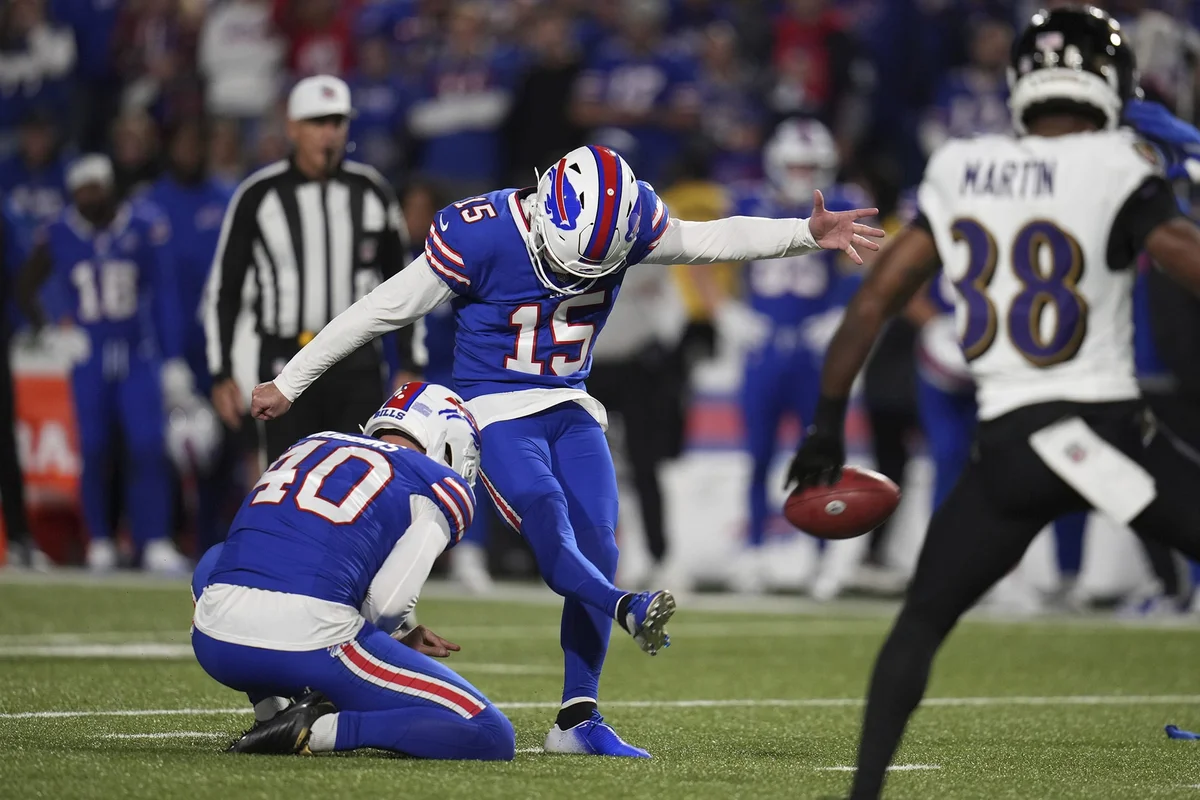
Other players making strides in recovery from last season’s injuries include kicker Tyler Bass, defensive end Landon Jackson, and defensive end Michael Hoecht. All three have remained active at team facilities, forging connections with new coaching staff members during their rehab.
“For timelines, I would say Tyler is the closest [to returning] from sports hernia. The other guys will be into the spring, but they’re there in Buffalo. It’s been fun to see them. And I know they’ve been up to meet some of the new coaches,”
Beane explained.
Transitioning to a New Era Without a Full Rebuild
Despite the new leadership under Joe Brady, the Bills are clearly not undertaking a complete rebuild. Instead, they envision a continuation of competitiveness, enhanced by fresh perspectives and adaptations. Beane noted that although Brady is instilling change, the team’s foundation remains intact after seven straight playoff appearances.
“Joe has come in and he’ll have different signage up, different pictures up, different things in meeting rooms,”
Beane said.
“He’ll have his own sayings and things like that. I think his thing is, let’s walk in like this is a fresh, new approach for how we want to build this team, for how we want to do our day. I’m sure there will be some nuances in his scheduling that are different. It’s not just going to be, ‘All right, one person in, one person out,’ and we do everything the same.”
Joe Brady emphasized the necessity of moving forward rather than dwelling on the past.
“There’s been a foundation that’s been set here and it might be a little different in the sense of we understand what expectations and everything that comes with it, but this isn’t just, ‘Hey, Joe Brady’s in and everything’s just business as usual, right?’”
Brady said.
“And so, it’s important that everybody in the organization knows it because if we continue to speak about how things used to be, then we’ll never continue to go forward. I have so much respect for the past, but it’s year one in the organization right now.”
Changes in the physical environment and daily routines are expected to reinforce this fresh start. Beane added,
“I think Joe just wants to make sure the guys walk in and feel like, ‘Okay, there has been a change here, and this is what we’re doing,’ Not really worried about what the expectations are, just this is year one of a new program. Just because we practiced this way before doesn’t mean that’s how we’re going to do practice now.”
Before they were Bills.
📺: NFL Combine 2/26 – 2/28 on @nflnetwork pic.twitter.com/2aULEi5oMK
— Buffalo Bills (@BuffaloBills) February 24, 2026
