
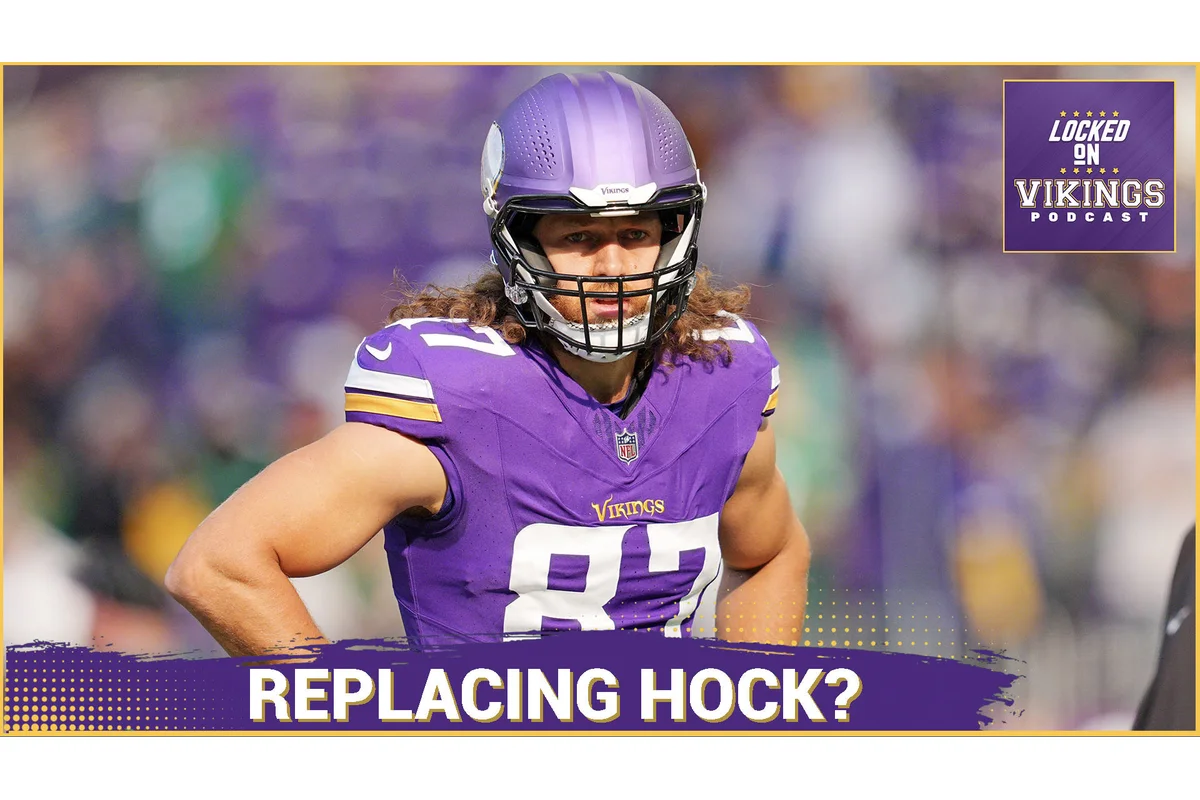
The Minnesota Vikings faced significant challenges along their offensive line during the 2025 season, primarily due to injuries that disrupted consistency. This instability, combined with erratic play from quarterback J.J. McCarthy, limited T.J. Hockenson’s effectiveness as a reliable outlet compared to his previous performances.
With starting tackle Christian Darrisaw sidelined by injury, the Vikings frequently deployed Hockenson in additional blocking duties to give McCarthy extra time to make plays. This shift reduced Hockenson’s typical offensive impact, highlighting the team’s struggle to balance protections and offensive production.
Upcoming Roster Evaluations and Salary Cap Concerns
As free agency approaches and the scouting combine kicks off, NFL teams are closely examining their rosters to identify needed changes. For Minnesota, however, managing the salary cap may take priority before making roster decisions.
If the Vikings lean toward moving on from the veteran tight end, exploring trade options for Hockenson could prove beneficial. ESPN analyst Ben Solak recently ranked all NFL positions for depth this offseason and identified tight end as one of the shallowest groups in the league, ranking just above defensive tackle and quarterback in terms of scarcity.
Solak also noted that this year is especially poor for teams seeking a blocking tight end. This situation could give the Vikings leverage to receive valuable returns from a trade, allowing them to reallocate salary cap space strategically.
Assessing Hockenson’s 2025 Performance and Trade Value
To consider trading Hockenson, Minnesota must analyze what he contributed last season, which teams might be interested, and what the potential market value would be.
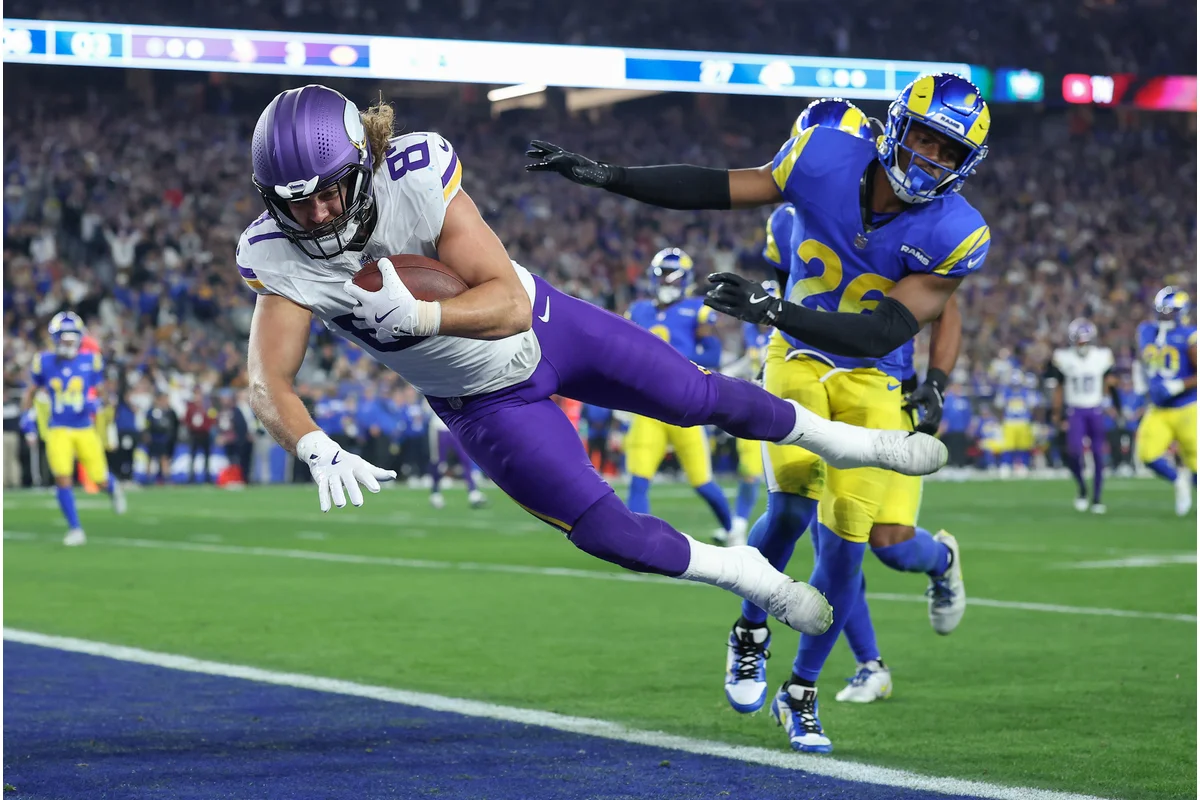
Over 15 games, Hockenson caught 51 passes for 438 yards and scored three touchdowns. These numbers represent some of his lowest output since his rookie season in 2019, disregarding the injury-shortened 2024 season. His average yards per reception dropped to a career-low 8.6, and he failed to record any reception longer than 30 yards, a rarity in his career.
Despite the dip in receiving production, Hockenson maintained health for most of the season, missing only the final two games due to a shoulder injury. He was active for 69.03% of the Vikings’ offensive snaps, ranking sixth on the team and third among skill position players after Justin Jefferson and Jordan Addison.
His expanded blocking role likely contributed to his extensive field time, but this use might undervalue his abilities. The Vikings could potentially secure a better return by trading him to a team with a stronger need for a versatile tight end.
Potential Teams Targeting Hockenson’s Skill Set
Teams interested in Hockenson will likely assess how they plan to use him. If they envision him primarily as a blocker, squads emphasizing their running game would benefit most. The Philadelphia Eagles, Los Angeles Chargers, and San Francisco 49ers stand out as possible suitors given their commitment to the run, although each faces challenges such as aging rosters, quarterback pressure, or ongoing injuries.
Alternatively, teams seeking an additional receiving threat from the tight end spot might consider Hockenson a valuable asset. Franchises like the Cincinnati Bengals, New England Patriots, and New York Jets could utilize him to give their quarterbacks more options in the passing game, particularly when struggling to connect on deep passes.
Trade Return Expectations for the Vikings
The Vikings’ recent acquisition of Hockenson from the Detroit Lions set a high bar for return value. Before the 2022 trade deadline, Minnesota traded a 2023 second-round pick and a 2024 third-round pick to Detroit, receiving Hockenson plus two fourth-round picks in return. Essentially, Minnesota paid a second-round pick for him.
Given Hockenson’s decline in production and injury history, the Vikings should expect a lower return in any trade. Offers equivalent to a fourth-round draft pick would be a realistic starting point. If the team manages to secure more than that, it would represent a net gain compared to their initial trade.
Since his ACL and MCL injuries sustained on a low hit from Kerby Joseph, Hockenson’s impact has waned significantly, influencing his market value.
Future Prospects and Team Strategy
The Vikings could consider extending Hockenson’s contract to free up salary cap space for the 2026 season, but the team might find it wiser to minimize losses and focus on rebuilding. Josh Oliver, another tight end on the roster, logged slightly better stats last season, including one more touchdown and higher average yards per reception, suggesting internal alternatives exist.
Last season demonstrated that Hockenson remains a valuable asset on the line as an additional blocker. However, the timing could be ideal for Minnesota to trade him while he still holds above-average value, gaining resources to strengthen other positions.
Heading into the 2026 offseason, the #Vikings currently sit at -$35.9M in cap space.
— VikingzFanPage (@vikingzfanpage) January 7, 2026
