Los Angeles Chargers Overview
The Los Angeles Chargers are a professional American football team based in the Greater Los Angeles area. The Chargers compete in the National Football League as a member of the American Football Conference West division. They play home games at SoFi Stadium in Inglewood, California, which they share with the Los Angeles Rams.
Established on August 14, 1959, the team began play in 1960 as a charter member of the American Football League. The Chargers have won one AFL championship, one AFC championship, and have made numerous playoff appearances, including one Super Bowl appearance. Known by nicknames such as “The Bolts” and “Super Chargers,” the franchise features powder blue, sunshine gold, and white as its primary colors.
Founding and Organizational Origins
The Chargers were established on August 14, 1959, as one of eight charter franchises of the American Football League. The team’s original owner was hotel heir Barron Hilton, son of Hilton Hotels founder Conrad Hilton. According to the Pro Football Hall of Fame, Barron Hilton agreed to the Chargers name after his general manager, Frank Leahy, selected it when purchasing the AFL franchise for Los Angeles.
The franchise began AFL play in Los Angeles in 1960, with Hilton’s vision shaping its early identity. The team drew inspiration from the fan traditions at Dodger Stadium and USC, where crowds often shouted “charge” and sounded bugles during games. After one season at the Los Angeles Memorial Coliseum, financial difficulties led the team to relocate to San Diego in January 1961.
Growth Into National Football League Competition
The Chargers joined the NFL in 1970 as part of the AFL-NFL merger, beginning a new chapter in professional football. The transition brought both challenges and opportunities, as the team adjusted to competing in a larger league with established rivals and higher competitive standards.
Under head coach Don Coryell, hired in 1978, the Chargers introduced the famous “Air Coryell” offense, a pass-heavy strategy that revitalized the team’s performance. With quarterback Dan Fouts leading the attack, the Chargers led the league in passing yards from 1978 to 1983 and again in 1985. The team made four consecutive playoff appearances from 1979 to 1982, winning three AFC West division titles during this era.
Los Angeles Chargers Competitive Journey
The Los Angeles Chargers have built a long and eventful competitive history spanning the AFL, the post-merger NFL, and a return to Los Angeles. From their founding era in 1960 to the modern era under head coach Jim Harbaugh, the franchise has compiled multiple division titles, conference championship appearances, and one Super Bowl berth.
Early Seasons and Development (1960–1969)
The Chargers’ first competitive year came in 1960, when they joined the AFL’s Western Division. After moving to San Diego in 1961, the team quickly established a strong defense, recording forty-nine interceptions in its first season in San Diego. The Chargers reached the AFL Championship Game in 1960, 1961, and 1963.
The team’s greatest early success came in 1963, when the Chargers won the AFL championship by defeating the Boston Patriots. They returned to the AFL Championship Game in 1964 and 1965 but lost both contests to the Buffalo Bills. During this era, the team won five AFL Western Division titles and developed a loyal fan base in San Diego.
Breakthrough in NFL (1970–1989)
Following the AFL-NFL merger in 1970, the Chargers faced a difficult transition. The team struggled in the early 1970s, finishing with a 2–11–1 record in 1973 amid coaching changes and a decline in performance. Ownership also shifted, as Barron Hilton sold the team in 1966 to a group of executives, including Eugene V. Klein and Sam Schulman.
The hiring of Don Coryell as head coach in 1978 marked a turning point, as the “Air Coryell” offense transformed the team into a perennial contender. The Chargers won AFC West titles in 1979, 1980, and 1981, making the playoffs four straight years from 1979 to 1982. Despite regular-season success, the team faced playoff challenges, including the famous “Epic in Miami” game in 1981.
Breakthrough in NFL (1990–2009)
The 1990s brought renewed success under head coach Bobby Ross, who was hired in 1992. The Chargers won the AFC West title that year and reached the Super Bowl for the first time in 1994 after winning the AFC championship. In Super Bowl XXIX, the Chargers lost to the San Francisco 49ers by a score of 49–26.
The mid-2000s featured one of the most dominant stretches in franchise history. Under head coach Marty Schottenheimer and later Norv Turner, the Chargers won five consecutive AFC West titles from 2005 to 2009. The 2006 season was particularly historic, as the team went 14–2, the best record in franchise history. Quarterback Philip Rivers, acquired via a draft-day trade in 2004, became the franchise’s longtime starter and led the team throughout this era.
Modern Program and Current Direction (2017–Present)
In January 2017, owner Dean Spanos announced the Chargers’ relocation back to Los Angeles after 56 seasons in San Diego. The team paid a $645 million relocation fee and played at Dignity Health Sports Park from 2017 to 2019 before moving to SoFi Stadium in 2020. Early attendance struggles gave way to improved fan engagement, with average attendance reaching the top third of the league by 2022.
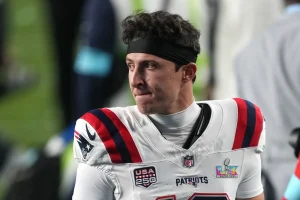
On January 24, 2024, the Chargers hired Jim Harbaugh as head coach, bringing in a former Chargers quarterback who had previously led the San Francisco 49ers to Super Bowl XLVII and won the 2024 College Football National Championship with Michigan. Under Harbaugh, the Chargers finished the 2024 season with an 11–6 record and advanced to the AFC Wild Card round. In 2025, the team again finished 11–6 before a Wild Card loss to the New England Patriots.
Philosophy and Competitive Strengths
The Chargers have long been associated with offensive innovation, particularly during the “Air Coryell” era when the team pioneered a pass-heavy approach that influenced modern NFL offenses. Under Jim Harbaugh, the team has emphasized a run-oriented, physical style, balancing run-game efficiency with the passing talent of quarterback Justin Herbert.
Key Milestones and Major Moments
The Chargers’ most significant milestones include the 1963 AFL championship, the 1994 AFC championship and Super Bowl XXIX appearance, and the 2006 season’s franchise-best 14–2 record. The team’s return to Los Angeles in 2017 marked a major organizational moment, followed by the move into SoFi Stadium in 2020.
Los Angeles Chargers Achievements and Results
The Los Angeles Chargers have earned one AFL championship, one AFC championship, nine division titles, and 22 playoff appearances across their history. The franchise has produced nine Pro Football Hall of Fame players and two Hall of Fame coaches, cementing its place among the NFL’s historically significant franchises.
NFL Achievements
The Chargers have made 17 NFL playoff appearances since joining the league in 1970. Their deepest postseason run came in 1994, when the team won the AFC championship and advanced to Super Bowl XXIX against the San Francisco 49ers. The Chargers have compiled a .364 postseason winning percentage, the lowest among NFL teams with multiple playoff appearances.
Conference Achievements
The Chargers have won one AFC championship, in 1994, which sent them to Super Bowl XXIX. The team has also made four additional appearances in the AFC Championship Game, demonstrating sustained competitiveness within the conference.
Divisional Achievements
The Chargers have won nine division titles. They captured five AFL Western Division crowns in 1960, 1961, 1963, 1964, and 1965, and four AFC West titles in 1979, 1980, 1981, and 1992. The franchise’s strongest divisional stretch came during the “Air Coryell” era and again in the mid-2000s.
Series Achievements
Throughout their history, the Chargers have developed notable rivalries within the AFC West. The Chargers–Raiders rivalry dates to the 1963 season and has produced memorable moments, including the controversial “Holy Roller” game in 1978. The team also maintains rivalries with the Kansas City Chiefs and the Denver Broncos, as well as an intercity rivalry with the Los Angeles Rams.