
Just two weeks after falling short in the Super Bowl, the New England Patriots have already mobilized much of their coaching staff and front-office personnel, heading to the NFL Scouting Combine in Indianapolis to regroup and plan. As the team refocuses on the future, the spotlight is on their strategies regarding free agency, trades, and draft preparation, with Stefon Diggs’ position on the roster emerging as a significant question amid broader roster decisions.
Trade Considerations Spotlight A.J. Brown and Other Key Targets
The Patriots have engaged in exploratory trade talks for Philadelphia Eagles wide receiver A.J. Brown, viewing him as a potential No. 1 receiving option who would significantly boost their offense. Brown, a consistent 1,000-yard producer over most seasons, aligns with New England’s goal to add firepower. However, sources say that the current asking price for Brown is considered excessive by the Patriots.
Brown’s contract intricacies further complicate potential trades. The Eagles face salary cap implications depending on the timing of any deal: a trade before June 1 would trigger $20 million in dead cap space for the Eagles, while post-June 1 could free approximately $7 million in cap room. The Patriots, however, need clarity sooner rather than later to plan for alternative options should a Brown trade not materialize.
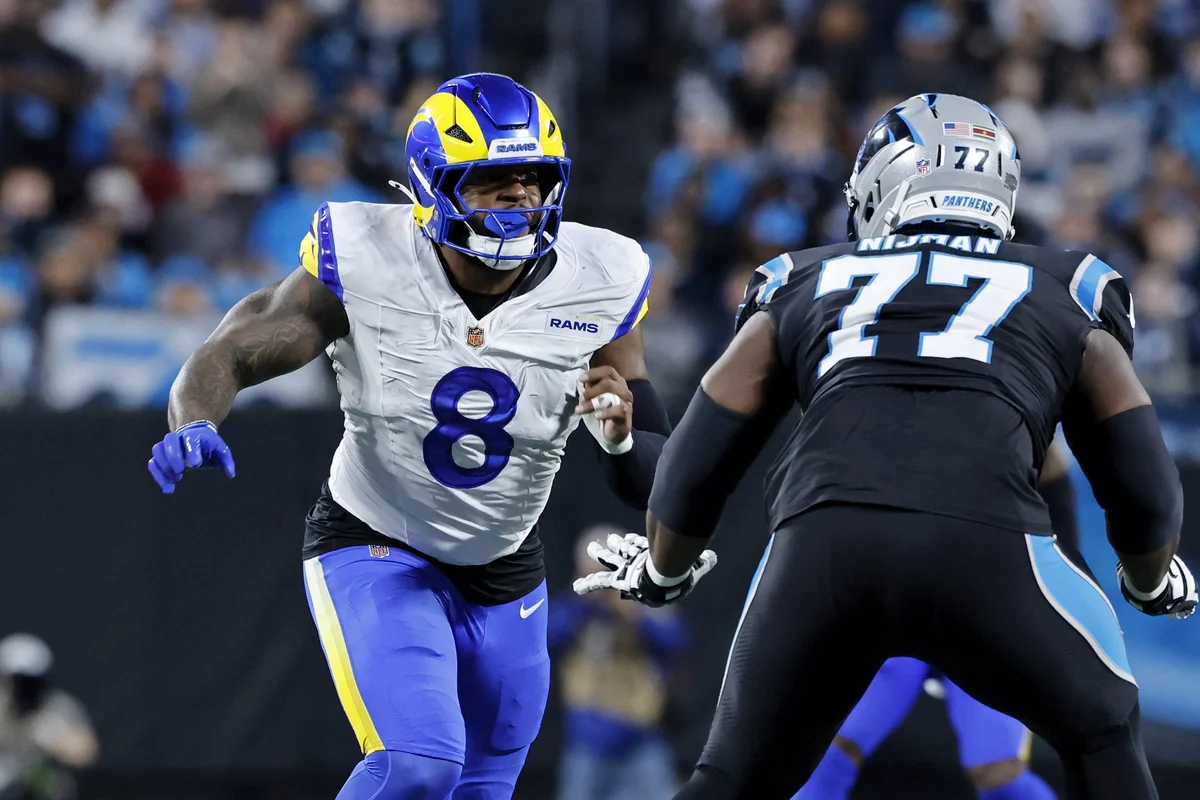
Meanwhile, the Raiders’ Pro Bowl defensive end Maxx Crosby has drawn interest and is perceived as a more feasible target than Brown at present. Although the Raiders reportedly demand two first-round picks plus a player for Crosby, one league source believes that a first-round pick along with additional mid-round draft selections could be sufficient. Crosby offers an impactful edge rushing presence, something the Patriots have prioritized after assessing their pass-rush needs.
Stefon Diggs’ Status Remains Undecided Amid Performance and Legal Concerns
Despite the public attention on wide receiver Stefon Diggs, his continuation with the Patriots is uncertain. Evaluators within the organization have mixed views: while they recognize his contract is manageable, there is doubt about whether Diggs can maintain his role as a No. 1 receiver given his age and recent playoff struggles. At 32 years old, with an impending 33rd birthday, Diggs’ playoff performance, which saw him disappear against top defenses, has raised questions about a potential decline.
Complicating matters are Diggs’ serious off-field legal issues, including charges related to strangulation and assault. Yet, he remains a significant locker room figure and emotional leader, roles highly valued by head coach Mike Vrabel as the team continues to build its culture.
Several scenarios are under consideration: retaining Diggs on his current deal, restructuring his contract, or releasing or trading him altogether. The Patriots are cautious, knowing that losing Diggs without ready replacements would create a critical gap on offense that may not be filled easily via free agency or the draft. Diggs’ $26.5 million cap hit in 2024, with $20.6 million base salary and limited guaranteed money, factors heavily into the team’s cost-benefit analysis.
Internal belief leaned toward Diggs returning this season despite widespread external skepticism, reflecting the complexity of balancing performance, leadership, and financial considerations.
Limited Free Agent Prospects Shape Patriots’ Roster Strategy
The Patriots appear reticent to engage in significant free-agent spending this offseason, a sharp contrast from their previous year’s $364 million investment in free-agent contracts. Several team sources agree there are no transformative players available in free agency, emphasizing the need to target specific, affordable contributors, particularly among edge rushers and safeties.
The front office is prepared to pursue valuable pass rushers who might fall just below star names like Trey Hendrickson, Jaelan Phillips, and Odafe Oweh, recognizing that top-tier players in this market may command unsustainable salaries. In case they cannot re-sign K’Lavon Chaisson, who is expected to attract offers around $10 to $12 million annually, the Patriots may double down on cost-effective alternatives such as Dre’Mont Jones or Kingsley Enagbare. Both drew interest during trade deadline discussions, though more serious talks did not develop.
At safety, the Patriots view the position as deep in this year’s free-agent pool. Their own Jaylinn Hawkins, who posted notable statistics last season with four interceptions and 1.5 sacks over 15 starts, has received less free-agent interest than anticipated. This cooling market may facilitate a reunion in New England if both parties come to terms. Should Hawkins depart, candidates like Chiefs safety Bryan Cook, Rams veteran Kamren Curl, and Seahawks’ Coby Bryant are on the Patriots’ radar.
Under Vrabel and safeties coach Scott Booker, the team prefers smaller, agile safeties capable of strong coverage and communication, moving away from the hulking box safety archetype exemplified by former Patriots like Kyle Dugger and Jabrill Peppers. This preference diminishes chances for players like Bears safety Jaquan Brisker to join the team.
Defensive Line and Offensive Adjustments Also on the Horizon
The Patriots face potential losses along the defensive line, notably with Khyiris Tonga, whose contract extension talks collapsed late last year and whose market value has climbed, attracting more suitors. The front office is mindful of limited alternatives to replace Tonga, especially since the current draft and free-agent classes offer few strong options at defensive tackle.
Veteran defensive tackle Christian Barmore remains with the team for now, but his situation is tenuous given sporadic production, ongoing knee problems, legal troubles following an alleged domestic incident, and a significant $17 million cap hit. His emotional temperament has also been highlighted internally, with one source stating,
“He’s always been an emotional guy.”
Decisions about Barmore will come by the March 13 guarantee deadline, and the Patriots could explore trading him, though expectations are for only late-round compensation—possibly a sixth-round pick or a fourth-rounder in a pick swap involving the team sending a later-round pick as well.
On offense, the Patriots are expected to address tight end depth by signing a blocking (“Y”) tight end and selecting a receiving (“F”) tight end in the draft. Austin Hooper, the current No. 2 option behind Hunter Henry, is likely to enter free agency, and replacements such as Cade Otton and Charlie Kolar are preferred over Ravens’ Isaiah Likely or Titans’ Chigoziem Okonkwo.
The Patriots also continue seeking receiver upgrades but have ruled out short wideouts like Giants’ Wan’Dale Robinson, citing size concerns, and face challenges acquiring other top options such as Colts’ Alec Pierce. Additionally, attention remains on retaining backup left tackle Vederian Lowe and evaluating lower-tier running backs for potential additions.
Team Culture, Player Travel Issues, and Contract Extensions in Focus
The Patriots’ offseason also sees broader organizational concerns, including negative player feedback on the team’s travel arrangements. For a second consecutive year, the NFLPA report card assigned the Patriots an “F” for travel experiences. Issues raised include outdated facilities on the team plane, absence of WiFi, cramped spaces, and an uncomfortable atmosphere that some staff liken to a “40-year-old sedan.” Despite no reported incidents, many feel uneasy traveling to road games, with international trips providing relief due to alternate transportation.
While position coaches earned a modest “B-” in the midseason survey, some team insiders disagreed with that grade, suggesting the team’s unity and performance in their Super Bowl run reflect stronger coaching than average assessments indicated.
In personnel news, contract extensions remain imminent for star cornerback Christian Gonzalez. Front office personnel regard Gonzalez and quarterback Drake Maye as among the few firmly secured players amidst anticipated roster turnover. The timing of Gonzalez’s deal is expected to depend on other team moves and cap commitments from free agents signed in the prior offseason.
The Patriots are optimistic about the alignment between this year’s draft strengths and their positional needs, particularly in edge rusher and tight end categories. Ohio State’s Will Kacmarek and Stanford’s Sam Roush stand out as top prospects in the blocking tight end role, which fits team preferences.
Veteran right guard Mike Onwenu is projected to remain with the team despite carrying a $25 million cap hit and zero guaranteed salary on a $16 million base, highlighting the team’s effort to maintain core stability on the offensive line.
Additional injury notes include Mack Hollins, who suffered a lacerated spleen in Week 16 but played through the injury with seven catches for 69 yards. The team also continues to seek fullback upgrades, eyeing options like Patrick Ricard or Reggie Gilliam.
Outlook and Implications for Patriots Roster and Strategy
The Patriots are navigating an intense and uncertain offseason defined by critical questions about key players like Stefon Diggs and Christian Barmore, challenging free agency markets, and careful management of salary cap resources. Their aggressive scouting and trade explorations signal a commitment to building a competitive roster, while balancing financial prudence and maintaining locker-room culture set by Mike Vrabel.
Decisions in the coming weeks on contract guarantees, potential trades, and free-agent signings will shape the Patriots’ trajectory. If the team successfully acquires impactful edge rushers or receivers like A.J. Brown, it could significantly alter their offensive and defensive dynamics.
At the same time, the organization must manage aging veterans and legal distractions while fostering young talent through the draft and extensions. The challenges of offseason roster management underscore the Patriots’ effort to return to championship contention amid turbulent market conditions and internal uncertainties.
