
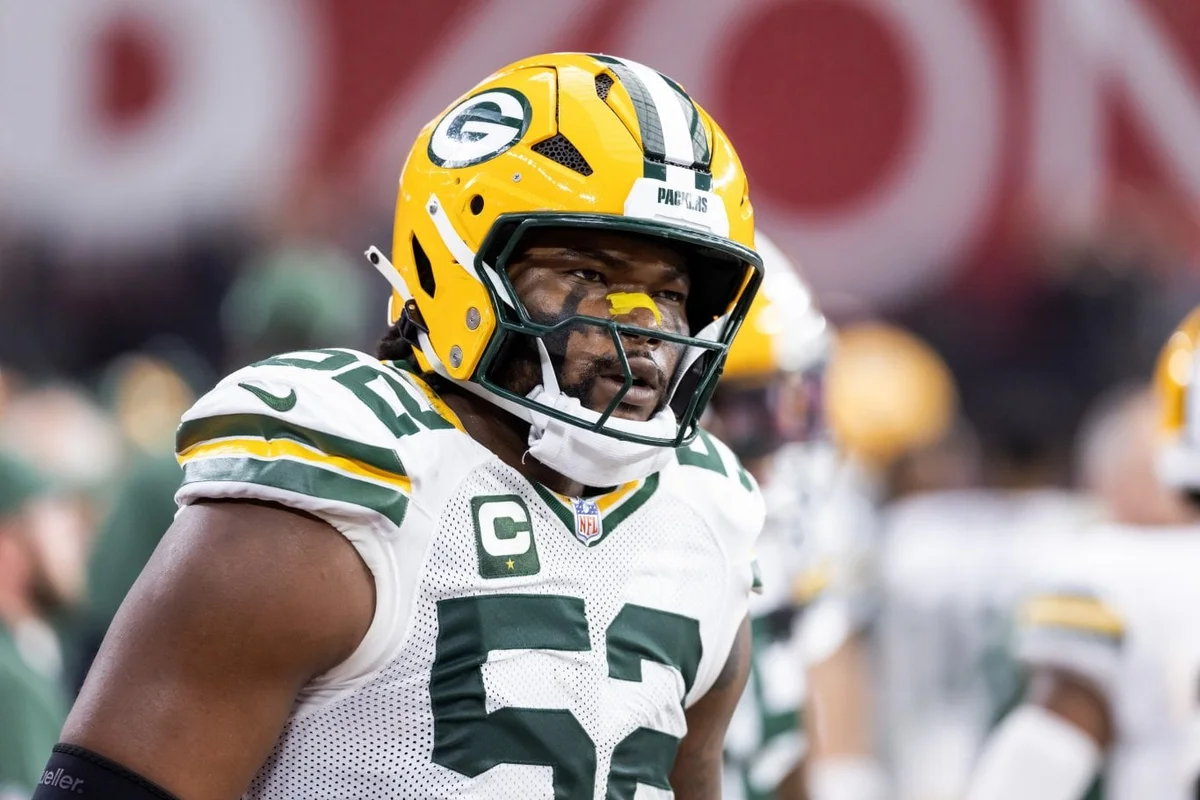
The Green Bay Packers have expressed their intention to keep Josh Jacobs as their lead running back next season, but questions remain about the depth behind him. Emanuel Wilson’s status with the team is now ambiguous after the Packers chose not to apply a restricted free-agent tender on him. According to ESPN’s Jeremy Fowler, Wilson will become an unrestricted free agent once the new league year begins on March 11, opening the door for other teams to pursue him.
Wilson emerged as a dependable No. 2 option behind Jacobs, and he demonstrated the ability to take on the lead role when Jacobs was sidelined due to injury. The Packers could have used a right of first refusal tender to retain some control over Wilson’s movement at an estimated cost of $3.8 million for the 2026 season. Their decision not to do so introduces considerable risk to their running back situation.
What the Packers’ Options Were for Protecting Emanuel Wilson
To understand the Packers’ gamble, it’s important to clarify the choices they had regarding Wilson’s restricted free agency. As a restricted free agent, Wilson’s original team is given more leverage in contract negotiations compared to unrestricted free agents. There are three types of tenders available: first-round, second-round, and right of first refusal.

Each tender allows the player to negotiate with other teams, but if Wilson agreed to an offer with a different franchise, the Packers could match it to retain him. If they chose not to match the offer, depending on which tender they had applied, they would receive draft pick compensation.
A first-round tender would have cost Green Bay about $8.74 million and required any team signing Wilson to surrender a first-round pick as compensation. The second-round tender is less expensive at $6.26 million with second-round draft pick compensation. The right of first refusal tender is the cheapest, but carries no compensation if the player signs elsewhere.
Historical precedent shows how these tenders work in practice. For example, in 2018, the Packers signed cornerback Kyle Fuller to an offer sheet from Chicago Bears, who used a transition tag—a comparable mechanism to the restricted free agent tender. Ultimately, the Bears matched Green Bay’s offer to keep Fuller on their roster.
The Packers Decline to Tender Wilson and Its Implications
Green Bay ultimately declined to tender Wilson, allowing him to enter unrestricted free agency. They still have the option to negotiate a long-term contract with Wilson that could reduce his 2026 salary cap hit, but that depends on whether Wilson is willing to commit without testing the market. Given his performance last season, there is likely to be significant interest across the NFL.
Wilson rushed for 496 yards and scored three touchdowns, averaging four yards per carry. Notably, he was thrust into the starting role in Week 12 against the Minnesota Vikings due to Jacobs’ injury, producing 107 yards and two touchdowns on 28 carries. His ability to step up highlighted his value beyond just being a backup.
By forgoing the RFA tender, Green Bay will now face competition from other teams to retain Wilson’s services. If he signs elsewhere, the Packers will receive no compensation, which makes the move all the more precarious.
Pressing Concerns for Packers’ Running Back Depth Without Wilson
If Wilson departs, the Packers risk facing a notable weakness at running back beyond Josh Jacobs, who remains the featured player. Jacobs struggled with injuries during the 2025 season, which amplified the importance of having a reliable backup.
Currently, Green Bay’s alternatives behind Jacobs include MarShawn Lloyd, Pierre Strong Jr., Damien Martinez, and possibly restricted free agent Chris Brooks. However, both Lloyd and Strong are unproven at the NFL level, and Lloyd’s availability is questionable due to injuries limiting him to just one game over the past two seasons. Similarly, Brooks has carried the ball only 63 times during his Packers tenure.
Without Wilson’s proven capability, the running back depth suddenly becomes a critical concern. The Packers’ limited draft capital, lacking a first-round pick, may make it difficult to address this vulnerability through the draft since key needs for the offensive and defensive lines and cornerback may take priority.
The running back group’s status could evolve quickly from an overlooked position to a pressing issue if Wilson leaves via free agency.
Looking Ahead: Potential Impact on the Packers’ Roster Strategy
The Packers retain the option to sign Wilson to a multi-year deal, potentially securing their backfield depth if both sides can agree on terms. However, if Wilson opts to explore unrestricted free agency, Green Bay will have to rethink its running back strategy heading into 2026.
Considering Jacobs’ injury history and Wilson’s previous contributions when called upon, losing Wilson without compensation would place significant pressure on the Packers to find dependable running back support through other means, either free agency or later draft picks.
The Packers are not placing a tender on running back Emanuel Wilson, per source.
He will be a free agent. Rushed for 496 yards and three touchdowns last year,l.
— Jeremy Fowler (@JFowlerESPN) February 28, 2026
