
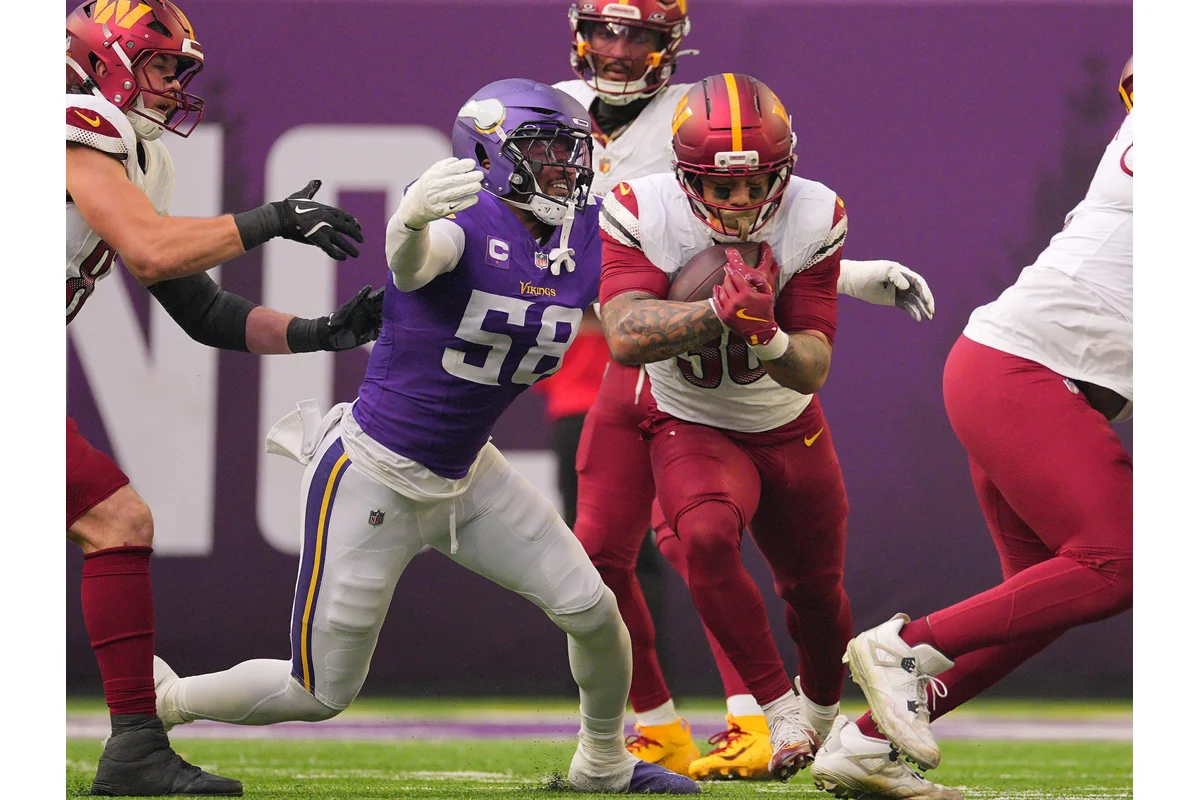
The Minnesota Vikings made headlines Tuesday with revelations that they are open to trading their star edge rusher Jonathan Greenard. With the team currently $45 million over the salary cap, financial pressures are driving discussions about moving Greenard to manage future salary flexibility.
Financial Factors Behind Greenard’s Potential Trade
The possibility of trading a defensive centerpiece like Greenard stems largely from salary cap challenges and contract valuations. According to NFL insider Albert Breer from Sports Illustrated, Greenard’s current average annual salary of $19 million places him as the 17th highest-paid edge rusher, yet it still lags behind recent deals for players like Myles Garrett and T.J. Watt.
Breer notes that George Karlaftis, a less proven player, recently secured a contract worth $23.25 million per year, which is $4.25 million more than Greenard’s deal. This discrepancy raises concerns about Greenard’s long-term fit with the Vikings and questions the team’s strategy around his contract.
“With Karlaftis, who isn’t as good of a player as Greenard getting $4.25 million on average more than he is, it raises questions about the future for Greenard in Minnesota. If Karlaftis is getting that much in new money, what is the worth of a player like Greenard?
Albert Breer, Sports Illustrated NFL Insider

Greenard’s contract situation also echoes what happened previously with Danielle Hunter, who was left underpaid for a period before a costly extension. Although Greenard did not sign a similarly undervalued contract, extending or adjusting his deal now could help the Vikings maintain greater salary cap control.
“First off, it gives the Vikings more control over salary cap, as they can maneuver his contract to however they see fit to get themselves into a good position in future years. Second, an extension or a raise now could end up being cheaper than giving him one after the season.”
Albert Breer, Sports Illustrated NFL Insider
The Vikings declined to increase Greenard’s salary earlier, and now the player is seeking the compensation he believes he deserves. This stalemate complicates contract negotiations, with potential implications for both sides moving forward. The team could still pursue an extension to avoid further issues.
Trade Discussions Highlight Future Direction of Vikings’ Roster
The exact value the Vikings could receive for trading Jonathan Greenard is uncertain, making the situation complex. Interim general manager Rob Brzezinski is thoroughly exploring all possible avenues to address the team’s salary cap challenges, with Greenard’s trade conversations playing a critical role.
These developments reflect how pressing salary cap restrictions can force teams to reassess even key players’ future positions on the roster. The decision to trade a player of Greenard’s caliber signals strategic moves by Minnesota to recalibrate their defensive lineup while managing finances.
What This Means for the Vikings and Greenard Moving Forward
Greenard’s potential trade highlights the difficult balance NFL teams face between rewarding talent and maintaining financial health. For the Vikings, resolving this situation will impact their defensive strategy and salary cap flexibility for upcoming seasons. Meanwhile, Greenard’s market value relative to peers like Garrett, Watt, and Karlaftis will likely influence negotiations and trade discussions.
The coming weeks will be pivotal as the Vikings evaluate how best to handle Greenard’s contract demands and possible trade offers. Fans, analysts, and the organization alike will be watching to see whether this move leads to a broader roster realignment or a contract extension keeping Greenard in Minnesota.
