
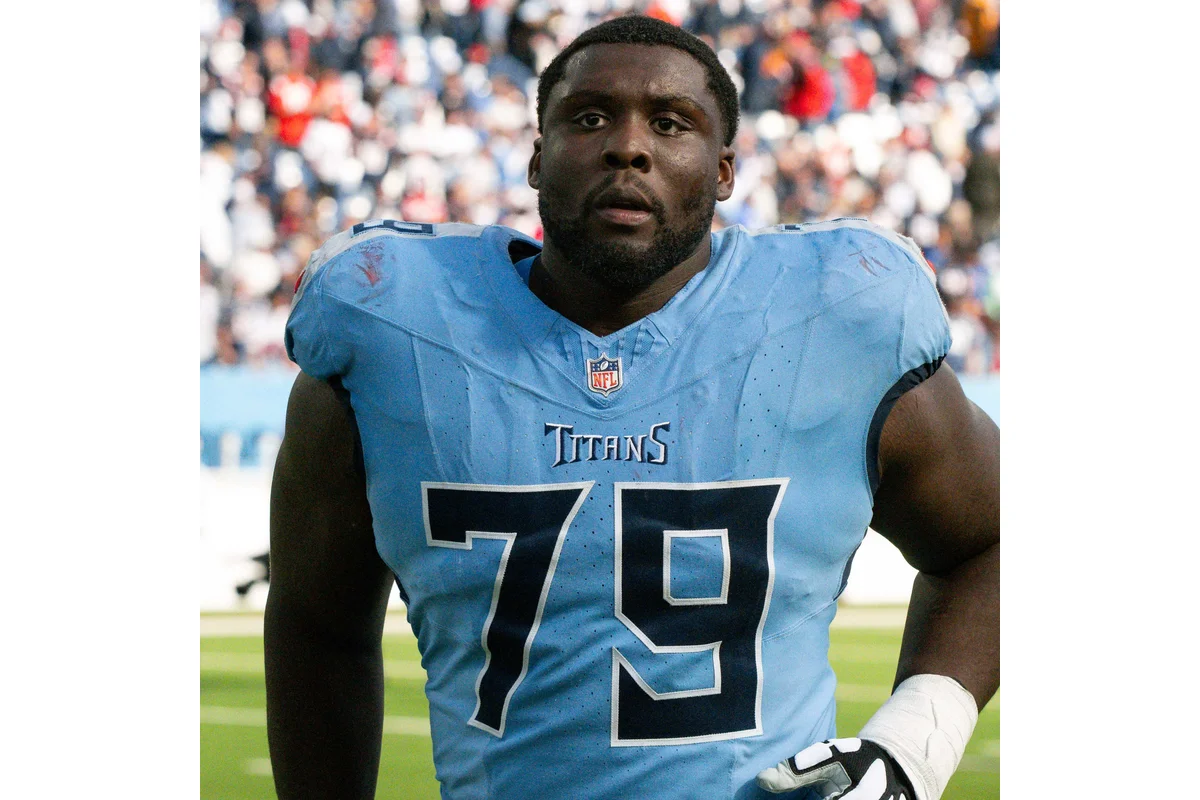
On Tuesday, the Minnesota Vikings stirred significant attention after ESPN’s Adam Schefter revealed the team is open to trading Pro Bowl pass rusher Jonathan Greenard as they navigate their salary cap constraints. This news was unexpected, given Greenard’s status as arguably the team’s top defensive player, paired with a comparatively modest contract and several alternative options for freeing cap space. The emergence of this potential trade signals deeper financial and strategic complexities within the Vikings’ roster management heading into 2026.
Greenard Seeks Contract Adjustment to Reflect Market Value
According to SI’s Albert Breer, Greenard is pursuing a “market correction” to his deal, effectively requesting a raise before the 2026 season when he is due about $19 million. Now two years into a four-year, $76 million contract, Greenard believes his performance merits compensation aligned with the highest tier of pass rushers in the league. This development complicates the Vikings’ plans, as their current salary cap situation makes increasing player contracts a difficult proposition rather than a viable option.
Impact of Greenard’s Request on Vikings’ Defensive Outlook
Trading away Greenard, especially while vying for a playoff return potentially led by a veteran quarterback succeeding J.J. McCarthy, seems counterproductive. Although ascending pass rusher Dallas Turner is viewed as a plausible replacement candidate, losing Greenard would weaken the Vikings’ defense in 2026. However, the request for a contract raise creates tension, especially since Greenard’s recent season was hampered by injuries and a modest three-sack output over a limited game count. Consequently, his leverage in negotiations may not be at its peak.
Historical Context: Team-Friendly Contracts and Their Consequences
The Vikings’ situation echoes past experiences with team-friendly deals that can later cause complications. Danielle Hunter, the franchise’s former star pass rusher, was signed to a five-year, $72 million contract just before his breakout in 2018. However, that agreement soon proved restrictive, leading to prolonged contract disputes. The Vikings effectively replaced Hunter with Greenard via free agency two years ago. Current tensions around Greenard’s contract reflect a recurring challenge for the team in balancing player compensation with cap flexibility.
Options for Managing Greenard’s Contract Demands
Reportedly, the Vikings prefer to keep Greenard at his current cap figure, leveraging the league’s Collective Bargaining Agreement (CBA), which limits players’ ability to hold out of training camp without facing hefty penalties. This approach banks on Greenard’s continued acceptance of the deal and strong on-field performance to avoid conflict. Alternatively, the Vikings could agree to a raise, aiming to match Greenard’s All-Pro-level contributions from the 2024 season without necessarily increasing his 2026 cap hit—possibly even decreasing it through creative restructuring.
“Stat sheet says Jonathan Greenard has 1 sack in 3 games. But when you turn the tape on, he’s everywhere. He creates sacks for others, draws penalties, makes plays against the run.Still the best player on a loaded defense, imo.” – Will Ragatz
Potential Trade Scenario and Its Implications
If a trade offer emerges, possibly involving at least a second-round draft pick, the Vikings might consider parting ways with Greenard. This move would save approximately $12 million in cap space, allowing Dallas Turner and Andrew Van Ginkel to team up as the primary pass rushers. Additionally, Minnesota could use one of their early draft picks to select another outside linebacker prospect to bolster the defense. Despite these options, moving Greenard would indicate a willingness to downgrade the 2026 team’s competitiveness in favor of long-term financial reset and roster rebuilding.
Assessing the Broader Impact on the Vikings’ 2026 Strategy
Trading a core defensive player like Greenard amidst plans to contend in 2026 points to conflicting signals within the organization. Such a move would suggest a strategic pivot focused on the future, which might undermine confidence in head coach Kevin O’Connell’s tenure unless management fully embraces a rebuilding timeline. In that context, the Vikings might opt to extend J.J. McCarthy’s starting role rather than pursuing an experienced veteran quarterback in a win-now strategy. Greenard’s contract demand adds a complicated layer to a pivotal offseason involving Coach O’Connell, General Manager Rob Brzezinski, and the entire Viking front office.
The Vikings' situation with OLB Jonathan Greenard is a bit complex—Greenard is seeking a market correction to his contract, per sources. He's due $19 million and would like a raise. Minnesota is comfortable with him at his current number.
The team views him as one of their best…
— Albert Breer (@AlbertBreer) March 3, 2026
Stat sheet says Jonathan Greenard has 1 sack in 3 games. But when you turn the tape on, he's everywhere. He creates sacks for others, draws penalties, makes plays against the run.
Still the best player on a loaded defense, imo. pic.twitter.com/mkycmY4ykz
— Will Ragatz (@WillRagatz) September 22, 2025
