
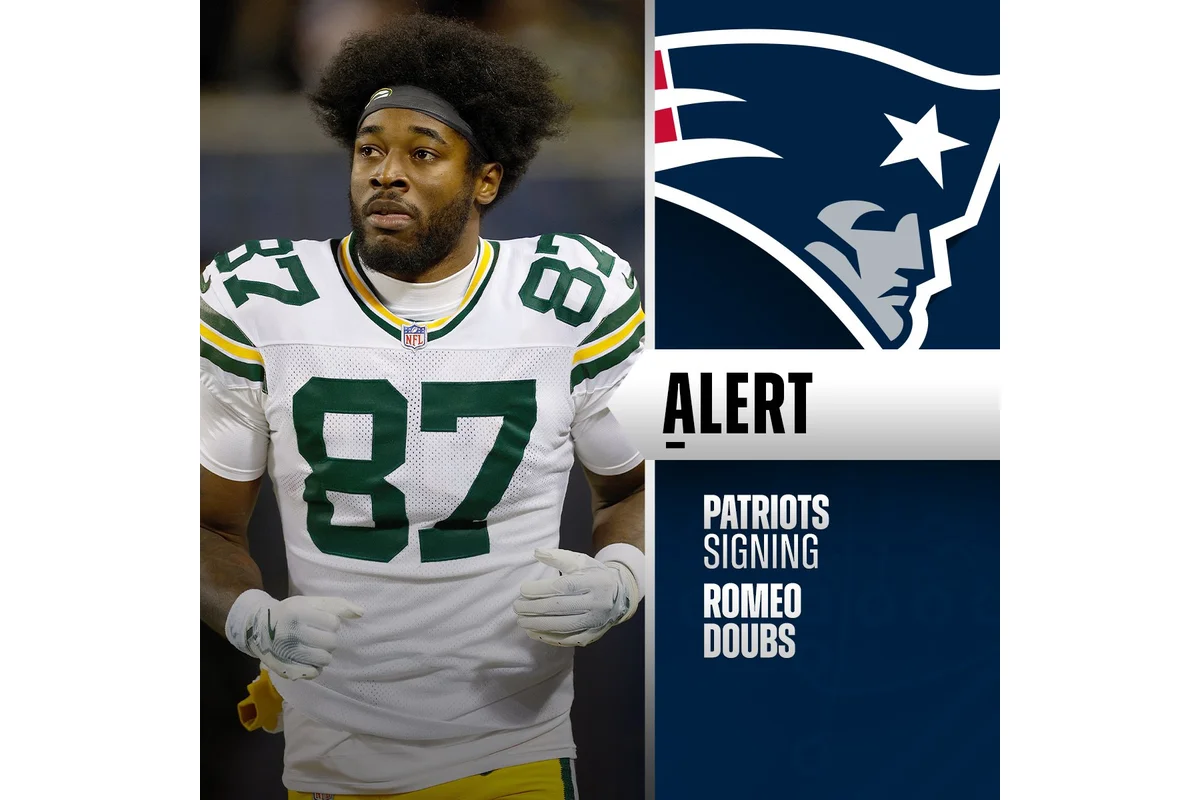
The Green Bay Packers face a pivotal moment ahead of the 2026 season as they prepare to replace wide receiver Romeo Doubs, who recently signed a four-year deal with the New England Patriots. With Doubs’ departure marking the end of a solid four-year run, the Packers must explore several strategies involving their current roster, upcoming draft picks, and free agency moves to fill the void ahead.
Romeo Doubs’ Departure Signals a Shift in Green Bay’s Receiving Corps
Romeo Doubs has been a reliable figure for the Packers over the past four seasons, concluding his tenure with a standout performance during their wild-card playoff loss to the Chicago Bears where he caught eight passes for 124 yards and a touchdown. Despite his efforts, the Packers fell short after a fourth-quarter collapse, ending Doubs’ chapter in Green Bay as he moved into free agency.
The move was anticipated as Doubs sought a more defined role, which the Patriots and Drake Maye seem poised to offer. Packers general manager Brian Gutekunst acknowledged Doubs’ departure at the Scouting Combine, praising his consistency and work ethic while accepting that the team might not retain him.
“Romeo’s done a fantastic job for us over his four years with the Green Bay Packers,” Gutekunst said. “Very consistent, his work ethic is second to none. Again, we’d love to have him back. And if we do, he’ll be a big part of our football team. And if we don’t, I’m sure he’ll be very successful wherever he goes.” – Brian Gutekunst, General Manager
The Packers’ receiving room is facing considerable turnover, with Doubs likely not the only familiar player to depart in the coming seasons. Therefore, the team must carefully address how to Replace Romeo Doubs Packers to maintain their offensive momentum.
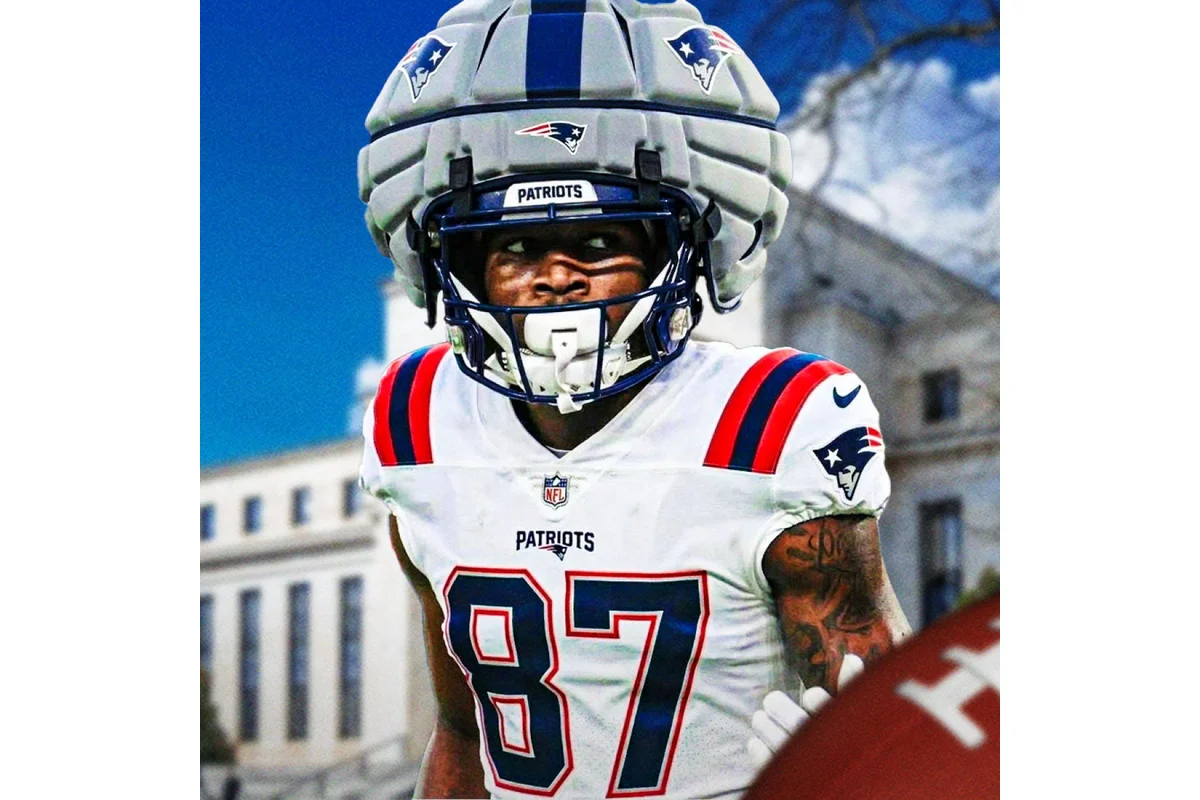
Matthew Golden Emerges as the Primary Internal Successor
Among the Packers’ internal options, 2025 first-round draft pick Matthew Golden stands out as the most natural replacement for Doubs. Golden impressed in his rookie season despite setbacks, including injuries and depth chart limitations. His playoff showing against the Bears, highlighted by his first NFL touchdown, demonstrated his capability to make crucial plays.
Golden was celebrated as Green Bay’s first first-round receiver pick since Javon Walker in 2002, fueling fans’ excitement about his potential impact. Although injuries and competition from Christian Watson, Jayden Reed, and Dontayvion Wicks limited Golden’s opportunities, his late-season flashes suggest he could assume a starting role in 2026.
One key question is whether head coach Matt LaFleur will deploy two smaller, quicker receivers like Golden (5-foot-11, 191 pounds) and Jayden Reed (5-foot-10 7/8, 187 pounds) in 11 personnel sets, given that Doubs was a bigger target at 6-foot-2 and 201 pounds. Watson’s larger frame fits LaFleur’s preference for size to support the run game, so Golden’s rise may hinge on offensive scheme adjustments.
Dontayvion Wicks Offers Size and Blocking Ability but Faces Uncertain Future
Dontayvion Wicks, similar in size to Doubs at 6-foot-1 and 206 pounds, is another receiver with potential to fill the outside role. However, Wicks is a pending free agent after the 2026 season and appears least likely among Reed and Watson to receive a contract renewal.
Although injuries hampered Wicks’ 2024 campaign, his performance in the Thanksgiving victory over the Detroit Lions was a highlight: he played through an injured ankle and hauled in seven catches for 94 yards and two touchdowns, including a clutch fourth-down conversion that secured the game and sweep of the Lions. Despite this bright moment, his overall season was quiet.
Wicks’ size and blocking skills align well with LaFleur’s offensive preferences, and he is expected to compete with Golden for the primary outside receiver spot opposite Watson during the upcoming training camp.
Savion Williams Could Be a Sleeper with Unique Size and Versatility
Savion Williams, the surprise third-round pick in 2025, brings a different profile to the receiving room, standing 6-foot-4 and weighing 222 pounds. His build resembles a running back more than a traditional wide receiver, offering the strength to absorb contact and play physically on the outside.
Williams contributed mostly as a gadget player and primary kickoff returner in his rookie season, with limited impact in the passing game. He battled through a foot injury before being placed on injured reserve late in the season. Despite his limited offensive production, the Packers’ front office believes in his receiving potential.
“We look at him as a receiver,” Gutekunst stated after drafting Williams. “Obviously, he’s versatile and he can do a lot of things.” – Brian Gutekunst, General Manager
If Williams can develop his route-running and catching ability, he may become a valuable outside target, particularly if new receivers coach Noah Pauley focuses on refining his skills. His blocking aptitude suits LaFleur’s “No block, no rock” philosophy, positioning him differently than many receivers on the roster.
Free Agency Options Remain Limited but Special Teams Could Factor In
The Packers are unlikely to aggressively use free agency to replace Doubs, as they anticipate having several key receivers with expiring contracts after 2026. However, if they do pursue free agents, candidates will likely be players who can contribute as special teams returners alongside offense.
One such player is Skyy Moore, a former full-time punt returner with the San Francisco 49ers who averaged 11.6 yards per punt return and 27.5 yards per kickoff return last season. Moore offers return abilities combined with receiving skills at 5-foot-10 and 195 pounds.
In 2024, the Packers lacked a true punt return specialist, sometimes carrying two kickers instead. Moore could fill that niche while serving as a depth receiver, ensuring roster flexibility and continued special teams effectiveness. Bringing him in would address part of the void left by Doubs’ multifaceted role in Green Bay’s final season.
Critical Decisions Loom for Key Players Christian Watson and Jayden Reed
Between looming free agency and roster turnover, the Packers face difficult choices regarding receivers Christian Watson and Jayden Reed, both set to become unrestricted free agents after 2026. These decisions carry significant salary cap implications as the team evaluates whom to retain or let go.
Other notable impending free agents include Tucker Kraft, Dontayvion Wicks, Luke Musgrave, Devonte Wyatt, Keisean Nixon, Carrington Valentine, and possibly Lukas Van Ness if his fifth-year option is declined. The weight of these contractual considerations will challenge the front office’s ability to maintain depth.
Watson, known for his exceptional athleticism and ability to stretch defenses vertically, and Reed, the dynamic slot receiver who has been the team’s top receiver production-wise when healthy, are central to offensive planning. Gutekunst emphasizes that the salary cap puzzle demands choices, suggesting the team may retain one but not both to finance reinforcements.
This internal juggling means that replacing Doubs will be less about signing a free agent and more about reallocating resources to hold onto top contributors while developing younger talent.
Evaluating the Draft as a Source for Receiving Reinforcements
The 2026 NFL Draft offers several intriguing receiver prospects the Packers may consider, particularly in the middle rounds where cost and upside balance.
Chris Brazzell from Tennessee is a notable second-round candidate who could intrigue Green Bay. Despite already investing two top-100 picks on receivers in 2025, the Packers’ history with drafting receivers like Jordy Nelson and Randall Cobb early in their careers shows their willingness to import talent for future impact. Brazzell possesses a rare blend of size (6-foot-4, 198 pounds) and speed (4.37-second 40-yard dash) that might make him an ideal option to either bolster or provide insurance for Watson.
Meanwhile, Bryce Lance from North Dakota State—Christian Watson’s alma mater—is attracting buzz as a possible third-round option. Lance’s 4.34-second 40-yard dash and 41.5-inch vertical leap highlight his explosive athleticism. His experience in a run-focused college offense may enable a smooth transition, and the Packers have seen success with similar players from that program before.
On draft day three, the Packers could target Josh Cameron from Baylor. At 6-foot-1 and 224 pounds, Cameron fits the preferred physical profile and excels as a punt returner with a 20.7-yard average in 2024 and a previous 70-yard return in 2023. Though initially projected as a depth player, Cameron might develop into a strong role player by 2027 once attrition affects the current receiving corps.
Packers’ Aggressive Approach Reflected by Front Office
Green Bay’s general manager Brian Gutekunst has been signaling a willingness to make bold roster adjustments to strengthen the team. As noted by analyst Bill Huber, Gutekunst appears ready to double down rather than wait for circumstances to unfold.
“There’s an old saying, ‘It’s time to fish or cut bait.’ Packers general manager Brian Gutekunst swapped the ‘or’ with an ‘and.’” – Bill Huber, NFL Analyst
This mindset signals the Packers will actively pursue a blend of drafting, internal competition, and strategic signings to remake their receiving unit post-Doubs, understanding the urgency to keep their offensive weapons competitive amid evolving challenges.
As Green Bay navigates free agency and draft preparation in the coming months, the decisions regarding which assets to retain or acquire will shape their offensive identity and influence their playoff prospects. The 2026 season will test whether these moves can effectively Replace Romeo Doubs Packers with fresh talent and maintain sustained success.
There’s an old saying, “It’s time to fish or cut bait.”
Packers general manager Brian Gutekunst swapped the “or” with an “and.”
Here is our grade of the addition of Benjamin St-Juste and release of Nate Hobbs. ⬇️https://t.co/LcnSTu1uwO
— Bill Huber (@BillHuberNFL) March 10, 2026
