
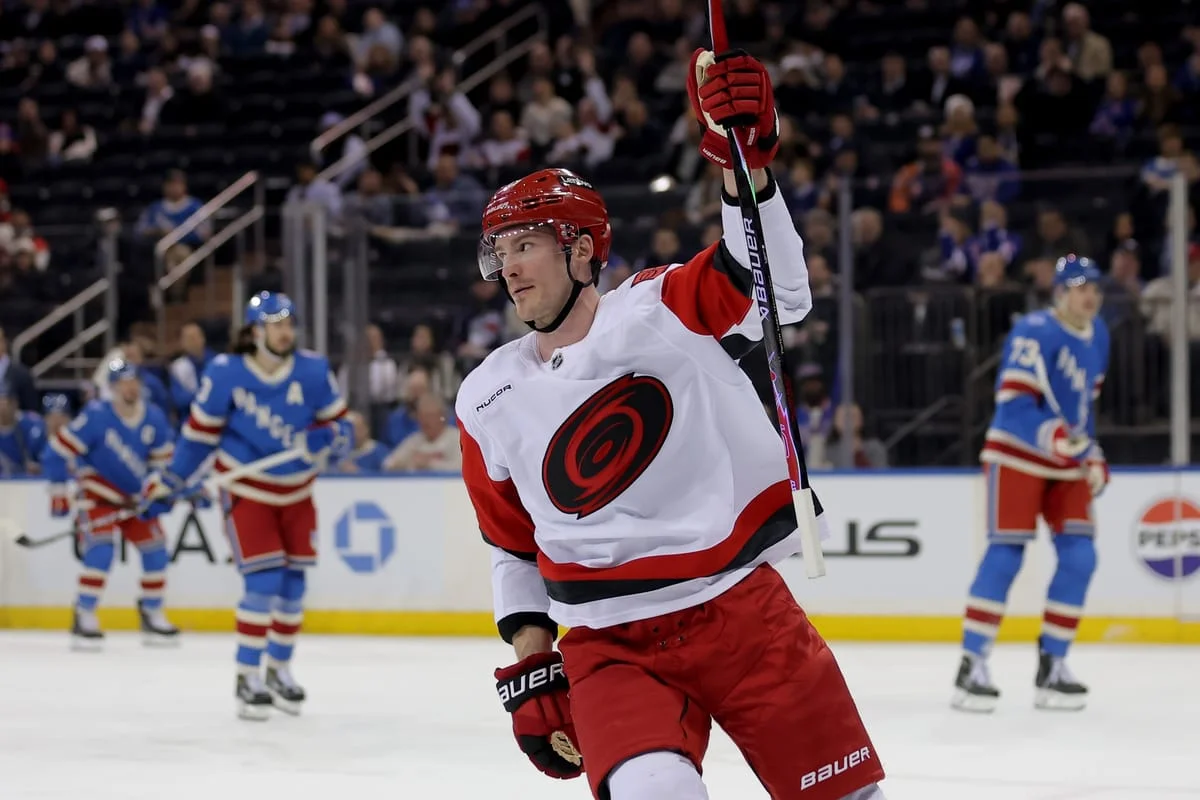
The New York Rangers face a critical moment with Brennan Othmann’s development, as the young forward’s future with the team hangs in the balance amid his struggles. Despite being a promising first-round pick in 2021 and showing flashes of offensive skill, Othmann’s transition to the NHL has been rocky, but the Rangers need to continue investing in his growth to salvage the potential they initially saw.
Brennan Othmann’s Offense and Confidence Have Waned Since Joining the Rangers
Brennan Othmann entered the NHL spotlight as a highly touted 16th overall draft pick in 2021 who was expected to bring scoring prowess and energy to the Rangers’ roster. Standing 6-foot tall and weighing 192 pounds, the winger’s quickness and aggressive north-south style fit the Rangers’ vision under GM Chris Drury. His junior career was impressive, notably scoring 50 goals and 47 assists in 66 games during the 2021-22 season with the Flint Firebirds, accompanied by a fiery, physical edge. He carried similar momentum into the AHL, tallying 21 goals in his rookie pro season with Hartford.
However, Othmann’s NHL production starkly contrasts with his earlier outputs. Over 41 games spread across three seasons, he has recorded just one goal and two assists, a signal that he has yet to make a significant impact at the top level. His first NHL goal came January 17 against the Philadelphia Flyers, where he capitalized on a 3-on-1 break and scored with a quick wrist shot after receiving a pass from teammate Will Cuylle in a 6-3 victory.
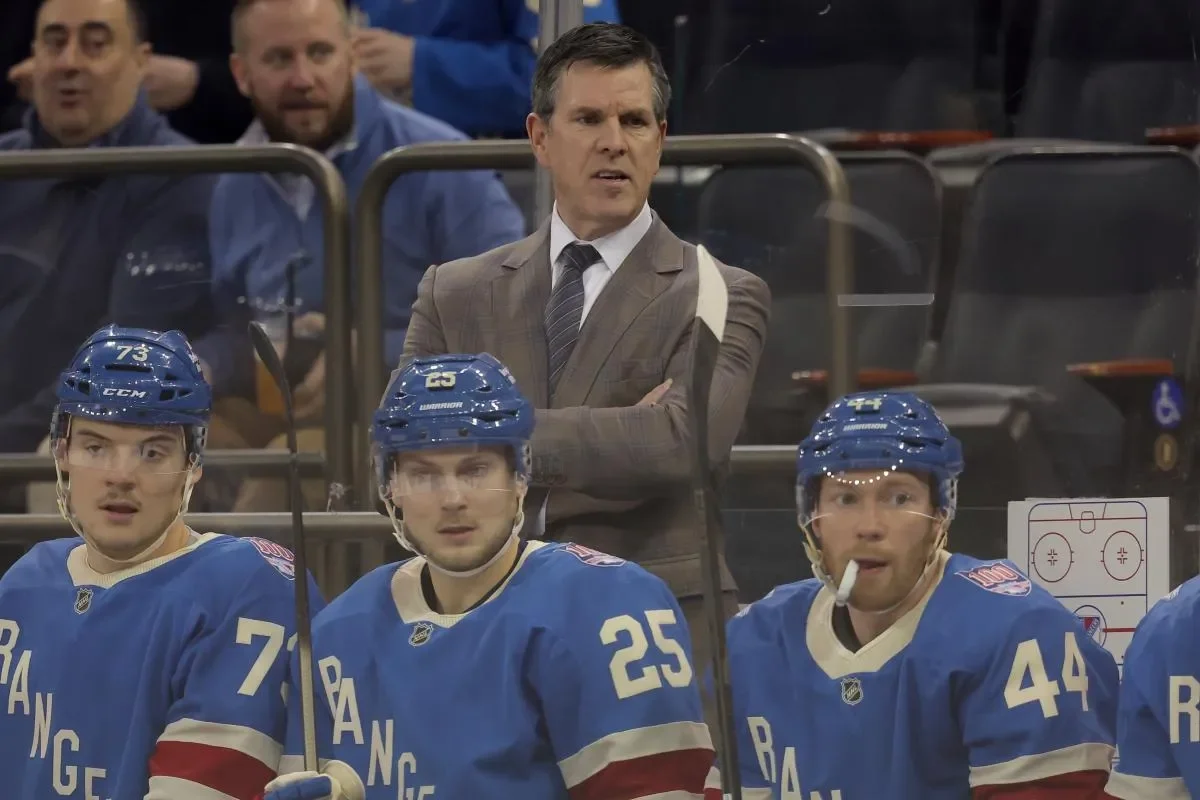
🚨 FIRST NHL GOAL ALERT 🚨 Congratulations, Brennan Othmann! pic.twitter.com/ZU1d2cm6c2
Despite this milestone, Othmann failed to build momentum, going scoreless in the following seven games. He was healthy scratched during the Rangers’ 2-0 loss to the Carolina Hurricanes just before the Olympic break, highlighting the fragile state of his standing on the team.
The primary issue appears to be a loss of confidence. Othmann’s previously bold and physical style, including his willingness to drop the gloves multiple times in juniors, AHL, and even once last season in the NHL, has vanished. His hesitation points to a fear of making mistakes, a common challenge for young players adjusting to the NHL pace and pressure. Coach Mike Sullivan has emphasized Othmann needs defensive improvement and more consistent play across all zones, signaling that Othmann’s cautiousness may be hindering his ability to contribute fully.
When asked about the decision to scratch Othmann before the Olympic break, Sullivan was clear:
Well, ‘Otter’ and I have had a number of conversations, we had a conversation today, on why I made the decision I made,
And I think there are elements of his game that have to continue to improve in order for him to establish himself as an NHL player.
Such comments echo Sullivan’s earlier statements when Othmann was a training camp cut, underscoring ongoing concerns about his readiness for a larger role. Since being recalled in January following a crushing 10-2 loss to the Boston Bruins, Othmann has seemed inconsistent, partly caught in his own head while trying to meet the high expectations laid out by the coaching staff.
Examining Why Brennan Othmann Has Fallen Short of Expectations with the Rangers
Though Mike Sullivan is a seasoned coach with two Stanley Cup championships, questions remain over whether Othmann is being utilized to his best advantage. The winger averages just under 10 minutes a game, primarily on the fourth line — a role many observers believe does not suit his skill set. While a top-six role might be premature, there is evidence that Othmann can thrive with greater responsibility, demonstrated during several shifts centering him on a third line with Noah Laba and Will Cuylle.
The Rangers’ current woes, reflected in a 22-29-6 record that included losing 15 of 18 games leading up to the break, suggest that there is little risk in allowing Othmann more ice time, even if mistakes occur. A difficult season should ideally serve to foster growth among younger players through valuable in-game experience rather than limiting opportunities out of fear of failure. Nonetheless, if the coaching staff feels Othmann lacks the commitment to adapt fully to their system, then his role diminishes further.
Othmann’s struggles also highlight broader issues with the Rangers’ player development framework. Several highly regarded prospects have either stagnated or failed to meet expectations, contributing to the decision by management to initiate a formal retool aimed at speeding up the team’s youth movement and improving overall skill.
While trading veterans for future talent is part of this strategy, the organization must also evaluate whether it is effectively nurturing the potential already on its roster. Othmann’s junior and AHL performances indicate a player with untapped offensive upside and an edge that aligns with the Rangers’ desired identity. Over parts of three AHL seasons with Hartford, he recorded 39 goals and 44 assists in 117 games, reinforcing the argument that the offensive talent remains.
His recent season has been harsh not only on the ice but also physically; a December 20 fight against the Philadelphia Flyers’ enforcer Nic Deslauriers left Othmann visibly worn down, indicative of the uphill battle he faces. Rather than abandoning him now, the Rangers should recognize this as a crucial moment to provide support and confidence, giving Othmann a chance to reclaim the spirited, productive player he once was.
Failure to back Othmann at this stage could raise concerns about the Rangers’ ability to execute their rebuilding plan successfully and to develop players who can become foundational pieces in the team’s future. Whether or not Othmann ultimately factors into the Rangers’ long-term core, his situation is a test case for how the organization manages emerging talent under pressure.
🚨 FIRST NHL GOAL ALERT 🚨
Congratulations, Brennan Othmann! pic.twitter.com/ZU1d2cm6c2
— NHL (@NHL) January 17, 2026
