
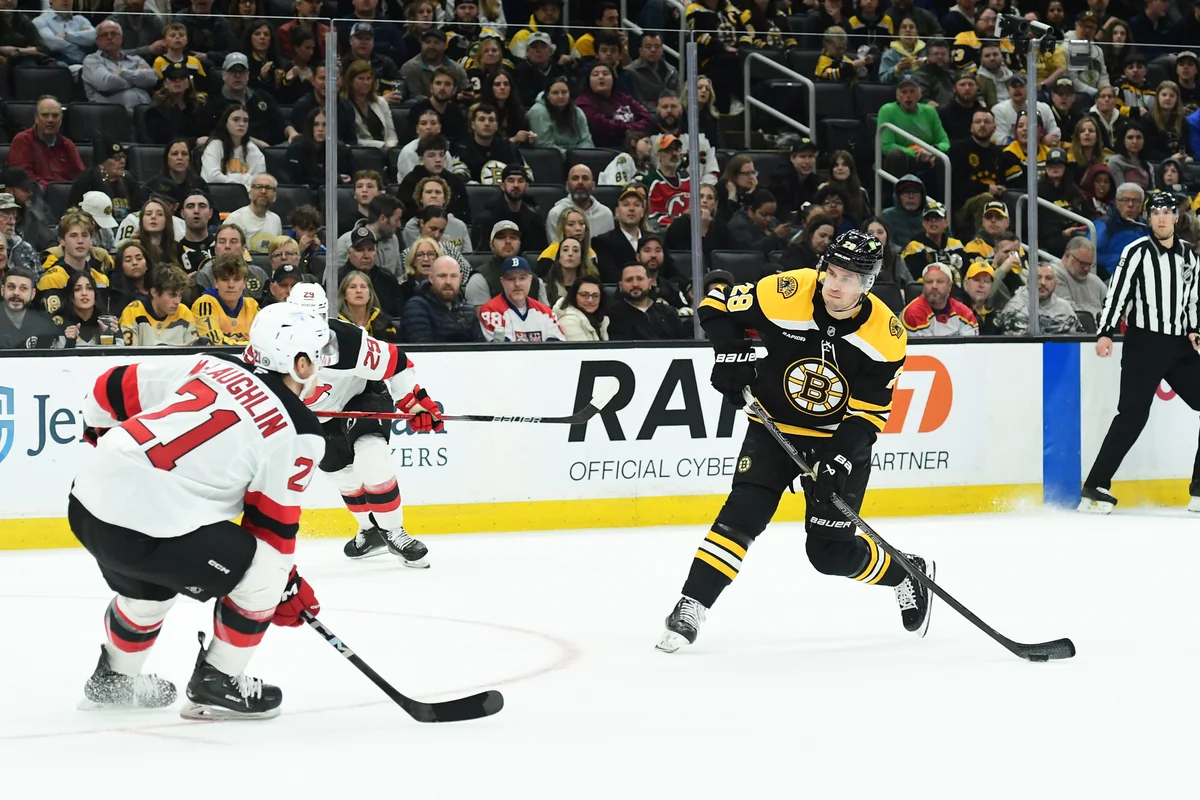
With less than a month remaining before the NHL trade deadline and the Olympic break underway, the New Jersey Devils find themselves at a critical juncture. This season’s struggles have dampened hopes for a playoff berth, despite a strong start that suggested consecutive postseason appearances were within reach. The Devils are now confronted with challenging decisions on whether to sell short-term assets or continue building for the future as the trade deadline looms.
Current Performance and Playoff Outlook
The Devils entered the break with a 28-27-2 record, placing seventh in the Metropolitan Division and carrying just a 2.4% chance of making the playoffs. After opening the season an impressive 8-1-0, their momentum sharply declined, going 20-26-2 since that run and dropping into a three-game losing streak before the pause. While a late-season surge is always possible, securing a postseason spot in the highly competitive Eastern Conference now appears unlikely. Despite that, a full rebuild won’t be considered given the team’s talented core and lengthy contractual commitments.
Trade Deadline Financial Standing and Roster Flexibility
Heading into the deadline day, New Jersey has approximately $7.66 million in salary cap space, with 48 out of 50 roster spots filled, and no use made of retention slots. This tight cap situation limits flexibility but still allows general manager Tom Fitzgerald to explore acquisition opportunities, particularly to bolster the lineup or address positional needs. The Devils’ collection of mid- to late-round draft picks in coming drafts also provides some leverage for trade negotiations.

Assets Available and Recent Transaction Activity
In recent weeks, the Devils added veteran center Nick Bjugstad in a trade with the St. Louis Blues before the Olympic roster freeze. Bjugstad’s contract extends through next season, making this a low-risk move to strengthen the bottom-six forward group rather than a major strategic pivot. Leading up to the March 6 deadline, GM Fitzgerald could look for similar affordable depth additions while also testing the market for restricted and unrestricted free agents whose contracts are nearing expiration.
Players Potentially on the Trading Block
The team’s group of NHL-ready pending unrestricted free agents is small but notable. Evgenii Dadonov, signed last summer as a veteran depth forward, has struggled with injuries and confidence issues, posting no points in 17 games and a minus-3 rating this season. Nonetheless, his recent playoff success with the Dallas Stars and productive third-line output last year could interest contending teams.
Luke Glendening, once a key fourth-line center, has been largely supplanted by Bjugstad and is producing disappointing numbers with only four assists in 52 games and a minus-11 rating, alongside declining effectiveness in penalty killing and faceoffs. Given these struggles, he may attract little trade interest. Zack MacEwen, hindered by injuries this season with just three games played, brings veteran NHL experience and an enforcer role that could appeal to contenders seeking toughness in depth roles.
Longer-term considerations include the contracts of Arseny Gritsyuk, who requires a new deal this summer, as well as captain Nico Hischier and Dawson Mercer, both signed through 2027. It would be strategic for the Devils to contemplate moving a player with term at an overstocked position if the trade eases cap constraints and brings back NHL-ready assets. New Jersey’s prior roster shuffling included trading Ondřej Palát to the Islanders in exchange for Maxim Tsyplakov and a mid-round draft pick as a comparable move.
Defensive Players At the Center of Trade Rumors
There are several defensive candidates who could factor into deadline discussions. Dougie Hamilton, carrying a $9 million cap hit, has been linked to potential moves for over a year but holds a no-movement clause that currently blocks most trade possibilities. His output of seven goals and 21 points in 52 games does not fully justify his cap burden, which may complicate finding a trade partner.
Johnathan Kovacevic, under a recent five-year, $20 million contract following his breakout season, has been limited to 11 games due to knee surgery, managing only two assists and a minus-6 rating. Given uncertainties about his health and limited recent playtime, persuading a team to assume his contract presents a notable challenge.
Critical Needs: Goaltending and Scoring Depth
Goaltending remains a pressing issue for the Devils. Jacob Markström has struggled significantly as the primary starter, with a save percentage of .882 over 30 games and a negative goals-above-expected rating of -10.9. His upcoming two-year, $12 million cap hit beginning next season further complicates the position. Backup Jake Allen remains a reliable No. 2 option but is limited to about 30 games a year. Meanwhile, third-string goalie Nico Daws has shown strong performance in limited NHL appearances but is enduring a difficult season in the AHL with a .881 save percentage. Prospect Mikhail Yegorov, who once seemed potential-ready for NHL action, has regressed in college competition. The Devils face a difficult path to solidify goaltending depth, potentially exploring trades to bring in another goalie capable of sharing responsibilities with Markström and Allen.
Offensively, New Jersey is plagued by a lack of depth scoring beyond star forward Jack Hughes, who has maintained a point-per-game pace despite missing time due to injury. The team ranks near the bottom of the league with 2.51 goals per game, only trailing Calgary in scoring. Other key forwards such as Jesper Bratt, Hischier, and Timo Meier have each experienced offensive declines, while bottom-six players like Paul Cotter and Stefan Noesen have contributed inconsistently. Acquiring a dependable scoring winger or center to strengthen the middle-six could prove crucial for future playoff pushes as the primary forwards aim to rebound.
The Road Ahead for the New Jersey Devils
The Devils confront a complex blend of immediate setbacks and long-term planning challenges as the trade deadline nears. With playoff chances diminishing this season, management must weigh the benefits of selling veteran assets to accelerate rebuilding against the desire to maintain a competitive roster. Key contractual obligations and limited cap space restrict aggressive moves, but strategic trades involving players like Dadonov, Hamilton, or Kovacevic could offer relief if balanced with youth and draft capital acquisitions. Addressing the glaring weaknesses in goaltending and offensive depth will be essential to improving the team’s prospects for next season and beyond.
General manager Tom Fitzgerald’s decisions in the coming weeks will significantly influence the Devils’ trajectory, determining whether they pivot toward a rebuild or attempt to salvage competitiveness within a crowded Metropolitan Division landscape.
