

The Buffalo Sabres are approaching critical free agency decisions that could shape their future success as they prepare for the upcoming trade deadline. After emerging as a strong playoff contender in the Eastern Conference, the team must carefully manage its roster and salary cap, particularly with several players reaching free agency following the 2025-26 NHL season.
Over the past six months, the Sabres have made significant progress, ending a 14-year playoff drought and establishing a core of young talent including Rasmus Dahlin, Tage Thompson, Owen Power, Mattias Samuelsson, and Josh Doan—a player recently signed to a seven-year contract extension after being acquired in the JJ Peterka trade from the Utah Mammoth. However, the team faces challenges in balancing financial flexibility and competitive depth as it moves closer to the 2026-27 season, with projected salary cap space of just $13.3 million, according to PuckPedia.
Deciding the Future of Unrestricted Free Agents: Alex Tuch and Others
Among the unrestricted free agents, winger Alex Tuch stands out as a pivotal figure in the Sabres’ plans. The team appears likely to retain Tuch as a rental for the remainder of the season rather than trade him during the playoff push, as his importance to the locker room and on-ice contributions weigh heavily in their decision. His anticipated contract demands—around $10.5 million annually for eight years—make a long-term extension impractical, especially since he will be 30 years old by May.
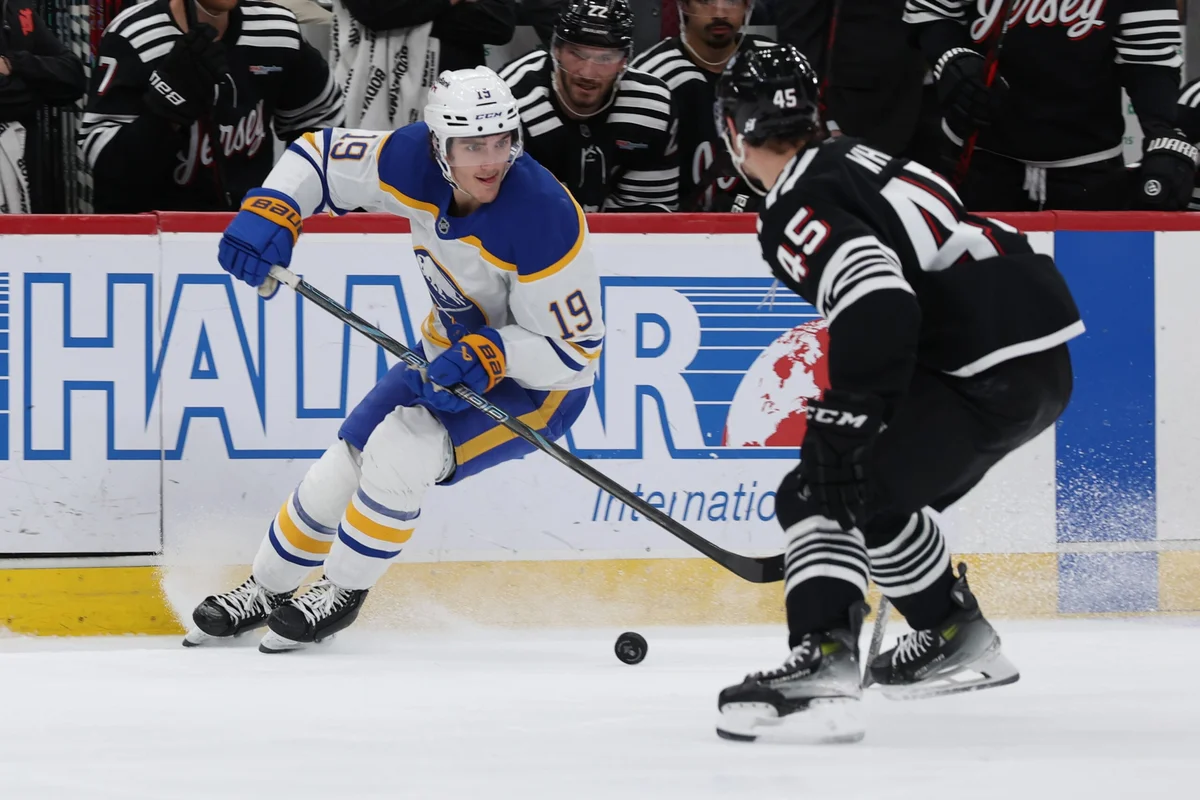
There is a possibility that Tuch’s market value may fall short of his agents’ expectations, which might allow Buffalo to re-sign him in the offseason for a more manageable salary. Still, if another team offers a lucrative deal extending into his late 30s, the Sabres will likely let him explore free agency.
Other unrestricted free agents include Beck Malenstyn, who plays a unique role as a high-energy fourth-line winger known for his physical play. The Sabres seem inclined to re-sign him on a short-term deal, likely one or two years, provided his salary demands remain close to his current $1.35 million. Malenstyn’s style fills a gap in Buffalo’s lineup that no other current player or minor leaguer adequately covers.
Conversely, players such as Josh Dunne and Jacob Bryson are expected to depart. Dunne has contributed well on the bottom lines but is seen as expendable if Malenstyn returns and there is no trade for Jordan Greenway. Bryson, who has been with the organization since the 2017 NHL Draft, has not developed beyond a seventh defenseman role and is not projected to be retained.
Restricted Free Agent Choices: Valuing Health and Role Fit
Among restricted free agents, Zach Benson has demonstrated his value as a crucial role player whose absence significantly affects the Sabres’ performance. Despite his injury history, the team is likely to commit to a long-term deal now to avoid facing an exorbitant contract later if he remains healthy for a full season. Benson’s aggressive playing style carries risks, but his contributions justify the investment.
Peyton Krebs provides important intangible benefits as a reliable fourth-line center with strong defensive acumen and team-oriented effort. While not an offensive threat, his presence is vital, especially when injuries force line adjustments. The Sabres aim to re-sign Krebs on a short-term contract, with hopes that increased offensive depth will allow him to remain a bottom-line fixture without being pressed into higher roles beyond his capabilities.
Michael Kesselring offers a more complicated case. Previously considered for a long-term extension, the 26-year-old defenseman’s season has been hampered by injuries and limited production, registering only one point in 24 games. Buffalo appears set to offer him a short-term, “prove-it” contract that would allow Kesselring to rebuild his value. Teams may reassess his prospects later if he shows significant improvement after the Olympic break.
Evaluating Prospects and Potential Trades Ahead of the Offseason
Isak Rosen, a 2021 first-round pick, has excelled in the AHL with the Rochester Americans, tallying 183 points over 228 games, including notable flashes of NHL capability this season. Despite these performances, the Sabres have hesitated to promote him to a regular top-six NHL role, which threatens to diminish his value as he nears 23 years old in March.
Given his status and potential, Buffalo might consider trading Rosen during the offseason to acquire a proven offensive player who can contribute more immediately at the NHL level. Moving Rosen could provide additional resources to deepen the team’s offensive lineup, addressing a key need as the playoff push intensifies.
Managing Salary Cap and Roster Depth Ahead of Trade Deadline
With limited projected salary-cap space for the next season, Buffalo may prioritize short-term rentals in trades to bolster their roster for the playoff run rather than make large, long-term commitments before the deadline. Significant roster moves could be deferred until the summer, when the full salary picture becomes clearer.
The Sabres’ front office under general manager Jarmo Kekalainen faces a difficult balancing act, navigating pressure to maintain momentum while preparing for sustained success. The decisions made over the next few months—whether re-signing key role players or trading promising prospects—will have lasting impacts on the team’s trajectory heading into the coming NHL seasons.
This critical juncture carries the weight of Buffalo’s recent resurgence and the hopes of ending a long postseason absence. How the Sabres address these impending free agency challenges will shape the foundation they have worked diligently to build and potentially determine their competitiveness for years to come.
Sabres when Zach Benson plays
28-10-4
Sabres when Zach Benson doesn't play
4-8-2 (and down 3-1 tonight)
— Sabre Noise (@sabrenoise) February 6, 2026
