
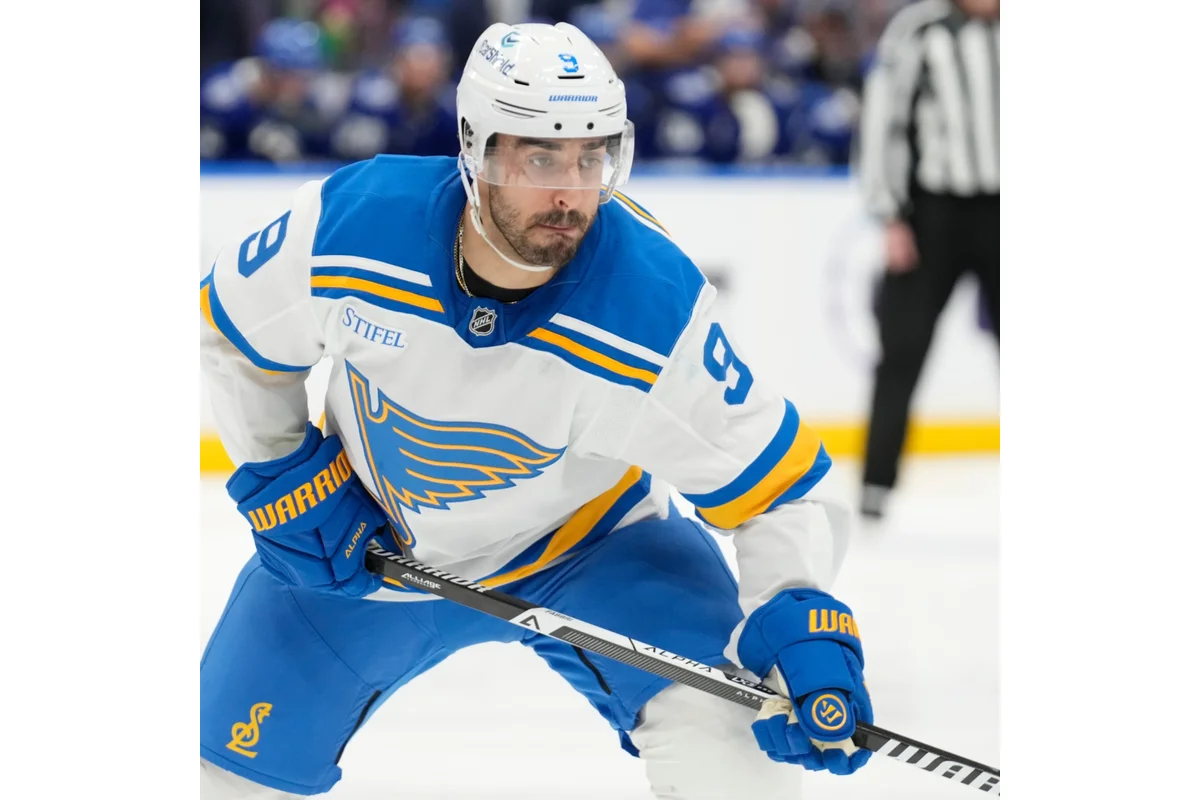
Robby Fabbri’s NHL comeback continues to capture attention as he pursues yet another chapter in his career amid ongoing obstacles. His story, marked by resilience and perseverance since being drafted 21st overall in 2014, showcases a player determined to overcome repeated setbacks in hopes of returning to form. Now 30 years old and joining the Minnesota Wild, Fabbri aims to prove that his past injuries and struggles don’t define his future on the ice.
Fabbri’s drive to succeed traces back to his childhood in Ontario, where his passion for hockey left no other career alternative in his mind. As a young boy, when confronted by his grandfather about life beyond hockey, Fabbri dismissed the idea entirely, embodying a singular focus on the NHL.
Early Promise and Breakthrough in Junior Hockey
Before turning pro, Fabbri made waves in the Ontario Hockey League, playing for his hometown Mississauga Rebels. In a remarkable underdog story, he led the Rebels to a victory against the powerhouse Toronto Marlies in the OHL Cup finals, a team featuring soon-to-be NHL stars Connor McDavid and Sam Bennett. His father recalls that many doubted their chances:
“A lot of people said, ‘They’re not the Marlies, they’re not going to win.’”
– Fabbri’s Father
This triumph set the stage for Fabbri’s entry into the NHL. The St. Louis Blues added him to their opening night roster for the 2015-16 season, where he quickly established himself as a reliable offensive contributor, maintaining a pace near 20 goals per full season. His rookie performance hinted at a promising future.
Setbacks from Critical Injuries
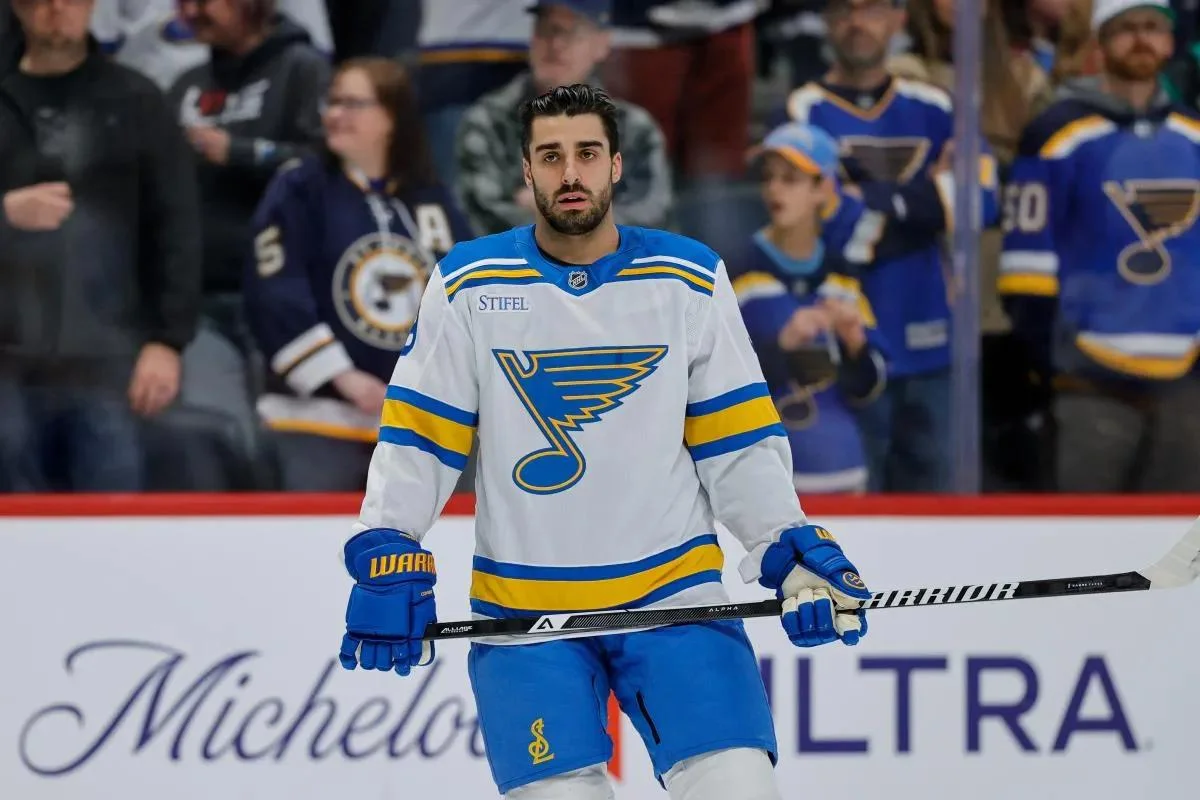
Fabbri’s ascent was stalled by major injuries, beginning with a torn ACL on February 4, 2017. Although he returned after five months, the timing compromised a crucial offseason of development. Worse yet, he suffered a second ACL tear during the 2017 preseason, sidelining him for nearly 20 months and robbing him of vital playing time in his early 20s. Such an extended absence is particularly daunting for any athlete, let alone one whose identity is so woven into the game.
During this period, Fabbri’s rehabilitation took him back to Ontario, where his interaction with his agent Mark Guy and trainer Matt Nichol sparked a renewed commitment to fitness. Guy considers this phase pivotal:
He became more dedicated to his training and conditioning than ever before.
– Mark Guy, Agent
Besides grueling workouts, Fabbri also found time to design a hat line and welcomed a French Bulldog into his life, using creativity and companionship to ease the monotony of rehab.
Financial and Career Challenges in Later Seasons
The road back to full health did not immediately translate to on-ice success or financial security. After missing the entire 2017-18 season, Fabbri entered the summer of 2018 as a restricted free agent (RFA) facing a tough market. Many of his draft peers signed lucrative contracts exceeding $30 million, but Fabbri was forced into a one-year, $925,000 “prove-it” deal, reflecting his uncertain standing within the league.
These prove-it contracts often benefit teams by limiting cap hits while placing significant pressure and risk on the player. For Fabbri, this arrangement reflected the years lost to injury rather than his talent level. Unfortunately, injuries persisted; he managed just 32 games with the Blues in that period, hindered by groin and shoulder issues, and recorded only six points.
Career Highlight: Stanley Cup Triumph Amid Adversity
For many, Fabbri may be best remembered not for his individual stats but for his contribution to the St. Louis Blues’ 2019 Stanley Cup victory. Although his playing time was limited to roughly nine minutes per game over ten playoff contests, and he scored a single goal, the achievement marks the pinnacle of his career so far.
Financially, it is estimated that Fabbri has forfeited over $40 million in potential earnings, a stark contrast to his peers. However, this does not diminish the value of a Stanley Cup ring from his perspective. Indeed, this milestone stands as a testament to his unwavering dedication.
Role and Expectations with Minnesota Wild
As Fabbri joins the Minnesota Wild at age 30, comparisons to recent waiver claims like Vinnie Hinostroza provide context. Both offer more offensive skill than traditional fourth-line players but lack the defensive robustness expected of bottom-six forwards. Fabbri’s ability to produce in open ice situations and his veteran instincts near the crease remain assets when given chances.
His recent performances illustrate a decline from his early promise. He has yet to surpass the 18 goals he scored as a rookie, though he matched that total during the 2023-24 season with the Detroit Red Wings. While serving as a valuable third-line player in Detroit, with nearly 13 minutes per game including spot duty on the second power play unit, he is unlikely to hold a significant offensive role with Minnesota beyond injury cover on special teams.
Recent Struggles and Potential for Revival
The statistics from Fabbri’s 2024-25 season with the Anaheim Ducks highlight noticeable struggles. A minus-15 plus-minus rating reflects performance well below replacement level. Despite his history with St. Louis, the Blues’ decision to waive Fabbri suggests caution about his current impact. The fact that no team offered a trade adds to concerns about his viability as a NHL regular at this stage.
Injuries remain a factor; Fabbri missed 11 games in Detroit due to a lower-body issue and 13 more in Anaheim following knee surgery, plus a hand injury in March. Such setbacks have hampered his attempts to regain consistency and may have contributed to diminished analytics.
System Fit and Opportunity for Growth in Minnesota
While the analytics are troubling, a change of environment and style of play might help Fabbri rediscover a productive role. Minnesota’s current fourth line, aside from Nico Sturm, has underperformed, suggesting room for incremental improvements. Adding Fabbri could spark competition that benefits all involved, potentially raising the overall level of play among the fourth-line wings, including Ben Jones, Tyler Pitlick, and Vinnie Hinostroza.
Fabbri has historically played better on teams contending for playoff spots, such as the 2023-24 Red Wings, rather than struggling clubs like Anaheim or St. Louis. His stamina and effectiveness seem linked to team context and morale.
Minnesota’s defensive system may suit Fabbri better than previous setups. According to Jack Han’s analysis in Hockey Tactics 2025, Anaheim’s defensive schemes focused largely on instructing younger players in fundamentals rather than optimizing defensive outcomes. For an experienced player coping with lower-body injuries, Anaheim’s demands were physically taxing and possibly detrimental to defensive metrics.
In contrast, the Wild employ a more conventional zone defense that limits the need for wingers to aggressively pursue opposing forwards throughout the zone. This system could help Fabbri conserve energy and focus on his offensive contributions without overextending on defense.
A Final Chance to Prove Endurance and Skill
The Wild’s pro scouting staff appears willing to gamble on Fabbri’s potential resurgence, signaled by a modest cap hit of $775,000. This low-risk investment reflects a hope that his combination of experience and skill can still serve a useful role, especially if he can stay healthy.
Beyond salary considerations, this opportunity represents one last chance for Fabbri to demonstrate the fortitude that has characterized his career. Time and injuries have tested his resolve, yet his commitment to the NHL remains unshaken. Whether at age seven or 30, he holds steadfast to a singular goal of staying in the league.
Once again, Fabbri faces the challenge of rebounding from adversity with the hope of adding another Stanley Cup to his legacy.
