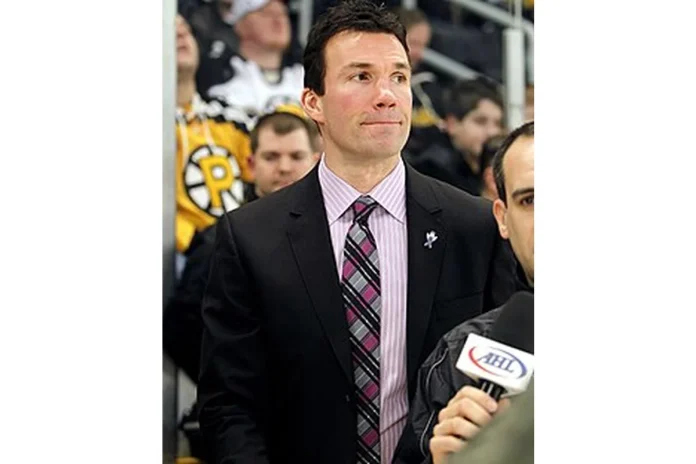
Luke Richardson Bio
Luke Glen Richardson MSC (born March 26, 1969) is a Canadian professional ice hockey coach and former National Hockey League (NHL) defenceman. He currently serves as an assistant coach for the Nashville Predators under head coach Andrew Brunette, a role he assumed on June 24, 2025. Selected seventh overall by the Toronto Maple Leafs in the 1987 NHL Entry Draft, Richardson played more than 1,000 NHL games across 21 seasons with six different franchises. Standing 6 feet 4 inches tall and weighing 216 pounds, the Ottawa, Ontario, native was widely recognized for his aggressive, stay-at-home defensive style throughout his playing career.
Early Life and Background
Luke Glen Richardson was born on March 26, 1969, in Ottawa, Ontario, Canada. Growing up in the Canadian capital gave him early and constant exposure to the country’s most competitive hockey culture, and he quickly developed into a promising defenceman. He spent two seasons with the Peterborough Petes of the Ontario Hockey League (OHL), where his steady two-way play helped elevate his draft stock. Those junior years established the foundation for what would become a long and durable professional career on the blue line.
Richardson represented Canada before even reaching the NHL, suiting up for the Canadian men’s national junior team in 1987. That squad became part of hockey lore for an unfortunate reason, as it was involved in the infamous Punch-up in Piestany brawl. Despite the chaotic tournament, Richardson’s play was strong enough to convince the Toronto Maple Leafs to make him the seventh overall selection in the 1987 NHL Entry Draft, marking him as one of the most highly regarded defencemen of his draft class.
Path to the NHL
Richardson’s path to the National Hockey League ran directly through his development with the Peterborough Petes in the Ontario Hockey League. Over two seasons, he refined the defensive details and physical play that would later define his professional reputation, earning the attention of NHL scouts as a top prospect. His combination of size, mobility, and reliability in his own end made him an ideal candidate for a top-ten selection, and Toronto did not hesitate to invest a premium pick in his potential.
The Toronto Maple Leafs selected Richardson seventh overall in the 1987 NHL Entry Draft, and he joined the club in time for the 1987-88 season. Midway through his rookie year, on January 6, 1988, he was the victim of an infamous attack by Dino Ciccarelli of the Minnesota North Stars, who struck him several times with his stick. Ciccarelli was convicted of assault, served one day in jail, and paid a C$1,000 fine, while Richardson returned to the lineup and continued to play a regular role on the Toronto blue line.
Luke Richardson Career
Early Career (1987-1991)
Richardson began his NHL career with the Toronto Maple Leafs in 1987 and quickly carved out a role as a steady, physical defenceman. He remained a regular on the Toronto blue line for four seasons, providing a defensive presence that earned the trust of his coaching staff. Though not a major point producer, his willingness to play a tough, defensive style set the tone for the rest of his career.
In 1991, Richardson was part of one of the most talked-about trades of the era, moving to the Edmonton Oilers along with Vincent Damphousse, Scott Thornton, Peter Ing, future considerations, and cash in exchange for Grant Fuhr, Glenn Anderson, and Craig Berube. The blockbuster deal signalled a new chapter in his development, and he continued to be valued for his aggressive, stay-at-home approach on the back end.
Philadelphia Flyers Era (1992-2000)
After his time in Edmonton, Richardson joined the Philadelphia Flyers in 1992 and became a fixture on the team’s blue line for several seasons. He embraced the physical identity that the Flyers organization has long been known for, and his steady defensive play helped Philadelphia remain a competitive force in the Eastern Conference throughout the 1990s. His reliability in his own end and his willingness to block shots made him a respected presence in the Flyers’ dressing room.
The high point of Richardson’s time in Philadelphia came during the 1999-2000 season, when the Flyers advanced to the Eastern Conference Finals. It was the closest he would ever come to reaching the Stanley Cup Finals, as Philadelphia ultimately fell 4-3 to the New Jersey Devils. Despite the disappointing ending, his performance throughout that playoff run reinforced his reputation as a dependable postseason competitor.
Columbus Blue Jackets Era (2000-2006)
Richardson moved to the Columbus Blue Jackets, where he became a cornerstone of one of the league’s newest franchises. He served as captain of the Blue Jackets during his time in Ohio, providing leadership and stability for a young team still establishing its identity in the NHL. His experience and toughness helped set a standard for the organization’s developing core.
On March 8, 2006, Richardson was traded back to the Toronto Maple Leafs in the final year of his time with Columbus. He finished the 2005-06 season with the Leafs before moving on to the next stage of his career.
Tampa Bay Lightning and Ottawa Senators (2006-2008)
Richardson signed a one-year contract with the Tampa Bay Lightning for the 2006-07 season, appearing in 27 games and registering 3 assists and 16 penalty minutes. He became a healthy scratch by the end of that season and the playoffs, eventually becoming an unrestricted free agent. On August 7, 2007, he signed a one-year, $500,000 two-way contract with his hometown Ottawa Senators, amid speculation that he would soon announce his retirement from the NHL.
On February 15, 2008, Richardson was named the Senators’ nominee for the Bill Masterton Memorial Trophy, though the award ultimately went to Jason Blake of the Toronto Maple Leafs. He re-signed with Ottawa for the 2008-09 season, but appeared in only two games before announcing his retirement as a player on November 27, 2008. Shortly after, he was hired as an assistant coach by the Senators, launching the second phase of his professional hockey career.
Driving Style and Strengths
Richardson was known throughout his playing career as an aggressive, stay-at-home defenceman who put team defence ahead of personal statistics. He rarely produced significant point totals, but his value came from his physicality, shot-blocking, and ability to log difficult minutes against opposing top lines. His dependable, blue-collar approach made him a trusted partner for goaltenders and a calming presence in his own zone.
Notable Events and Milestones
Beyond his 1987 draft selection, one of the defining moments of Richardson’s early career was the January 6, 1988, on-ice attack by Dino Ciccarelli, an incident that became one of the most talked-about events of the 1980s NHL season. Later, his selection as the Senators’ Bill Masterton Memorial Trophy nominee in 2008 reflected the respect he had earned across the league for perseverance and dedication to the game.
Luke Richardson Career Coaching Path
Following his November 2008 retirement announcement, Richardson immediately transitioned into coaching, beginning his NHL coaching career as an assistant with the Ottawa Senators during the 2009-10 season. He worked under head coach Cory Clouston for two seasons, and the Senators posted a combined 117-103-26 record over three years, making the Stanley Cup playoffs twice but never advancing past the first round.
Binghamton Senators (2013-2016)
After three seasons in Ottawa, Richardson joined the Binghamton Senators, Ottawa’s American Hockey League (AHL) affiliate, as head coach. In his rookie season, he led an inexperienced Binghamton team to a 44-24-1-7 record, finishing fourth in the AHL’s Eastern Conference. He was named coach of the AHL Eastern Conference All-Star team in 2012-13 after guiding the Senators to the conference’s best record at the all-star break, and was rewarded with a contract extension.
New York Islanders, Montreal Canadiens, and Chicago Blackhawks (2017-2024)
On May 18, 2017, Richardson was hired by the New York Islanders as an assistant coach. The following year, on July 7, 2018, he joined the Montreal Canadiens as an assistant coach to Claude Julien. During the 2021 Stanley Cup Playoffs, Richardson temporarily served as head coach in Game 3 of the Semifinals against the Vegas Golden Knights and through the remainder of the series after interim head coach Dominique Ducharme entered COVID-19 protocols, leading the team to a series win and a place in the 2021 Stanley Cup Finals.
On June 27, 2022, Richardson was named the 40th head coach in Chicago Blackhawks franchise history. Despite a combined 49-102-13 record over his first two seasons, he was praised for his managerial abilities while working with a weak roster. On December 5, 2024, the Blackhawks fired Richardson after the team tallied a league-worst 18 points through the first 26 games of the season.
Luke Richardson Family
Family Background and Personal Life
Richardson and his wife Stephanie had two daughters, Daron and Morgan. He is the uncle of Washington Capitals defenceman Jakob Chychrun. The Richardson family has been closely associated with the Ottawa hockey community, and Luke’s long career and post-playing roles in the city reflected those deep roots.
The family endured profound personal tragedy on November 13, 2010, when Daron died by suicide at the family home in Ottawa. Five days later, approximately 5,600 mourners attended a celebration of life ceremony at Scotiabank Place in Kanata, Ontario, and the Philadelphia Flyers held a moment of silence before their game against the Senators on November 15. On February 2, 2011, the Richardsons, the Royal Ottawa Foundation for Mental Health, the Senators Foundation, and the Ottawa Senators announced the creation of a youth mental health program known as “Do it for Daron.” In April 2017, Luke and Stephanie Richardson were awarded the Meritorious Service Cross for their efforts in raising awareness of youth mental health.
2025 Season Outlook
Richardson was named assistant coach of the Nashville Predators on June 24, 2025, joining the staff of new head coach Andrew Brunette. His arrival in Nashville came shortly after his dismissal from the Chicago Blackhawks, where he had served as head coach. With extensive experience behind NHL benches in Ottawa, Montreal, and Chicago, he is expected to contribute defensive structure and player development to a Predators team entering a new coaching era.
Throughout his career, Richardson has built a reputation for steady leadership and clear communication, qualities that are likely to influence his work with Nashville’s blue line. The 2025-26 season will represent an opportunity for him to reset professionally while helping shape the identity of a retooling Predators roster. His track record of guiding young players and stabilizing defensive groups positions him as a meaningful addition to Brunette’s staff in Music City.