Seattle Storm Overview
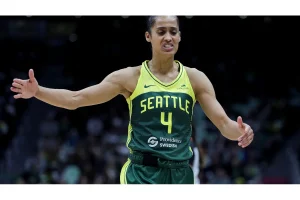
The Seattle Storm are a professional women’s basketball team based in Seattle, Washington, competing in the Western Conference of the Women’s National Basketball Association (WNBA). Founded in 2000, the franchise has become one of the league’s most successful organizations, capturing four WNBA championships in 2004, 2010, 2018, and 2020, along with the inaugural WNBA Commissioner’s Cup in 2021. The team plays its home games at Climate Pledge Arena and is owned by Force 10 Hoops LLC, a group composed of Seattle businesswomen Dawn Trudeau, Lisa Brummel, and Ginny Gilder, along with former player Sue Bird and NFL player Bobby Wagner. Known for a family-friendly atmosphere and weather-inspired branding, the Storm have built a loyal fan base and a reputation for competitive excellence across more than two decades of play.
Founding and Organizational Origins
The Seattle Storm were created ahead of the 2000 WNBA season by Ginger Ackerley and her husband Barry, who operated the team as the sister franchise of the Seattle SuperSonics of the National Basketball Association (NBA). The team emerged after the city of Seattle was awarded a WNBA expansion franchise, filling a void left by the Seattle Reign, which had played in the now-defunct American Basketball League (ABL) from 1996 through late 1998. The Storm took the court less than two years after the ABL folded, having been built through a December 1999 WNBA expansion draft that also stocked the Indiana Fever, Portland Fire, and Miami Sol.
The early organizational structure centered on building a competitive roster from scratch, with Lin Dunn serving as the first head coach and guard Edna Campbell and Czech center Kamila Vodichkova leading the on-court product. The team’s original identity drew heavily on Seattle’s reputation for rainy weather, leading to the selection of the Storm name and the introduction of a maroon-furred mascot named Doppler, whose head is topped with a cup anemometer. From the start, the franchise set out to cultivate a family-friendly environment, complete with an all-kid dance squad and weather-themed traditions such as the use of AC/DC’s “Thunderstruck” as its home game anthem.
Growth Into WNBA Competition
After a difficult 6–26 expansion season in 2000, the Storm used a high draft position to select 19-year-old Australian forward Lauren Jackson, who quickly became the foundation of the franchise’s competitive identity. The arrival of point guard Sue Bird, drafted out of the University of Connecticut (UConn) in 2002, gave Seattle a backcourt leader to pair with Jackson’s scoring and rebounding, and the team reached the playoffs for the first time that year. A 2003 coaching change brought in Anne Donovan, under whom the franchise matured into a championship contender, with Jackson earning the WNBA Most Valuable Player Award and the team capturing its first title in 2004.
Throughout the late 2000s, the Storm developed a track record of postseason consistency, qualifying for the playoffs in 19 of their first 25 seasons in Seattle. After Donovan’s departure, Brian Agler was hired in 2008 and guided the team to a record 28–6 regular season and a second championship in 2010. The Storm also invested in long-term infrastructure, eventually commissioning a dedicated training facility in Seattle’s Interbay neighborhood, the Seattle Storm Center for Basketball Performance, which opened in April 2024 as the first facility of its kind built for a WNBA team.
Seattle Storm Competitive Journey
The Seattle Storm have grown from a struggling expansion side into one of the WNBA’s defining franchises, with four championships, two Western Conference titles, and a Commissioner’s Cup to their name. Across nearly every era, the team has paired star talent with strong coaching, and its history is organized around the arrival of franchise cornerstones such as Lauren Jackson, Sue Bird, Jewell Loyd, and Breanna Stewart.
Early Seasons and Development (2000–2001)
Seattle’s debut campaign in 2000 was a typical expansion-year struggle, as the team finished 6–26 under head coach Lin Dunn. The low finish was not without purpose, however, as it positioned the Storm to draft Lauren Jackson, who immediately became the franchise’s foundational talent. While the team missed the playoffs in 2001, Jackson’s rookie impact gave the organization a clear direction heading into the 2002 season and established a model of building around a singular superstar.
Sue Bird’s Arrival and the Road to the WNBA Finals (2002–2004)
The selection of Sue Bird with the first overall pick in the 2002 WNBA Draft transformed the Storm’s backcourt, and the team reached the playoffs that season before being swept by the Los Angeles Sparks. After a disappointing 2003 campaign that saw Bird miss significant time with injury, the 2004 Storm posted a then-franchise-best 20–14 record and rolled through the Minnesota Lynx and Sacramento Monarchs in the playoffs. In the WNBA Finals, Seattle defeated the Connecticut Sun two games to one, with Betty Lennox earning Finals MVP honors and Anne Donovan becoming the first female head coach in WNBA history to win a championship.
A Consistent Postseason Contender (2005–2009)
Despite roster turnover, Seattle remained in playoff contention through the middle of the decade, matching their 2004 record in 2005 and reaching the postseason every year from 2006 through 2009. The team advanced to a 22–12 mark and a 16–1 home record in 2008 under new head coach Brian Agler, but repeatedly ran into the Los Angeles Sparks in the first round. This era of playoff frustration set the stage for the franchise’s dominant 2010 run, when the Storm tied a league record with 28 regular-season wins and a perfect 17–0 home mark on the way to a second title.
Postseason Challenges (2011–2014)
The years immediately following the second championship were marked by injuries, particularly to Lauren Jackson, who underwent hip surgery and missed most of the 2011 season. The Storm continued to qualify for the playoffs behind veterans such as Sue Bird and Swin Cash, but their first-round exits to Phoenix and Minnesota reflected a transitional phase for the franchise. After a first-round loss to the Lynx in 2013 and a missed postseason in 2014, the Storm opened a new era centered on young talent drafted out of Notre Dame and UConn.
The Loyd/Stewart Era, Third and Fourth Championships (2015–2021)
Following a roster overhaul led by President and General Manager Alisha Valavanis, the Storm selected Jewell Loyd with the first overall pick in 2015 and Breanna Stewart with the first overall pick in 2016, building around the new duo plus the veteran Sue Bird. After steady playoff progress in 2016 and 2017, Seattle broke through in 2018, posting a 26–8 record and sweeping the Washington Mystics in the WNBA Finals behind Stewart’s MVP season and Finals MVP award. The 2020 season, played inside the league’s Bradenton, Florida, “wubble” due to the COVID-19 pandemic, ended with a perfect playoff run and a fourth title, again with Stewart named Finals MVP. In 2021, the Storm added the inaugural WNBA Commissioner’s Cup to their trophy case with a 79–57 win over the Connecticut Sun.
Modern Program and Current Direction (2022–Present)
The Storm moved into Climate Pledge Arena for the 2022 season, where Sue Bird played her final regular-season home game in front of a franchise-record 18,100 spectators, a mark later surpassed with 18,343 fans in attendance against the Indiana Fever on May 22, 2024. On July 23, 2025, NFL linebacker Bobby Wagner joined the ownership group as the team’s fifth Force 10 Hoops partner. In another league first, the Storm hosted the Atlanta Dream at Rogers Arena in Vancouver, Canada, on August 15, 2025, marking the first WNBA regular-season game played outside the United States. The current program is led by Head Coach Sonia Raman, with Talisa Rhea serving as General Manager.
Philosophy and Competitive Strengths
The Storm have long emphasized a culture of high-character players, collaborative leadership, and a fast-paced, perimeter-oriented offense built around elite guard play. The franchise has consistently invested in star talent through the draft and complemented those players with veteran leadership, creating continuity that has produced four titles and 19 playoff appearances in 25 seasons.
Key Milestones and Major Moments
Among the franchise’s most defining moments are the 2004 championship that made Anne Donovan the first female head coach to win a WNBA title, the 2010 squad’s 28–6 regular season and 17–0 home record, the 2018 sweep of the Washington Mystics, and the 2020 perfect playoff run inside the “wubble.” The opening of the Seattle Storm Center for Basketball Performance in April 2024 also stands as a landmark, representing the first dedicated training facility built for a WNBA team.
Seattle Storm Achievements and Results
The Storm are four-time WNBA champions, two-time Western Conference champions, and one-time WNBA Commissioner’s Cup winners, achievements that place them alongside the Minnesota Lynx and the former Houston Comets for the most titles in league history. The franchise has reached the playoffs in 19 of its 25 seasons and has retired two jersey numbers in honor of its most iconic contributors.
WNBA Achievements
Seattle’s four WNBA championships came in 2004, 2010, 2018, and 2020, with the franchise never losing a WNBA Finals series. Betty Lennox was named Finals MVP in 2004, and Breanna Stewart earned Finals MVP honors in both 2018 and 2020. The Storm added the inaugural Commissioner’s Cup in 2021, completing a run in which they captured at least one major trophy in three consecutive seasons.
Conference Achievements
The Storm have claimed two Western Conference championships, both coming during their title-winning seasons in 2004 and 2010. The 2010 playoff run was particularly dominant, as Seattle swept the Los Angeles Sparks, the Phoenix Mercury, and the Atlanta Dream en route to the franchise’s second title. Conference play has remained a strength throughout the franchise’s history, with 19 total postseason qualifications reflecting sustained competitiveness in the West.
Divisional Achievements
Within the Western Conference standings, Seattle has regularly finished among the top seeds, including a franchise-best 28–6 regular season in 2010 and a 26–8 mark that earned the No. 1 overall seed in 2018. The team has also posted multiple 20-win seasons, including 22–12 in 2008 and 21–13 in 2011, demonstrating consistent divisional performance. Retired numbers 10 and 15 honor the franchise’s most influential contributors, with the latter worn by both Lauren Jackson and, in different eras, by other key players.
Series Achievements
Across the WNBA’s playoff formats, the Storm have advanced past the first round in six separate seasons, including their four championship years. The 2018 and 2020 title runs each culminated in a Finals sweep, with Seattle dispatching the Washington Mystics in 2018 and the Las Vegas Aces in 2020. The franchise has also produced multiple league MVPs, including Lauren Jackson’s three honors and Breanna Stewart’s 2018 award, alongside Rookie of the Year winners Jewell Loyd (2015) and Breanna Stewart (2016).