Minnesota Lynx Overview
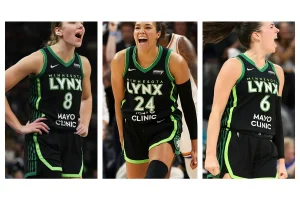
The Minnesota Lynx are a professional women’s basketball team based in Minneapolis, Minnesota, competing in the Western Conference of the Women’s National Basketball Association (WNBA). Founded in 1999, the Lynx have built a reputation as one of the most decorated franchises in league history, capturing four WNBA championships in 2011, 2013, 2015, and 2017, along with a Commissioner’s Cup title in 2024. The team plays its home games at the Target Center in Minneapolis and is owned by Alex Rodriguez and Marc Lore. Cheryl Reeve serves as both the team’s president of basketball operations and head coach, while longtime jersey partner Mayo Clinic remains the main sponsor. The franchise is widely known for its strong competitive identity, distinctive team colors of midnight navy blue, lake blue, aurora green, and moonlight grey, and a proud tradition of developing some of the most influential players in women’s basketball.
Minnesota Lynx Competitive Journey
Over more than two decades, the Minnesota Lynx have evolved from an expansion franchise into one of the WNBA’s defining teams. Their journey includes long stretches of playoff contention, a celebrated dynasty in the early-to-mid 2010s, and a modern rebuild centered on emerging young talent. The Lynx have qualified for the WNBA playoffs in 15 of their 26 years, a record that underscores their sustained relevance in the league.
Founding and Organizational Origins
The Minnesota Lynx were created when the WNBA announced on April 22, 1998 that Minnesota would receive an expansion franchise alongside the Orlando Miracle for the 1999 season. The team was officially named the Minnesota Lynx on December 5, 1998, and held their expansion draft on April 6, 1999. The franchise launched its inaugural season in 1999, drawing 12,122 fans to the Target Center for its first regular-season game, a 68–51 victory over the Detroit Shock. The Lynx finished that opening year with a 15–17 record and repeated the mark in 2000. Glen Taylor, who also owned the NBA’s Minnesota Timberwolves, served as the original owner of the Lynx and oversaw the organization through its formative years.
Early Seasons and Development (1999–2004)
The Lynx’s first competitive years were marked by growing pains as the team searched for a winning identity. After a 12–20 campaign in 2001, the franchise parted ways with its first head coach, Brian Agler, and turned to Suzie McConnell-Serio in 2003. McConnell-Serio promptly led the team to a franchise-best 18–16 record, securing the Lynx’s first winning season and their first WNBA Playoff appearance. The team returned to the playoffs in 2004, falling in the Western Conference semifinals. These early seasons helped the organization build a foundation of competitive habits, even as the roster continued to take shape.
Growth Into WNBA Competition (2005–2009)
The arrival of Seimone Augustus in the 2006 WNBA draft, where the Lynx selected her with the first overall pick, marked a turning point for the franchise. Augustus was named WNBA Rookie of the Year after averaging 21.9 points per game, a mark that still stands as the WNBA rookie record. The Lynx cycled through additional head coaches during this period, including Don Zierden and Jennifer Gillom, as the team worked to blend young talent with veteran leadership. Despite posting competitive stretches, the Lynx missed the playoffs in 2006, 2007, 2008, and 2009, though the development of core players laid the groundwork for future success.
Breakthrough in WNBA (2010–2011)
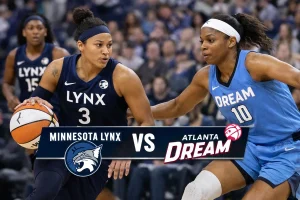
The hiring of Cheryl Reeve as head coach in 2010, combined with key acquisitions such as Rebekkah Brunson and Lindsay Whalen, transformed the Lynx into immediate contenders. The 2011 WNBA draft brought Maya Moore to Minnesota, completing a star-studded core. That season, the Lynx finished with a 27–7 record, the best in the WNBA, and earned the top overall seed. Behind the play of Augustus, Brunson, Moore, and Whalen, all named to the Western Conference All-Star Team, the Lynx swept through the playoffs. They defeated the Atlanta Dream in three games to claim their first WNBA championship, the first professional title for the state of Minnesota since the 1991 World Series. Seimone Augustus was named Finals MVP.
Sustained Championship Success (2012–2017)
The Lynx built a dynasty unlike any other in WNBA history during this six-year run. After a 10–0 start in 2012, they reached the WNBA Finals before falling to the Indiana Fever. They rebounded in 2013, sweeping the Atlanta Dream to claim a second title, with Maya Moore earning Finals MVP honors. The 2014 season ended short of the Finals, but Minnesota returned to the championship in 2015, adding Sylvia Fowles to the roster and winning a third title in five years. In 2016, the Lynx reached the Finals again but lost to the Los Angeles Sparks in five games. The following year, Minnesota avenged that loss, defeating the Sparks in five games to capture a fourth championship in seven seasons, tying the Houston Comets for the most WNBA titles in league history.
Modern Program and Current Direction (2018–Present)
The retirement of key players, including Lindsay Whalen in 2018 and Sylvia Fowles after the 2022 season, signaled the end of the dynasty and the start of a new era. Under Cheryl Reeve’s leadership, the Lynx transitioned their focus to emerging stars such as Napheesa Collier, who was named WNBA Rookie of the Year in 2019. Collier was named the team’s sole captain in 2023, the first time Reeve had designated a single captain during her tenure. In 2024, the Lynx won the WNBA Commissioner’s Cup championship, defeating the New York Liberty 94–89, with Collier earning the game’s MVP honors. The franchise also retired Maya Moore’s jersey that season, further cementing its connection to its championship core.
Philosophy and Competitive Strengths
The Lynx have long been defined by a team-first philosophy, a commitment to defensive intensity, and the development of versatile talent. Under Cheryl Reeve, the organization has emphasized a balanced offensive attack, strong post play, and disciplined execution in high-pressure moments, allowing the franchise to remain a consistent playoff presence.
Key Milestones and Major Moments
Among the Lynx’s most notable moments are the franchise’s first championship in 2011, four titles in seven seasons from 2011 to 2017, a 111–52 victory over the Indiana Fever in 2017 that set WNBA records for margin of victory and consecutive points scored, and the 2024 Commissioner’s Cup win. The team has also retired five jersey numbers, including those of Maya Moore, Seimone Augustus, Rebekkah Brunson, Lindsay Whalen, and Sylvia Fowles, honoring the core that built the dynasty.
Minnesota Lynx Achievements and Results
The Minnesota Lynx are among the most accomplished franchises in WNBA history, with four league championships, a Commissioner’s Cup title, and four conference championships. Their sustained success across multiple eras has placed them at the forefront of professional women’s basketball in the United States.
WNBA Achievements
The Lynx have won four WNBA championships, in 2011, 2013, 2015, and 2017, tying the Houston Comets for the most titles in league history. Their first title came in 2011 with a sweep of the Atlanta Dream, and they added three more titles over the next six years. In 2024, the Lynx added a Commissioner’s Cup championship to their trophy case, defeating the New York Liberty in New York. These accomplishments have established the Lynx as a model of sustained excellence in the WNBA.
Conference Achievements
Minnesota has captured four Western Conference championships, winning in 2011, 2012, 2013, and 2015. This run of conference success coincided with the team’s dynasty years, during which the Lynx reached the WNBA Finals five times in a six-season span. The franchise’s ability to consistently compete at the conference level has been central to its identity.
Series and Playoff Achievements
The Lynx have qualified for the WNBA playoffs in 15 of their 26 seasons, reaching the Finals six times in seven years between 2011 and 2017. Their playoff success has been built on strong regular-season performances, including a franchise-best 28–6 record in 2016, and a series of deep postseason runs that have defined one of the most successful eras in WNBA history.