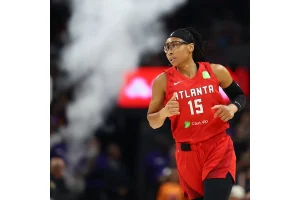
Atlanta Dream Overview
The Atlanta Dream are an American professional basketball team based in the Atlanta metropolitan area. The Dream compete in the Women’s National Basketball Association (WNBA) as a member of the Eastern Conference, a league in which they have played every season since 2008. The franchise is owned by real estate investors Larry Gottesdiener and Suzanne Abair, alongside former Dream guard Renee Montgomery, and plays its home games at the Gateway Center Arena in College Park, Georgia. Known for team colors of red, dark grey, light grey, light blue, and white, the Dream have developed a loyal fan base in the Atlanta market while operating independently of the National Basketball Association’s Atlanta Hawks. Over the course of seventeen seasons, the team has qualified for the WNBA playoffs ten times and reached the WNBA Finals three times, establishing itself as a consistent contender in the Eastern Conference.
Atlanta Dream Competitive Journey
The Atlanta Dream’s competitive journey has followed a steady arc from a difficult expansion start in 2008 to regular postseason contender status in the WNBA’s Eastern Conference. After a record-setting losing streak in their first season, the team steadily built a roster that reached the playoffs in 2009 and later advanced to three WNBA Finals appearances in 2010, 2011, and 2013. Following a turbulent period of roster turnover and ownership changes between 2019 and 2021, the Dream entered a new chapter built around young star Rhyne Howard and a refreshed front office. The franchise continues to compete annually with the goal of securing its first WNBA championship.
Founding and Organizational Origins
Before the success of the United States women’s basketball team at the 1996 Olympic Games, the American Basketball League had attempted to place a women’s professional basketball team in Atlanta as early as 1995. The Atlanta Glory played at Forbes Arena and lasted two seasons before folding prior to the start of the 1998–99 season. For several years afterward, Atlanta was discussed as a possible future city for WNBA expansion, but those efforts did not come together until early 2007. At that time, an organizing committee of Atlanta business leaders and local politicians launched a structured campaign to attract an expansion franchise, gathering volunteers and petition signatures.
By May 2007, the committee had collected more than one thousand pledges for season tickets, and by July of that year it had secured around twelve hundred commitments while searching for a potential owner. On October 16, 2007, it was reported that Atlanta businessman Ron Terwilliger, the chief executive officer of a national real estate company, would become the future owner of the Atlanta franchise. The next day, at a news conference held at Centennial Olympic Park, WNBA president Donna Orender officially announced that Atlanta would receive a WNBA expansion team. On November 27, 2007, the Dream named Marynell Meadors, an experienced college coach and former WNBA executive, as the franchise’s first head coach and general manager. In January 2008, the team revealed its name, the Dream, inspired by a famous speech delivered by Atlanta native Martin Luther King Jr.
Growth Into WNBA Competition
The Atlanta Dream formally joined the WNBA for the 2008 season, completing an expansion draft on February 6, 2008, in which the franchise selected one player from each of the league’s thirteen existing teams. Atlanta then traded for established talents such as Izi Castro Marques from the Seattle Storm and Ivory Latta from the Detroit Shock. The early technical and operational structure of the team was built around first-year head coach and general manager Marynell Meadors, who also served as the principal basketball decision-maker. Philips Arena, The Arena at Gwinnett Center, and Alexander Memorial Coliseum were all considered as potential home venues before Philips Arena was selected.
The Dream’s first season proved historically difficult. From their season-opening loss against the Connecticut Sun on May 17, 2008, to a home loss against the Houston Comets on July 3, 2008, Atlanta lost seventeen consecutive games, setting the WNBA all-time record for consecutive losses and losses from opening day. On July 5, 2008, the Dream earned their first franchise victory, 91–84 over the Chicago Sky, ending the streak. Atlanta finished the year with a 4–30 record, but the foundation of the team’s scouting, training, and front-office operations had been put in place to support long-term growth.
Early Seasons and Development (2009–2010)
The 2009 offseason marked a clear turning point for the Dream, as Marynell Meadors added players such as Sancho Lyttle, Nikki Teasley, Chamique Holdsclaw, Angel McCoughtry, and Michelle Snow. Atlanta responded by reaching the playoffs at 18–16, improving its previous record by fourteen wins, although the Dream were swept in the first round by the 2008 champion Detroit Shock. Following the season, Meadors received the WNBA Coach of the Year Award. In August 2009, owner Ron Terwilliger announced that he wanted to step away as primary owner, and on October 29, 2009, Kathy Betty took control of the franchise under the business entity Dream Too, LLC.
The 2010 season brought further growth. Atlanta finished fourth in the Eastern Conference, then swept the New York Liberty in the Eastern Conference Finals to reach the WNBA Finals for the first time in franchise history. The Dream faced the 28–6 Seattle Storm and lost each of the three Finals games, though none by a margin of more than three points. That appearance established Atlanta as a legitimate postseason force and laid the groundwork for sustained success in subsequent years.
Breakthrough in WNBA (2011–2013)
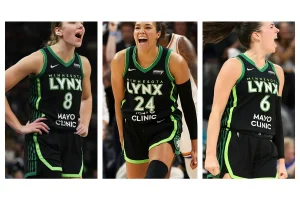
Before the 2011 season, Atlanta traded for All-Star point guard Lindsey Harding to address backcourt needs. Despite a 2–7 start affected by injury and overseas commitments, the Dream ran off a 14–5 record after the All-Star break, then swept the Connecticut Sun and defeated the Indiana Fever to return to the WNBA Finals. Atlanta again faced the Minnesota Lynx, this time losing the 2011 WNBA Finals in three games. During the season, Kathy Betty sold Dream Too LLC to local investors Mary Brock and Kelly Loeffler, beginning a new phase of ownership.
The 2012 campaign saw the Dream dismiss Marynell Meadors during a dispute with leading scorer Angel McCoughtry and promote Fred Williams as the new head coach. Atlanta finished 19–15 but exited in the first round of the playoffs. In 2013, the Dream reached the WNBA Finals for the third time in four seasons, only to be swept again by the Minnesota Lynx. Williams’ contract was not renewed after that season, and Michael Cooper was hired to lead the team in 2014. Cooper guided the Dream to playoff appearances in 2014 and 2016 before being relieved of his duties after the team missed the postseason in 2017.
On October 30, 2017, Atlanta hired Nicki Collen as the new head coach after she served as an assistant for the Connecticut Sun. In 2018, Collen led the Dream to a 23–11 finish and the top seed in the Eastern Conference, although Atlanta was eliminated in the semifinals that year. The period from 2009 through 2018 represented the first sustained era of playoff basketball in franchise history.
Modern Program and Current Direction (2019–Present)
The 2019 season was more difficult, as Angel McCoughtry continued recovering from an ACL injury suffered during 2018, and the Dream finished 8–26, the worst record in the Eastern Conference. On October 18, 2019, Atlanta unveiled an updated logo and color scheme, the first major branding change since the team’s 2008 launch. Ahead of 2020, McCoughtry departed for the Las Vegas Aces, and Tiffany Hayes and Renee Montgomery sat out the season, leaving Elizabeth Williams as the only returning starter. Atlanta drafted guard Chennedy Carter with the fourth overall pick in the 2020 WNBA draft to anchor the rebuild.
In 2021, the Dream approved a sale to a three-member investor group that included former Dream guard Renee Montgomery, marking a new era of ownership alongside Larry Gottesdiener and Suzanne Abair. On October 12, 2021, the franchise hired Tanisha Wright, a former WNBA player with twelve seasons of experience, as its new head coach. In the 2022 WNBA draft, Atlanta acquired the first overall pick from the Washington Mystics and used it on Kentucky guard Rhyne Howard, who had been a three-time Associated Press All-America First Team selection. In 2025, the Dream signed ten-time All-Star Brittney Griner to a one-year contract, signaling the team’s continued push toward championship contention. For the 2026 season, the franchise launched the Homegrown campaign alongside the league-wide Nike Rebel Edition uniform update, partnering with Monarch Commerce to offer new branded apparel.
Philosophy and Competitive Strengths
The Atlanta Dream have historically built around versatile perimeter scorers and athletic frontcourt players, with Angel McCoughtry and Rhyne Howard serving as the central offensive engines during their respective eras. Under recent leadership, the franchise has emphasized player development, modern offensive spacing, and the acquisition of veteran stars such as Brittney Griner to support young talent. Atlanta’s identity is defined by competitiveness in the Eastern Conference, a strong developmental pipeline through the WNBA draft, and a renewed focus on building a sustainable winner around its core players.
Key Milestones and Major Moments
Among the franchise’s most important milestones are its three WNBA Finals appearances in 2010, 2011, and 2013, as well as ten total playoff qualifications across seventeen seasons. The team’s first victory, a 91–84 win over the Chicago Sky on July 5, 2008, ended a record-setting losing streak that defined its difficult debut. The 2022 selection of Rhyne Howard with the first overall pick, the 2025 signing of Brittney Griner, and the 2021 ownership transition to Larry Gottesdiener, Suzanne Abair, and Renee Montgomery all represent major organizational moments.
Atlanta Dream Achievements and Results
The Atlanta Dream have built a competitive record book that includes three Eastern Conference championships and three appearances in the WNBA Finals, despite never having won a league title. Across seventeen seasons, the franchise has reached the postseason ten times and has consistently been among the Eastern Conference’s most active teams in player development and trade activity. The Dream have also distinguished themselves off the court, partnering with organizations such as Emory Healthcare as a marquee jersey sponsor and with Microsoft and Xbox as corporate partners beginning in 2022.
WNBA Achievements
The Dream have reached the WNBA Finals three times in franchise history, finishing as runners-up in 2010, 2011, and 2013. Each of those Finals appearances ended in a sweep, first by the Seattle Storm in 2010 and then by the Minnesota Lynx in both 2011 and 2013. The team has yet to secure a WNBA championship, but its three Finals trips remain the defining measure of its league-level success. Atlanta has also produced multiple All-Star players during this era, including Angel McCoughtry, who helped anchor all three Finals runs.
Conference Achievements
The Atlanta Dream have won three Eastern Conference championships, earned in 2010, 2011, and 2013. Each of those titles came with a successful run through the Eastern Conference Finals, including a sweep of the New York Liberty in 2010 and series victories over the Connecticut Sun and Indiana Fever in 2011. The franchise returned to the top of the conference in 2018 under head coach Nicki Collen, finishing first in the Eastern Conference at 23–11, although it fell in the semifinals. These conference results reflect the Dream’s long-term status as one of the East’s most reliable postseason teams.
Season-by-Season Records
The Atlanta Dream have completed seventeen WNBA seasons since 2008, with their strongest results coming during the 2010, 2011, 2013, and 2018 playoff runs. The franchise’s competitive progress has been steady, with multiple seasons above .500 and a growing number of postseason qualifications. Despite occasional rebuilding years, the Dream have continued to develop young talent and maintain a presence in the Eastern Conference standings.
Atlanta Dream Identity and Culture
The Atlanta Dream operate as an independent WNBA franchise within the Atlanta market, sharing the metropolitan area with the National Basketball Association’s Atlanta Hawks. The team plays its home games at the Gateway Center Arena in College Park, Georgia, while occasionally scheduling select matchups at State Farm Arena in downtown Atlanta. With team colors of red, dark grey, light grey, light blue, and white, and a brand identity linked to Martin Luther King Jr.’s legacy, the Dream have cultivated a distinct place within Atlanta’s professional sports landscape.