

The Women’s National Basketball Association (WNBA) is the elite professional basketball league for women in North America and one of the most successful and enduring women’s sports leagues worldwide. Founded by the National Basketball Association (NBA) in 1996, the WNBA has evolved into a global platform for female athletes, symbolizing progress in gender equity, athletic excellence, and sports business growth.
As of 2026, the league consists of 13 franchises across major U.S. metropolitan areas, expanding toward 18 teams by 2030. The regular season runs 40 games from May through September, followed by a high-stakes playoff tournament that culminates in the WNBA Finals, where the top eight teams compete for the championship trophy.
Origins and Early History (1996–2000)
The WNBA’s roots trace back to April 24, 1996, when the NBA Board of Governors approved the formation of a professional women’s league following the U.S. women’s basketball team’s gold-medal triumph at the 1996 Atlanta Olympics. Public enthusiasm for the women’s game had never been higher, and the NBA capitalized on that momentum to establish a summer league that complemented its own calendar.
The WNBA launched on June 21, 1997, with eight inaugural teams:
-
Charlotte Sting
-
Cleveland Rockers
-
Houston Comets
-
Sacramento Monarchs
-
Utah Starzz (later moved to San Antonio and then to Las Vegas)
The first-ever game, held at the Los Angeles Forum between the Sparks and Liberty, was nationally televised and drew millions of viewers — a powerful debut for a women’s professional league.
In the league’s formative years, the Houston Comets built an unprecedented dynasty, capturing the first four WNBA titles (1997–2000) led by superstars Cynthia Cooper, Sheryl Swoopes, and Tina Thompson. Cooper won the first two WNBA MVP Awards and became the league’s initial marquee player.
Average attendance exceeded 10,000 fans per game in the inaugural weekend, demonstrating commercial viability at a time when few women’s sports leagues had sustained mainstream traction. Importantly, the WNBA’s close operational partnership with the NBA — shared facilities, marketing coordination, and national broadcast partnerships — positioned it for long-term survival.
Expansion, Consolidation, and the Rise of New Powers (2001–2010)
Following early success, the WNBA expanded aggressively through the early 2000s. By 2008, the league featured a record 16 franchises, including teams in Detroit, Connecticut, and Seattle. Major new markets tapped into growing fan bases, and the game’s quality improved as international talent entered the league.
The Los Angeles Sparks, behind Lisa Leslie, became the league’s next great team, winning back-to-back championships in 2001 and 2002. Leslie’s historic first dunk in a 2002 game captured national attention, showcasing the athletic evolution of women’s basketball.
From 2003 onward, the Detroit Shock (coached by Bill Laimbeer) emerged as a dominant force, winning three titles (2003, 2006, 2008) with physical, defense-first basketball. Meanwhile, Sacramento Monarchs, led by Yolanda Griffith, won the 2005 championship and became the first Western team outside Houston or Los Angeles to break the duopoly.
However, the league faced economic headwinds late in the decade, leading to contraction from 16 to 12 teams by 2010. The Houston Comets, Sacramento Monarchs, and Cleveland Rockers folded due to financial difficulties. Yet, amid this turbulence, foundational franchises like the Seattle Storm, Minnesota Lynx, and Phoenix Mercury solidified themselves as stable, community-driven operations.
The Modern Era and Dynastic Teams (2011–2020)
The 2010s marked a renaissance, fueled by star power, improved player marketing, and social engagement. A new wave of superstars — including Maya Moore, Diana Taurasi, Sylvia Fowles, Sue Bird, Elena Delle Donne, and Candace Parker — redefined visibility for women’s sports.
The Minnesota Lynx became the era’s standard-bearer under head coach Cheryl Reeve, capturing four championships (2011, 2013, 2015, 2017) and reaching six Finals in seven years. Their disciplined play and consistent leadership established one of the greatest dynasties in women’s basketball history.
Simultaneously, the Seattle Storm, led by veteran Sue Bird and newcomer Breanna Stewart, claimed dominant titles in 2018 and 2020, extending their franchise total to four. The Washington Mystics, spearheaded by Elena Delle Donne, broke through for their first championship in 2019.
The league’s global influence expanded as international players from countries such as Australia, Belgium, Spain, and Nigeria became stars. Meanwhile, WNBA athletes increasingly used their platforms for social activism, particularly during the 2020 season played inside the “Wubble” (a COVID-19 bubble site in Florida), where players championed racial justice and civic engagement.
Growth, Business Evolution, and Expansion (2021–2026)
The post-pandemic years have been a period of unprecedented growth for the WNBA. The league’s 2020 Collective Bargaining Agreement (CBA) introduced sweeping reforms:
-
Doubling top player salaries and guaranteeing full maternity benefits.
-
Charter flights for Finals teams and designated back-to-back games.
-
Expanded marketing, revenue-sharing clauses, and upgraded training facilities.
As a result, player retention improved dramatically, with fewer stars opting to spend winters overseas. Domestic endorsements grew, bolstered by brands prioritizing equal visibility across men’s and women’s sports.
The Caitlin Clark Effect and Record Visibility
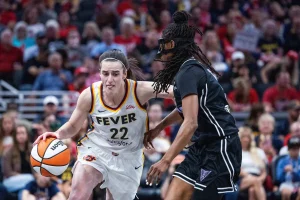
In 2024, women’s basketball exploded into mainstream prominence with the entry of collegiate phenom Caitlin Clark, whose transition brought record-breaking viewership. The 2024 WNBA Draft drew 2.45 million viewers, the highest in league history. Ratings for regular-season broadcasts skyrocketed across ESPN, Amazon Prime Video, and NBA TV.
This visibility helped the WNBA secure its historic $2.2 billion media rights deal for 2025–2035, more than quadrupling prior contracts. It introduced flexible scheduling, wider network distribution, and increased revenue for teams and players.
Expansion into New Markets
The WNBA’s growth strategy prioritizes stable ownership, regional engagement, and geographic reach.
-
Golden State Valkyries (San Francisco Bay Area) debuted in 2025, immediately becoming one of the league’s most marketable brands.
-
Toronto joins in 2026, marking the WNBA’s first franchise outside the U.S.
-
Further expansion teams in Portland, Cleveland, Detroit, and Philadelphia are planned by 2030, bringing the total to 18 franchises.
This wave of growth cements the WNBA’s position as a global league with North American and international influence.
Structure, Format, and Operations Today
As of the 2026 season, the WNBA features 13 teams across two unofficial regional groupings (Eastern and Western conferences). However, playoff qualification is based solely on standings, with the top eight teams overall advancing — regardless of conference.
Regular Season and In-Season Tournaments
-
40-game schedule from May to September.
-
Commissioner’s Cup, introduced in 2021, serves as a midseason tournament with financial bonuses and conference pride at stake.
-
Increased emphasis on rivalry weeks and national TV games during peak summer windows.
Playoffs
-
First round: Single-elimination.
-
Semifinals: Best-of-three series.
-
Finals: Best-of-five format.
Venues
-
Crypto.com Arena (Los Angeles Sparks, capacity 19,000)
-
Barclays Center (New York Liberty, capacity 17,000)
-
Michelob ULTRA Arena (Las Vegas Aces, capacity 12,000)
-
Other modern, NBA-grade facilities in Phoenix, Seattle, and Minnesota.
Salary and CBA Impact
-
Team salary cap: $1.5 million (rising annually).
-
“Designated Player Rule” allows teams to offer premium extensions to star players.
-
Revenue-share growth tied to league-wide earnings, empowering players through collective financial stakes.
-
Focus on player well-being, maternity leave, childcare allowances, and private flights for select travel segments.
Year-by-Year Champions (2000–2025)
Why the WNBA Matters
The WNBA stands at the intersection of sport, culture, and empowerment. While it trails the NBA in size and economics, its influence on global gender equity in sports is unparalleled.
-
Cultural leadership: WNBA athletes have been central voices in social justice movements, LGBTQ+ advocacy, and voter engagement.
-
Athletic excellence: The league has consistently raised the standard of women’s basketball through improved training, analytics, and global scouting.
-
Economic growth: Record sponsorships, new ownership groups, and stronger media exposure contribute to financial momentum.
-
Role models: Players such as A’ja Wilson, Breanna Stewart, Sabrina Ionescu, and Caitlin Clark inspire the next generation of athletes and fans worldwide.
The WNBA continues to pioneer new benchmarks for equity, visibility, and professionalism. As expansion progresses toward 2030, it’s poised to become not only a fixture of the sports calendar but also a transformative cultural institution.