
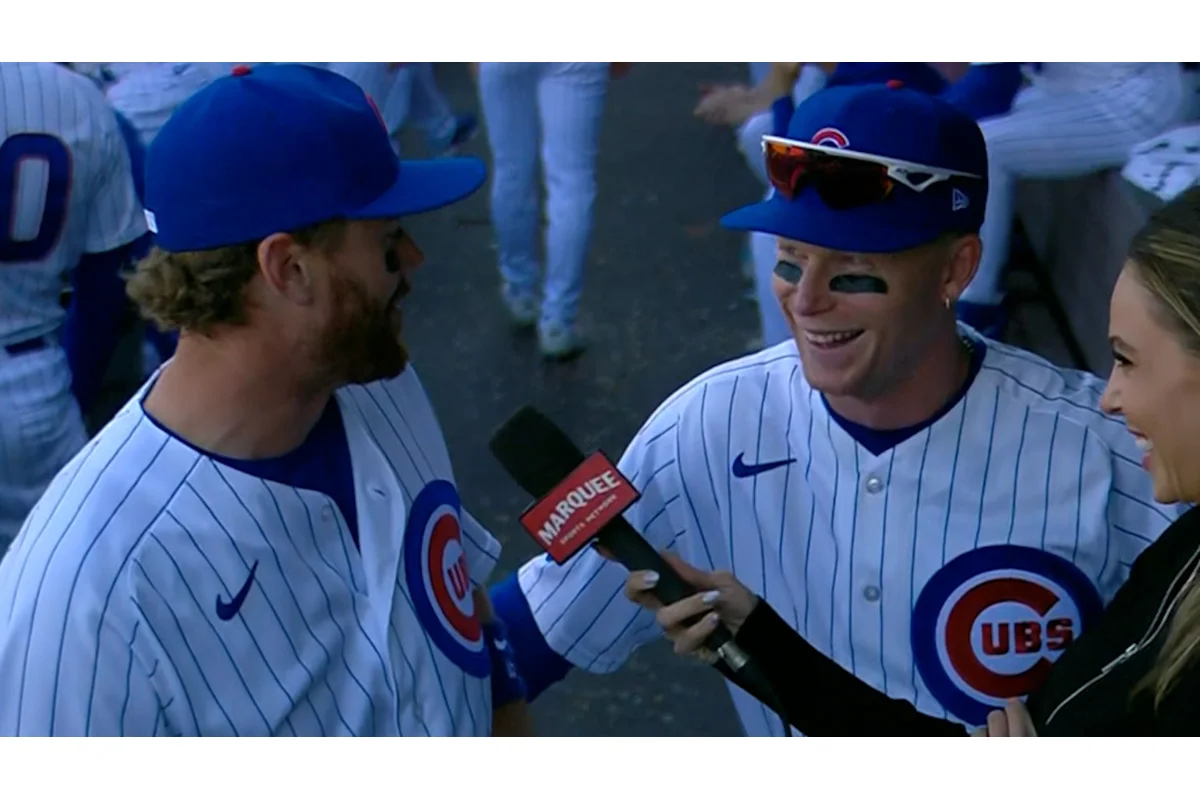
As Spring Training progresses, the spotlight is not only on the field but also on contract negotiations, as Major League Baseball enters what has become known as extension season. With teams now having a clearer sense of their payroll capacities following offseason moves and players not yet locked into the regular-season routine, there exists a narrow window during which franchises aim to secure their most promising talents ahead of Opening Day. Among these bright stars, Pete Crow-Armstrong stands out, with Pete Crow-Armstrong extension projections at the center of discussions about baseball’s emerging financial landscape.
Emerging Patterns in Early Contract Extensions
The trend to offer young players lucrative extensions early in their careers has grown steadily over recent years. This development stems from the MLB’s traditional economic framework, which requires players to endure three years at minimum salary and another three under arbitration before they can negotiate market-value contracts. Many rising stars, including Crow-Armstrong, desire financial rewards that better reflect their current production and potential sooner rather than later. Simultaneously, teams seek to maintain control over these athletes for longer terms, combining financial prudence with roster stability. Accelerated development in the minors means prospects are reaching the majors faster and making more immediate impacts, intensifying the urgency for extensions.

The Case of Pete Crow-Armstrong and Contract Negotiations
Chicago Cubs outfielder Pete Crow-Armstrong, who was a serious MVP contender for much of the past season yet is not even 24 years old, encapsulates this new paradigm. Crow-Armstrong has expressed a willingness to remain with the Cubs, stating,
“I’ve made it clear I want to be here for as long as they want me,”
as he recently shared with Chicago Magazine during Spring Training. He further added,
“I want what’s best for the team. I’m cool with being under team control and being here. League minimum ain’t too f***ing bad.”
Despite his openness to team control, Crow-Armstrong understands the financial upside of securing a high-value extension. Last offseason, he reportedly declined offers ranging from $75 million to $90 million, showing no inclination toward providing a hometown discount. Reflecting on market fairness, he said,
I would like to get a fair deal so I don’t f*** the market up,
followed by,
I want to look out for the other center fielders who have to go through the same process. Which is why I’m glad [Cubs management] and my agents are figuring out how to do this.
Determining a fair price for Crow-Armstrong is complex. Some comparable player deals provide context, such as Corbin Carroll’s eight-year, $111 million extension with Arizona before playing 32 major league games, and Jackson Merrill’s nine-year, $135 million deal with San Diego after just one full MLB season. Crow-Armstrong, with 280 games over two years, sits between these examples. His defensive skills offer a strong baseline, despite some questions about his hitting consistency. The projected contract aims to buy out parts of his free agency while allowing a full market payday before his prime years wane.
Estimated extension proposal: Seven years, $125 million, with an eighth-year club option.
Challenges in Securing Gunnar Henderson for the Orioles
Baltimore Orioles’ shortstop Gunnar Henderson represents one of the toughest extension negotiations pending. He has only three years of team control left despite turning 25 soon, and his representation by Scott Boras, a renowned advocate for testing free agency, complicates talks. To keep Henderson long term, the Orioles likely must approach this as they would a free-agent signing, offering significant upfront capital with structural flexibility.
Past examples like Bobby Witt Jr.’s 11-year, $288 million deal with the Kansas City Royals, including opt-outs and team options, offer a glimpse of the contract framework necessary. Henderson has performed at a near-equal level to Witt and enters his prime as an MVP-level talent at a premium position. To buy out enough free agency years effectively, the price tag may approach $40 million annually, aligning with Henderson’s expected market value if he continues his current trajectory.
Projected contract: 11 years, $450 million, with potential club options beyond the term.
Junior Caminero’s Potential Long-Term Deal with the Tampa Bay Rays
While the idea of the Rays investing heavily in young players often seems surprising due to the team’s market size, Tampa Bay has precedent for making significant commitments early. The franchise extended Wander Franco for 11 years and $182 million, a contract the team continues to manage. Junior Caminero, a third baseman who erupted onto the scene with 45 home runs during his first full age-21 season, fits the profile of a foundational player worth securing before reaching free agency.
Caminero’s agent, Rafa Nieves, has suggested a guaranteed money range between $150 million and $200 million, an estimate that aligns well with the market value represented by Jackson Merrill’s extension. Caminero will reach free agency with five years of team control remaining, creating leverage and offering the Rays a chance to keep their prized prospect at a manageable long-term cost.
Expected contract: Nine years, $162 million, including a team option for a tenth year.
Youth and Durability Concerns Shaping Bryan Woo’s Mariners Extension
The Seattle Mariners are evaluating extensions for several promising young pitchers, including Bryan Woo, Logan Gilbert, and George Kirby. Of the group, Woo is the youngest and may possess the highest upside, but his injury history— including Tommy John surgery and a pec strain late in the 2025 season—introduces risk factors that affect contract length and value.
Tanner Bibee’s recent five-year, $48 million extension with Cleveland’s Guardians presents a fitting model. Since Woo’s service time is similar and his performance solid (a 2.92 ERA over two years), Seattle might pursue a comparable arrangement that balances investment with flexibility, allowing continued evaluation of his health and development.
Anticipated extension: Five years, $60 million, with a club option for a sixth year.
Braves Poised to Extend Catcher Drake Baldwin after Rookie Success
The Atlanta Braves have been particularly aggressive at securing their young core players, and catcher Drake Baldwin appears next in line following his impressive rookie campaign, which earned him a 126 OPS+ and NL Rookie of the Year honors. Catching’s physical demands and volatility often prompt teams to seek early security for young backstops through contract extensions.
Although Atlanta already has Sean Murphy under a long-term contract, Baldwin’s left-handed bat and offensive potential make him a rare and valuable asset. A recent benchmark is Keibert Ruiz’s eight-year, $50 million deal signed five years shy of free agency, but Baldwin’s demonstrated value exceeds Ruiz’s when his contract was negotiated.
Predicted contract value: Eight years, $80 million.
Zach Neto’s Extension Potential Amidst Angels’ Rebuilding Efforts
The Los Angeles Angels, unwilling to fully commit to a traditional rebuild, must identify and invest in cornerstone players. Shortstop Zach Neto, boasting back-to-back seasons exceeding 5 bWAR and significant offensive upside including 30-30 potential (homers and stolen bases), fits the bill. Despite defensive challenges, his contributions justify a substantial extension.
Comparable to Maikel Garcia’s five-year, $57.5 million agreement with the Kansas City Royals, Neto would likely seek a higher financial commitment due to his position and the Angels’ broader context, which adds urgency to retaining top talent.
Expected contract: Five years, $70 million, plus a team option for a sixth year.
Detroit Tigers Eye Long-Term Deal for Kevin McGonigle
Detroit Tigers infielder Kevin McGonigle represents a high-upside prospect potentially following a path similar to Jackson Chourio’s, who secured an eight-year, $82 million extension with Milwaukee before his MLB debut. While other notable prospects like JJ Wetherholt and Konnor Griffin appear less likely to sign major extensions imminently, McGonigle is positioned for an early role with a contending Tigers roster.
Detroit has shown enthusiasm for signing top prospects early, as seen with Colt Keith, and McGonigle’s contract could provide mutual benefit by offering him financial security while the Tigers retain a key future contributor.
Forecasted deal: Eight years, $88 million, including a club option for a ninth year.
Wyatt Langford’s Rising Profile and Extension Prospects with Texas Rangers
Texas Rangers outfielder Wyatt Langford is notable for his advanced service time and impressive performance. According to Evan Grant of the Dallas Morning News, the only under-25 outfielder to have accumulated more bWAR over the past two seasons is Mariners star Julio Rodriguez. While Rodriguez commands a massive 12-year, $209 million deal, Langford’s extension would logically fall below that, but above recent comparable deals like Merrill’s contract.
Locking up Langford long term would provide the Rangers stability in the outfield as they assess other young players like Evan Carter.
Projecting a 10-year, $175 million extension for Langford.
Implications of These Extension Trends for MLB and Its Stars
The wave of early extensions signals a shift in how MLB balances player compensation, team control, and risk management. For talents like Pete Crow-Armstrong, signing a significant contract before reaching arbitration or free agency allows immediate financial stability and team alignment. For franchises, locking up emerging stars before free agency circumvents bidding wars and preserves roster continuity, though it requires accurate forecasting of player development and health.
Contracts of this scale and length reflect baseball’s evolving economy, much of it driven by faster prospects’ ascendance and front offices’ readiness to make bold financial commitments. Going forward, players such as Crow-Armstrong, Henderson, and others will shape the labor market, influence future extension negotiations, and potentially recalibrate expectations for baseball’s next generation of stars.
