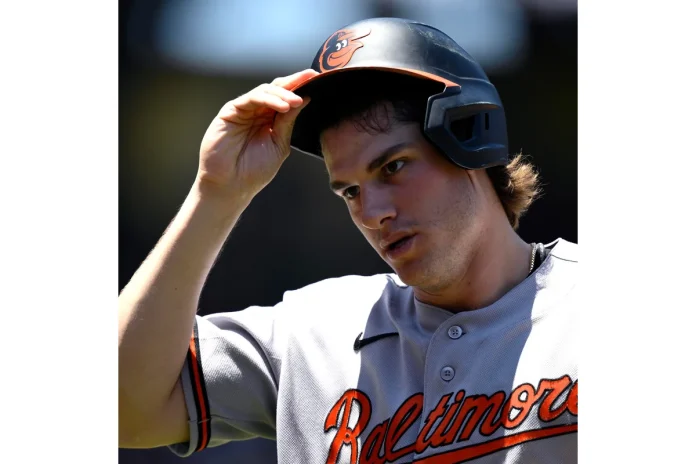
Baltimore Orioles Overview
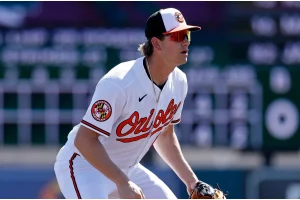
The Baltimore Orioles are a professional baseball team based in Baltimore, Maryland, competing in Major League Baseball (MLB) as a member of the American League East Division. Founded in 1901 originally as the Milwaukee Brewers, the franchise later became the St. Louis Browns before relocating to Baltimore in 1954, where it adopted its current name, drawn from the oriole, the official state bird of Maryland. The Orioles have won three World Series championships (1966, 1970, and 1983) and play their home games at Oriole Park at Camden Yards.
Nicknamed the O’s and the Birds, the Orioles are recognized for their black, orange, white, and gray team colors and a passionate fan base that fills Oriole Park at Camden Yards. The franchise is led by principal owner and Chief Executive Officer David Rubenstein, with Mike Elias serving as general manager and executive vice president of baseball operations. The current manager is Craig Albernaz, who oversees a roster built around a core of young players and a renewed competitive direction in the American League East.
Founding and Organizational Origins
The Orioles franchise traces its roots to 1894, when the original Milwaukee Brewers were members of the Western League. When the Western League renamed itself the American League in 1900 and declared itself a competing major league in 1901, the Brewers finished last among the league’s eight charter teams during the American League’s first season as a major league.
In 1902, the club moved to St. Louis and became the St. Louis Browns, sharing Sportsman’s Park with the St. Louis Cardinals. The Browns were a popular draw at the gate but rarely competitive on the field, with the notable exception of the 1944 season, when they won their only St. Louis-based American League pennant. By 1951, owner Bill Veeck had introduced a series of promotions and stunts, but his efforts to move the franchise were blocked by other American League owners.
Veeck eventually sold his stake to a Baltimore investment group, and the team moved to Baltimore for the 1954 season, renaming itself the Baltimore Orioles. The new ownership group was led by attorney and civic activist Clarence Miles and Mayor Thomas D’Alesandro Jr., who sought to establish Baltimore as a permanent home for the franchise. The Oriole name had a long history in Baltimore baseball, having been used by teams in the city since the late 19th century, giving the relocated club an immediate local identity.
Growth Into American League East Competition
During the 1950s and early 1960s, the Orioles methodically built a winning organization through scouting, player development, and a steady pipeline of talent. The arrival of manager Paul Richards and later Hank Bauer helped the club reach respectability, but it was the 1966 World Series sweep of the Los Angeles Dodgers that announced Baltimore as a dominant force in Major League Baseball.
The franchise’s move to the American League East Division in 1969 ushered in a sustained era of success. Under manager Earl Weaver, the Orioles captured six American League pennants between 1969 and 1979, with stars such as Brooks Robinson, Frank Robinson, Jim Palmer, Eddie Murray, and Cal Ripken Jr. anchoring the lineup and pitching staff. This period established the Orioles as a model organization in the American League East.
After their third World Series title in 1983, the Orioles endured a long decline, including a record 0-21 start to the 1988 season and 14 consecutive losing seasons between 1998 and 2011. The opening of Oriole Park at Camden Yards in 1992 signaled a new beginning, and under manager Buck Showalter and general manager Dan Duquette, the club returned to the postseason in 2012, 2014, and 2016, signaling the first phase of a modern revival.
Baltimore Orioles Competitive Journey
The Orioles’ competitive journey stretches from a struggling 1901 Milwaukee Brewers club to a St. Louis Browns era that peaked with a 1944 pennant, and ultimately to a Baltimore era defined by three World Series championships and ten American League East division titles. After several decades of inconsistency, the franchise has rebuilt around young talent and finished 2023 with a 101-61 record, capturing the American League East title for the first time since 2014.
Early Seasons and Development (1901-1953)
The franchise’s earliest major league seasons in Milwaukee and St. Louis were marked by poor finishes and limited playoff opportunities. Despite occasional flashes of competitiveness, the Browns generally fielded mediocre teams, though they drew strong crowds at Sportsman’s Park and remained a popular draw for decades. The 1944 World Series appearance against the Cardinals remains a singular highlight of the St. Louis era.
Following World War II, the Browns struggled to compete in the same market as the Cardinals, and Bill Veeck’s ownership tenure brought creative promotions but few wins. The franchise’s relocation to Baltimore in 1954 represented a fresh start, with the Orioles name tying the club to the state bird of Maryland and a long baseball tradition in the city.
Breakthrough in American League East (1966-1983)
The 1966 season marked the Orioles’ first World Series championship, a four-game sweep of the heavily favored Los Angeles Dodgers that established Baltimore as a national powerhouse. Anchored by Brooks Robinson’s defensive brilliance at third base and Frank Robinson’s Most Valuable Player performance, the Orioles became the last of the American League’s eight charter franchises to win a World Series title.
Under manager Earl Weaver, the Orioles captured American League pennants in 1969, 1970, 1971, 1979, and 1983, winning World Series titles in 1970 and 1983 to bring their total to three championships. Stars such as Jim Palmer, Eddie Murray, and Cal Ripken Jr. defined this golden era, with the franchise earning a reputation for strong pitching, defense, and fundamental play.
Modern Program and Current Direction (2022-Present)
The Orioles’ modern era has been defined by a comprehensive rebuild led by general manager Mike Elias, focusing on player development and a young core featuring catcher Adley Rutschman, shortstop Gunnar Henderson, and closer Félix Bautista. In 2023, the team finished with a 101-61 record, winning the American League East for the first time since 2014 and advancing to the American League Division Series before falling to the Texas Rangers.
The franchise underwent a significant ownership change in 2024, when a group led by Baltimore native and Carlyle Group co-founder David Rubenstein completed a $1.7 billion deal to acquire full control of the Orioles from the Angelos family. The new ownership group includes Cal Ripken Jr., Michael Arougheti, Michael Bloomberg, Grant Hill, and former Baltimore mayor Kurt Schmoke, bringing both local ties and financial strength to the franchise.
On June 10, 2024, the Orioles announced their first-ever jersey sponsorship deal with T. Rowe Price, with the firm’s bighorn sheep logo debuting on the team’s sleeve the following day. Craig Albernaz was named manager ahead of the 2025 season, joining a front office that continues to emphasize player development, analytics, and long-term competitiveness in the American League East.
Philosophy and Competitive Strengths
The Orioles have historically been recognized for strong pitching, defensive excellence, and disciplined at-bats, traits that defined their championship eras of the late 1960s and 1970s. Under Mike Elias, the modern organization has prioritized scouting, international player development, and a pitching staff that set a franchise single-season strikeout record in 2023, signaling a new identity built on power arms and contact-oriented hitting.
Key Milestones and Major Moments
Major milestones in Orioles history include the 1966 World Series sweep of the Dodgers, the 1970 and 1983 World Series championships, and the 1995 game in which Cal Ripken Jr. broke Lou Gehrig’s consecutive games record. The 2023 season produced a 101-win campaign, a franchise-record 19-9 April, and the franchise’s first division title in nine years, all of which underscored the club’s return to national relevance.
Baltimore Orioles Achievements and Results
The Orioles have won three World Series championships (1966, 1970, and 1983), seven American League pennants, ten American League East division titles, and four Wild Card berths. Their postseason appearances have been concentrated in the late 1960s through the early 1980s, with renewed success in the 2010s and 2020s reflecting a careful rebuild centered on homegrown talent.
American League Achievements
The Orioles have captured seven American League pennants, with the first coming in 1944 as the St. Louis Browns and six more following the franchise’s relocation to Baltimore. The Baltimore-era pennants came in 1966, 1969, 1970, 1971, 1979, and 1983, with the 1966, 1970, and 1983 clubs going on to win the World Series. The 1969 pennant was particularly historic, marking the first American League Championship Series victory in Major League Baseball history.
Conference Achievements
Within the American League East Division, the Orioles have won ten division titles, beginning with the division’s inaugural season in 1969 and continuing with titles in 1970, 1971, 1973, 1974, 1979, 1983, 1997, 2014, and 2023. The 2023 title, secured with a 101-61 record, marked the franchise’s first division crown in nine years and featured breakout performances from Rutschman and Henderson.
Divisional Achievements
The Orioles’ divisional success has largely coincided with the franchise’s championship eras, with five division titles coming during the 1969-1983 run and additional titles in 1997, 2014, and 2023. The club’s ability to develop star-caliber players, including Hall of Famers Brooks Robinson, Cal Ripken Jr., Jim Palmer, and Eddie Murray, has been central to its divisional dominance.
Series Achievements
Beyond the World Series, the Orioles have earned four Wild Card berths (1996, 2012, 2016, and 2024) and advanced to the American League Championship Series in 2014 for the first time in 17 years. In 2012, the Orioles beat the Texas Rangers in the inaugural American League Wild Card Game, further cementing the franchise’s reputation for dramatic postseason moments.