
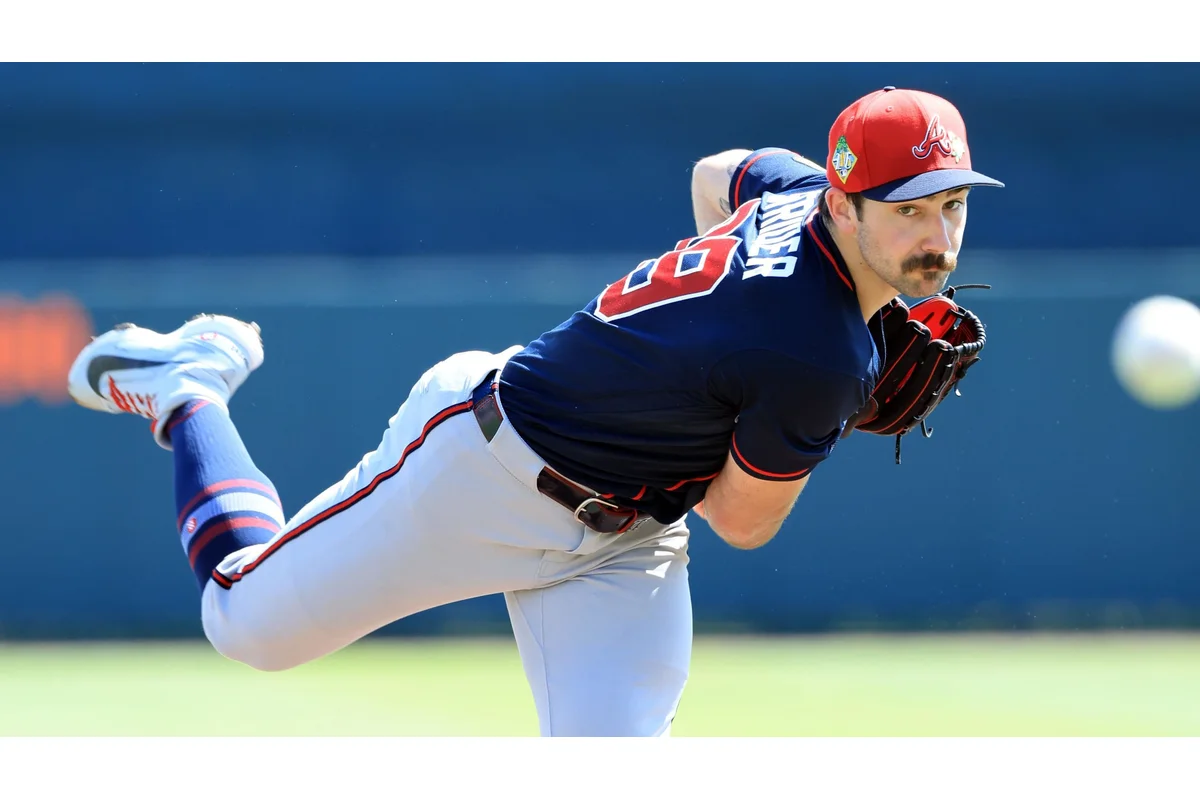
With the 2026 fantasy baseball draft season intensifying, alarm bells are ringing for Spencer Strider as his risk of being a bust escalates amid troubling spring performances. Strider’s early 2026 outings with the Atlanta Braves have raised doubts about his ability to return to form following an internal brace procedure last year, placing his draft value—and the associated risk—under greater scrutiny for fantasy managers.
Emerging Concerns Over Strider’s Spring Performance
Strider entered the offseason hopeful that time would help him regain the devastating fastball shape and develop a complementary pitch to his feared slider, aiming to recover the dominance he lost after undergoing surgery in 2024. After expressing confidence about his progress, his first spring start delivered a harsh reality check.
While there was a glimmer of improvement as his fastball generated around 18 inches of vertical break—an increase from the previous season, aligning with his peak dominance—the velocity declined by 2.5 mph, down to roughly 93 mph. Despite prior beliefs that fastball shape could compensate for lost speed, such a lower velocity limits its effectiveness. This underwhelming fastball resulted in only a single whiff during his outing.
Mark Bowman of MLB.com asserted that early spring velocity fluctuations are normal, advising caution before reading too much into these early numbers. However, for a pitcher like Strider, who was already vulnerable last year, his diminished velocity combined with a fastball prone to powerful contact is worrisome. His slider, still possessing a remarkable 48 percent whiff rate last year, may not be enough to offset these issues at lower fastball speeds.
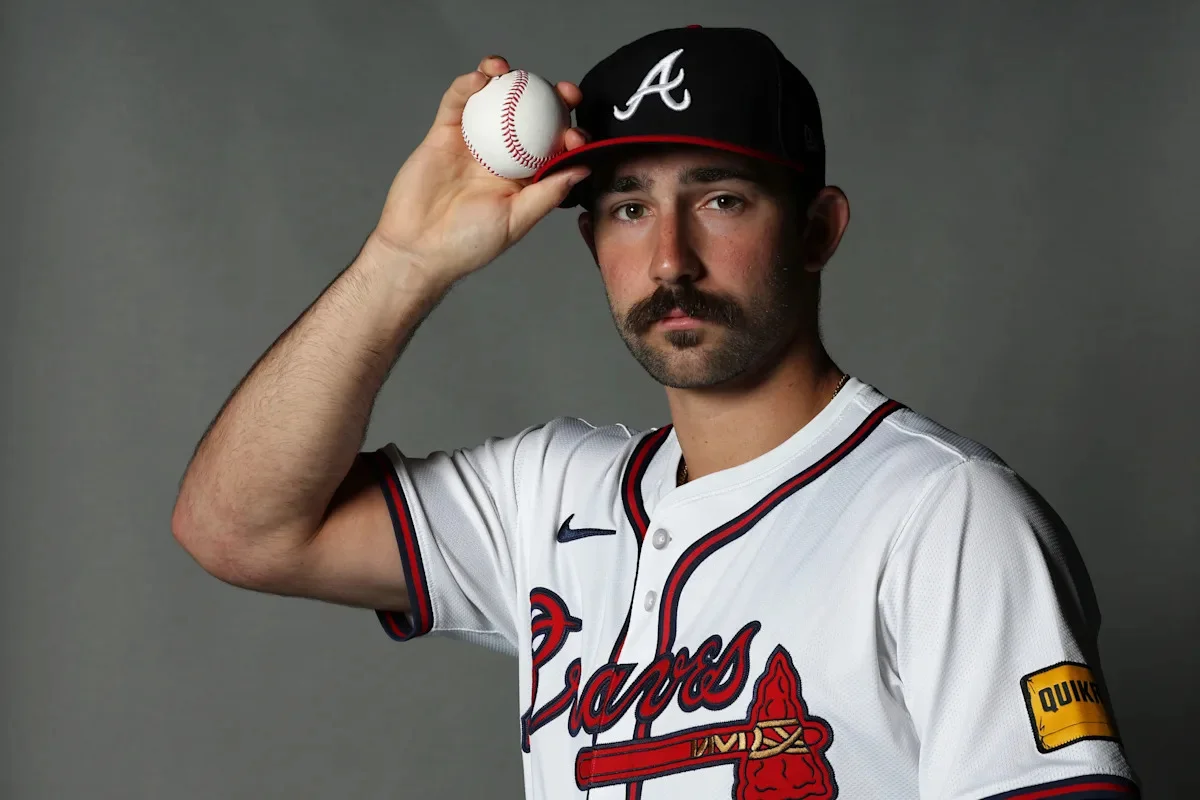
Previously viewed as a mid-tier starting pitcher around the 30th ranking, experts now suggest Strider should drop outside the top 45 starters to balance the increased downside risk. His current Average Draft Position (ADP) near 102.4 may not adequately reflect his precarious situation as his spring struggles unfold.
Other Notable Players Facing Doubtful Draft Returns
James Wood: Struggles with Increased Strikeouts
James Wood, outfielder for the Nationals with a FantasyPros ADP of 31.6, has shown a sharp decline tied to a surge in strikeouts rather than previously persistent issues pulling the ball. His strikeout rate jumped from 27.6 percent to 39 percent in the second half of last season, leading to a .223 average and a .690 OPS. Although Wood’s contact quality remains excellent, no hitter can thrive with that level of strikeouts.
The causes attributed to this decline—steeper launch angles or fatigue—lack compelling evidence. Given this uncertainty and the risky draft capital required (early third-round territory), fantasy managers might prefer investing in more stable first baseman options rather than gambling on Wood’s unpredictable plateau.
Riley Greene: Production Driven by Volatile Home Run Reliance
Tiger’s outfielder Riley Greene, with a FantasyPros ADP of 61.0, delivered must-start production in 2025 but through a method that raises sustainability concerns. He traded in well-rounded hitting for a strictly home–run-heavy approach, increasing his launch angle and aggressiveness to boost power at the cost of average exit velocity falling from the 84th to the 48th percentile.
His strikeout rate escalated to 30.7 percent, ranking fifth among qualified batters. The latter half of last season particularly highlighted his volatility with a dismal .212 average and a .691 OPS over 73 games. If he loses any home run production, his batting average is likely to suffer drastically, making his draft price insufficiently reflective of the risks involved compared to safer options like Cody Bellinger or Randy Arozarena.
Carlos Estevez: Closer Role Vulnerable Despite Save Total
Despite closing for the Royals and maintaining an ADP around 122.6, Carlos Estevez stands out as a prime regression candidate. His 2025 performance included an 8.2 percent swinging-strike rate and a 7.4 K/9—the kind of numbers typical of back-end rotation arms, not elite closers.
Adding to the concern is a velocity drop of 6 to 7 mph on his fastball during the spring, an alarming trend considering a similar dip last spring preceded a standout season. His slide comes while other closer options like Emilio Pagan, Daniel Palencia, and Raisel Iglesias are being drafted later, despite their own concerns, due to stronger strikeout abilities and stuff better suited for closing situations.
Andy Pages: Numbers Mask Underlying Limitations
Dodgers outfielder Andy Pages, drafted on average in the 134th spot, posted respectable stats last year but underlying indicators suggest caution. At 24, he may grow from prior postseason failures, but his toolkit doesn’t convincingly support a breakout. Fantasy players might find safer value in comparably priced players like Ian Happ or Jurickson Profar.
Munetaka Murakami: Power Threat Overshadowed by Contact Woes
Munetaka Murakami, first baseman for the White Sox, is attracting attention at a steep ADP of 181 despite glaring weaknesses. While his raw power includes two MVPs and a Triple Crown in Japan, his major league contact rates are troubling. His zone-contact rate in 2025 was just 72.6 percent—the lowest among all major leaguers qualifying by plate appearances.
Murakami has struggled more with high-velocity fastballs (only 63 percent contact on 93+ mph pitches), and while he set a recent Japanese single-season home run record during a dead-ball era, the leap to MLB pitching velocity appears daunting. Given this backdrop, and with late-round picks like Daulton Varsho and Jac Caglianone offering compelling performances, Murakami’s draft appeal is questionable.
Jackson Merrill: Persisting Concerns After a Disappointing Rookie Year
San Diego Padres outfielder Jackson Merrill continues to be drafted heavily despite underwhelming results and unresolved issues from a 2024 concussion. His ADP is 62.4, placing him ahead of players with more consistent performances like Cody Bellinger and Ben Rice. Merrill’s production—highlighted by 16 home runs, largely accrued in a hot September—fails to inspire confidence, especially with only one stolen base on the season.
Merrill’s poor plate discipline, reflected in a career walk rate of 5.8 percent and lower strike zone patience, undermines his strengths at contact and power. His home ballpark also suppresses left-handed power, further constraining his upside. While he may retain an everyday role, expectations should be tempered as he projects closer to a mid-tier contributor rather than a top outfielder.
Nick Pivetta: Late-Career Decline Clouds Bright 2025 Season
Nick Pivetta from the Padres, with a FantasyPros ADP of 87.2, enjoyed a standout 2025 season, lowering his ERA and earning sixth-place Cy Young votes. However, beneath the surface, his strikeout rate dropped from consistent double digits to 9.4 K/9 overall and 8.5 in the second half, while his swinging-strike rate declined close to league average.
His peripheral stats did not improve in pitching style or contact limitation, suggesting that his previously strong strikeout ability is waning. At age 32, this might indicate the onset of decline. Yet, fantasy drafters still value him as a top-25 starting pitcher, a placement that might be overly optimistic in light of his deteriorating skills.
Alex Bregman: Change of Venue Poses Power Challenges
Cubs third baseman Alex Bregman, entering 2026 with an ADP near 93.6, faces difficulties adjusting after leaving hitter-friendly venues to play at Wrigley Field, one of MLB’s deepest parks. Historically dependent on pulling balls down shorter left field lines at Fenway and Daikin Park, Bregman now contends with a 40-foot increase in left field corner distance.
This shift parallels Isaac Paredes’ struggles in similar transitions, where power and batting averages dipped. Given Wrigley’s notoriously unpredictable and predominantly wind-in conditions—confirmed by 51 “wind-in” days versus 19 “wind-out” days last year—expectations for Bregman to exceed 20 home runs should be cautious, with batting average likely to slide below .250 if his flyouts replace former home runs.
Trevor Story: Balancing Health and Production Risks at Shortstop
Despite a full, productive 2025 season (25 homers, 31 steals), Red Sox shortstop Trevor Story, with an ADP of 108.8, remains a gamble. After consecutive injury-plagued seasons averaging just 54 games from 2022-2024, questions linger about his durability and performance consistency.
His striking lack of plate discipline—a 26.9 percent strikeout rate in the 12th percentile and a 5.0 percent walk rate in the 10th percentile—drive a projected expected batting average (.249) below his actual .263 figure. Comparable players with better health and more consistent production, such as Bo Bichette, Dansby Swanson, or Corey Seager, may offer superior reliability at more favorable draft positions.
Jacob Misiorowski: Promising Arsenal Undermined by Control Issues
Brewers’ rookie Jacob Misiorowski, ADP 127.4, began strong in 2025, making the All-Star Game with a blazing fastball averaging 99 mph and reaching 103 mph, inducing a 33 percent whiff rate. Yet, his secondary pitches—slider and curveball—lack sufficient swing-and-miss impact. As the season progressed, control issues reemerged, particularly over his final nine starts where he walked 4.7 batters per nine innings and posted a 5.89 ERA with a 1.50 WHIP.
Given Milwaukee’s depth of pitching, Misiorowski may struggle to maintain a major league role. His upside as a mid-round flyer is intact, but current drafting inside the top 36 starting pitchers overvalues a player still refining fundamental consistency.
Jakob Marsee: Early MLB Surge Likely Overstated by Small Sample
Marlins’ outfielder Jakob Marsee, selected around pick 127.4, experienced a hot streak immediately after debuting in August 2025 but collapsed in September. His August numbers (.352 average, 3 homers, 9 steals in 30 games) inflated his overall stat line, while his September slump (.231 average, 1 homer, 5 steals in 25 games) more accurately reflects his true level.
Prior minor league seasons showed unimpressive .219 average with mediocre contact and minimal prospect status. Marsee appears to have had a brief “Shane Spencer moment,” blazing hot early before regression. Though the Marlins may provide him extended centerfield opportunities, his hitter profile is closer to a reserve player, underscoring substantial risk in higher round drafts.
Taylor Ward: Reliable Yet Limited Offensive Ceiling
Orioles’ Taylor Ward, with an ADP near 129.0, is often viewed as dependable due to low downside risk in maintaining a .250 average and solid counting stats. However, his 36 home runs in 2025—a near 50 percent jump from his previous career high—lack supporting skill changes, appearing largely due to random variance.
He exceeded his expected home run total by seven, one of the highest differentials in MLB. Without sustainable power growth, Ward’s production offers mediocrity rather than high-end fantasy impact, especially in shallow leagues where higher-upside players are preferred.
Ceddanne Rafaela: Repetition of Inconsistent Performance Patterns
Red Sox utility man Ceddanne Rafaela, ADP near 149.2, remains a cautionary tale for fantasy drafters despite middling moments such as a strong June-July span. His late-season dip to a .224 average with limited power and weak on-base skills underscore his profile as a hitter with an excessive chase rate (45 percent), often swinging at pitches outside the strike zone.
Though capable of boosting home run totals by targeting Fenway’s Green Monster, his poor overall offensive profile and batting order placement undermine his value relative to other players drafted in similar ranges.
Robbie Ray: Aging and Injuries Weigh on Effectiveness
Giants pitcher Robbie Ray, drafted near 160, showed signs of decline in the second half of 2025 following Tommy John surgery. His ERA ballooned to 5.54 with elevated WHIP, and key metrics such as K/9 (8.2) and swinging-strike rate (11.6 percent) declined, marking a sharp performance drop after a strong first half and All-Star selection.
Ray’s shaky command and prior profile of yielding hard contact suggest his window of elite production may be closing, making his current draft position more speculative than secure.
Jackson Holliday: Prospects Clouded by Injury and Underwhelming Metrics
Despite a fractured hamate bone expected to delay his season start, Baltimore Orioles prospect Jackson Holliday holds an ADP near 165.8, resisting downward adjustment. Son of Matt Holliday and a former No. 1 overall pick, expectations are high, but his major league debut and subsequent seasons have been underwhelming, showing low exit velocities and a lack of plate discipline.
At 22, potential remains, but no clear breakthrough signs demand patience over higher-upside alternatives at second base such as Marcus Semien, Matt McLain, or Jorge Polanco, all drafted much later.
Edward Cabrera: Flashes of Promise Clouded by Inconsistency
Cubs pitcher Edward Cabrera, drafted in the 214th range, drew attention upon acquisition due to perceived ace potential. Yet his Fantasy performance remains volatile, such that he has earned the nickname “Charizard” for the damage he inflicts unpredictably—both on opponents and fantasy rosters.
While improvements in pitch selection, including adopting a two-seam fastball, contributed to a steadier 2025 mid-season stretch, concerns linger over sustainability. Past adjustments often flamed out, raising doubts about Cabrera’s consistency this season and limiting confidence in his draft position.
Expansion of Bust Risk Highlights Greater Drafting Caution
The updated bust list reflects a broad reassessment, underpinned by recent performance breakdowns and preseason evaluations that expose heightened volatility and risk among previously reliable or hyped players. These concerns extend well beyond Spencer Strider, emphasizing the need for fantasy managers to prioritize risk management and consider safer alternatives, especially in mid-to-late rounds.
Strider’s spring struggles encapsulate the precarious nature of many pitchers returning from injury, with velocity drops and control issues demanding sharper scrutiny. His ongoing situation will be closely monitored through spring training to see if velocity rebounds or if draft valuations require further adjustment.
For fantasy baseball participants, this evolving landscape means recalibrating expectations and draft strategies to mitigate bust risk, particularly when investing high-value picks. As the season approaches, updated player evaluations will be vital, with special attention on those showing troubling signs like Strider and others detailed here, broadening the cautionary tone necessary for prudent fantasy management in 2026.
Carlos Estévez's velocity was way down today in his spring debut, 86-89 mph. This is obviously eyebrow-raising and something to monitor but not new — it's exactly what came up last year. It's typically a slow start for him. #Royals really rely on how he says he feels.
— Anne Rogers (@anne__rogers) February 24, 2026
