
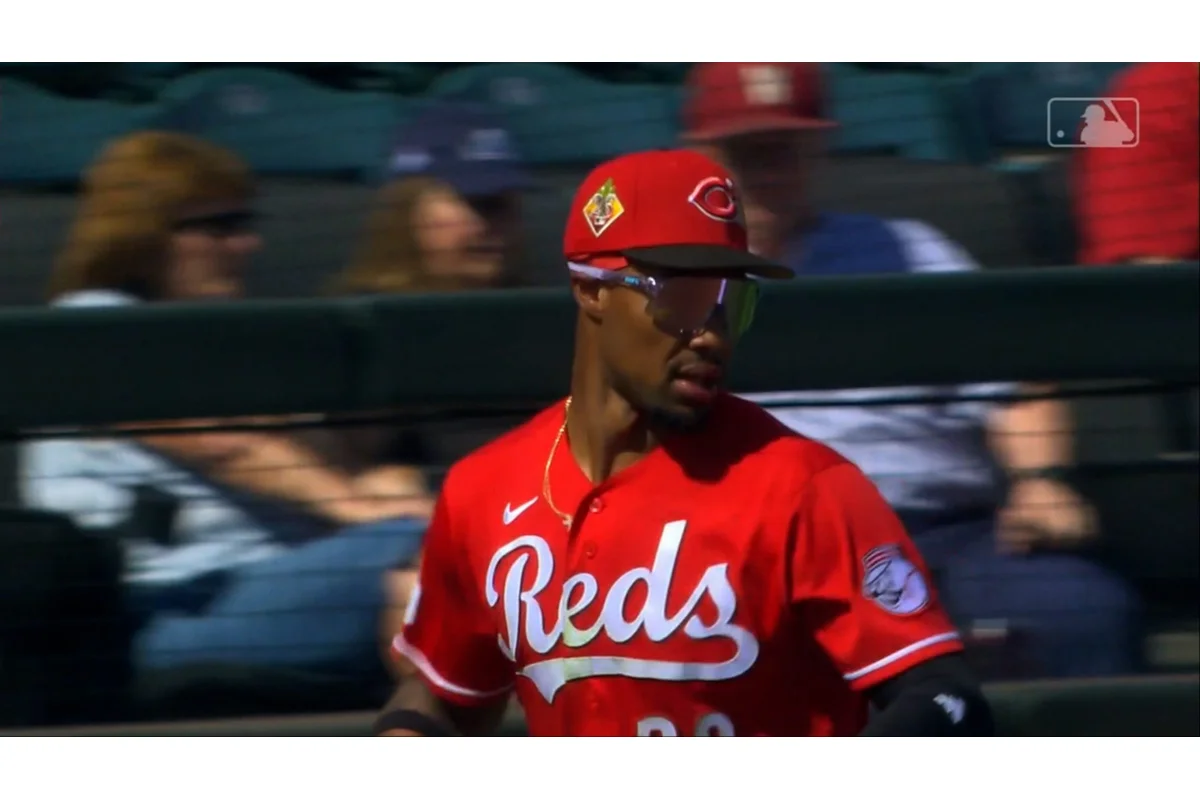
The Cincinnati Reds have brought back slugger Eugenio Suarez for the 2026 season, aiming to add much-needed power to a lineup that showed inconsistency last year. This move comes amid a cautious Cincinnati Reds offseason review focused on balancing roster improvements with financial constraints, as the team prepares for another bid to return to postseason play at Great American Ball Park.
Key Free Agent Signings Strengthen Pitching and Offense
Cincinnati’s notable acquisitions include right-handed reliever Emilio Pagan, who was signed to a two-year, $20 million contract with an opt-out after the 2026 season. Pagan, returning after a successful 2025 season marked by a 2.88 ERA and 32 saves in 38 chances, is seen as a reliable bullpen asset. Additionally, the Reds inked Eugenio Suarez to a one-year, $15 million deal with a mutual option for 2027, reinforcing their offensive potential.
Other signings include relief pitchers Pierce Johnson (one year, $6.5 million) and Caleb Ferguson (one year, $4.5 million), plus outfielder JJ Bleday on a modest one-year contract. These additions aimed to address gaps while maintaining payroll flexibility, with the team’s 2026 spending estimated around $37.4 million and total offseason spending at approximately $47.4 million.
Trades and Roster Moves Focus on Bullpen and Depth
The Reds executed a multi-team trade involving the Angels and Rays that sent infielder Gavin Lux to Tampa Bay and brought left-handed pitcher Brock Burke from Anaheim. Burke, a groundball-oriented hurler, is expected to bolster the relief staff. Cincinnati also acquired outfielder Dane Myers from Miami in exchange for a minor league outfielder, Ethan O’Donnell, and added minor league pitcher Dusty Revis from Seattle.
Waiver claims included catcher Ben Rortvedt, who was later reclaimed by the Dodgers, and right-handed pitcher Roddery Munoz, who was non-tendered and later selected by Houston in the Rule 5 Draft. These moves reflect the Reds’ continued efforts to strengthen pitching depth amid departures and option declines.
Significant Departures and Declined Options Affect Team Composition
The Reds declined club options on outfielder Austin Hays, reliever Scott Barlow, and southpaw Brent Suter, paying buyouts totaling $2.35 million. These decisions removed reliable, if unspectacular, pieces from the roster, opening opportunities for new acquisitions. Other notable losses include infielders Santiago Espinal and Miguel Andujar, pitcher Nick Martinez, and several unsigned free agents such as Zack Littell and Wade Miley.
Failed Pursuit of Kyle Schwarber Highlights Offseason Challenges
Cincinnati sought to add power in a big way by courting hometown favorite Kyle Schwarber with a reported five-year, $125 million offer. Schwarber ultimately re-signed with the Philadelphia Phillies for five years and $150 million, leaving the Reds to recalibrate. Instead, they secured a familiar presence in Eugenio Suarez, who hit 49 home runs last season. Suarez, however, is entering his age-35 season, has experienced inconsistent performance, and lacks Schwarber’s walk rates and plate discipline that make Schwarber a more elite offensive force despite similar home run totals.
Evaluating Suarez’s 2024-25 Performance and Fit in Cincinnati
Suarez’s recent major league tenure was characterized by streaks of brilliance and slumps. From July 2024 through July 2025, he posted an impressive slash line of .276/.336/.593, hitting 60 home runs over 766 plate appearances. However, his performance declined significantly early in 2024 and again after a midseason trade to the Mariners. Defensive struggles at third base have also complicated his value. Despite these concerns, Suarez accepted a one-year contract in a hitter-friendly park to showcase himself for a potential multi-year deal next offseason. The Reds welcome his power as a primary designated hitter, since third base is occupied by Ke’Bryan Hayes, who offers outstanding defense despite modest offensive output.
Offensive Needs Remain a Focus amid Limited Spending
Cincinnati’s offense was their most pressing concern following a season marked by sparse run support. Bringing back Suarez for 2026 is expected to energize the lineup, but much of the roster’s core remains from 2025. President of Baseball Operations Nick Krall indicated early on that payroll would not rise substantially, aiming to maintain financial stability amid broadcast uncertainties. As a result, the Reds’ 2026 payroll projects to hover near $126 million, a moderate increase from about $118.7 million in 2025.
Broadcast Deal Issues Impact Financial Flexibility
The Reds faced complications with their broadcast partner, Main Street Sports, which experienced ongoing financial troubles leading several teams, including Cincinnati, to exit those agreements. The club subsequently contracted Major League Baseball to manage their broadcasts for 2026, providing some short-term stability but at a reduced revenue level. This financial hit influenced the club’s restrained offseason spending, particularly regarding high-profile free agent signings.
Trade Market Activity Focused on Maintaining Rotation Strength
The Reds explored trade opportunities for offensive upgrades, notably targeting players like Miguel Andujar and Ketel Marte. However, these deals never materialized, likely because Cincinnati was unwilling to part with key starting pitchers such as Hunter Greene, Nick Lodolo, Andrew Abbott, or Chase Burns. Maintaining a strong rotation was a priority, given it was a major reason for their playoff appearance. The rotation lost Nick Martinez to the Rays and may lose free agent Zack Littell, though Littell remains unsigned. This forced the Reds to address relief pitching through free agency and trades rather than starter trades.
Relief Pitching Reinforcements Update Cincinnati’s Bullpen
After declining options on Scott Barlow and Brent Suter, Cincinnati sought upgrades by signing Pierce Johnson and Caleb Ferguson to one-year contracts worth $6.5 million and $4.5 million, respectively. These pitchers, alongside Emilio Pagan and Brock Burke acquired via trade, are viewed as bullpen reinforcements with postseason experience and upside. The bullpen overhaul reflects the club’s commitment to sustain late-inning effectiveness despite some rotation departures.
Outfield Depth Shuffled with New Acquisitions and Departures
The outfield, an area of uncertainty heading into the offseason, lost Austin Hays to Chicago, where he sought regular playing time. With the departure of Hays and trading of Gavin Lux, Cincinnati’s outfield acquisitions focused on low-cost, controlled players like JJ Bleday and Dane Myers. Bleday, a former high draft pick, had a strong 2024 but regressed in 2025, leading to the Oakland Athletics non-tendering him. Myers is primarily valued for his defensive skills and platoon advantage against left-handed pitching, though his career offensive numbers remain modest.
The projected primary outfield in 2026 features Bleday in left field, TJ Friedl in center, and Noelvi Marte in right, with Myers and Spencer Steer providing flexibility when facing left-handed pitching or as depth. Will Benson is available as bench or Triple-A reinforcement. This group maintains the focus on defense and cost-control rather than offensive firepower.
Position Player Roles and Development Remain Uncertain Heading into Next Season
Manager Terry Francona faces a challenging task in determining playing time among position players, as the roster lacks a true everyday player beyond a few key names. Suarez provides a measure of offensive consistency if he performs like his best D-Backs years. Elly De La Cruz remains an exciting young All-Star with high upside, while Ke’Bryan Hayes stands out defensively at third base even if his hitting is limited.
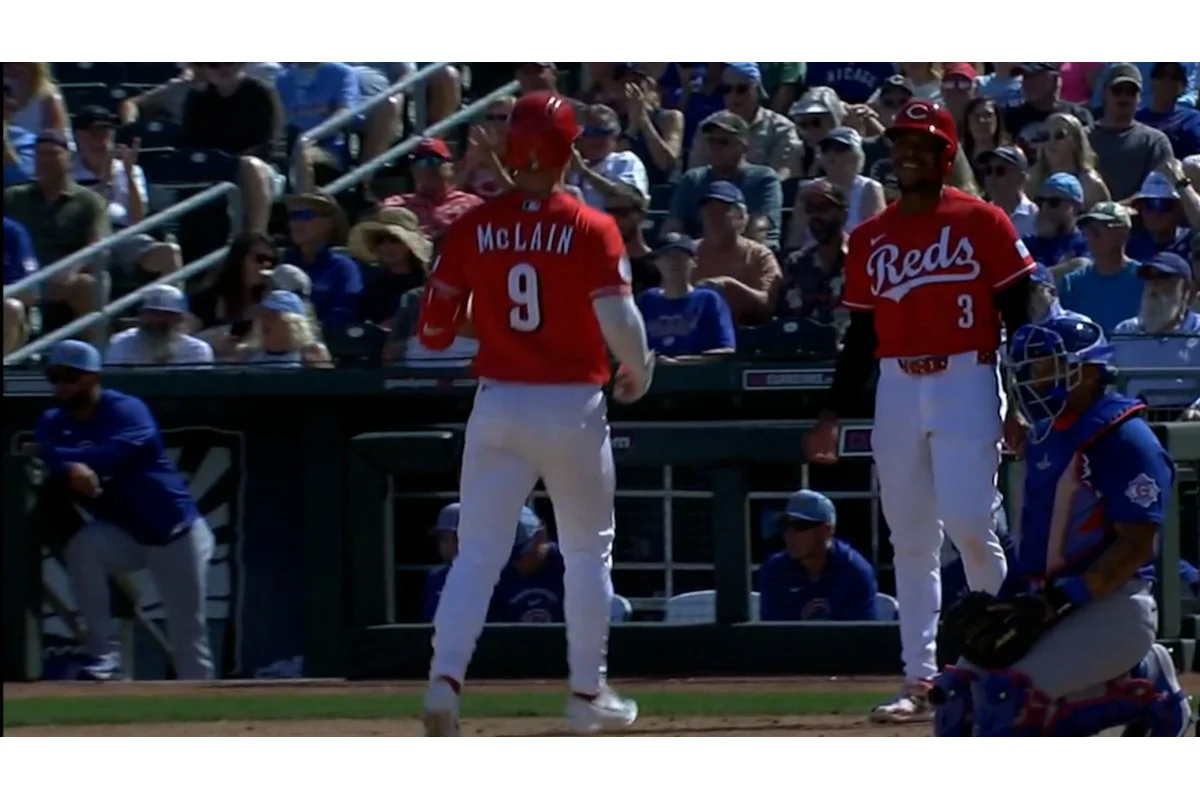
Other position players such as Noelvi Marte, Sal Stewart, Spencer Steer, Matt McLain, and Tyler Stephenson each carry potential but have yet to establish themselves as consistent major league contributors. Steer, in particular, is expected to serve as a versatile utility player across infield and outfield positions. The Reds will rely on internal player development and potential midseason adjustments to improve the lineup’s productivity.
Minor League Signings Provide Additional Depth and Possible Bounce-Back Candidates
The front office also invested in numerous minor league free agents, including Nathaniel Lowe, Garrett Hampson, Josh Staumont, Michael Toglia, Michael Chavis, Anthony Misiewicz, Yunior Marte, Tejay Antone, and others. Among them, Nathaniel Lowe stands out as a candidate to regain previous form, although his addition would increase competition at first base. These signings support the organization’s approach of cultivating a deep pool of players who could contribute at the major league level.
Reds Poised for Potential Growth but Face Tough Division Competition
Despite uncertainties in the lineup, Cincinnati’s solid rotation remains a significant strength and could carry them to another playoff appearance. The National League Central is becoming more competitive, so the Reds will need contributions from Suarez and internal breakouts to advance beyond the wild card stage. With limited offseason spending and a focus on player development, the team must blend stability with strategic risks to progress in 2026.
Fan Reactions to the Offseason Highlight Mixed Sentiments
Among 498 fan votes, 43% graded the Reds’ offseason as a “C,” while 38% offered a “B” rating. Smaller percentages assigned grades of “A” (6%), “D” (10%), and “F” (4%). This distribution reflects divided opinions on the effectiveness of the club’s moves amid budget constraints and unmet expectations on power-hitting acquisitions.
“Pagan rebounded in very impressive fashion to post a 2.88 ERA, 30% strikeout rate, and 8.1% walk rate across 68 2/3 innings last season, while converting 32 of 38 save opportunities.” – Nick Krall, Reds President of Baseball Operations
“Assuming Suarez is more like the version of himself who tore up pitching for the bulk of his D-Backs tenure, he’ll be a source of stability.” – Terry Francona, Reds Manager
“With money at a premium, it isn’t surprising that most of the Reds’ offseason pursuits (particularly on the batting front) came on the trade market.” – Nick Krall, Reds President of Baseball Operations
