
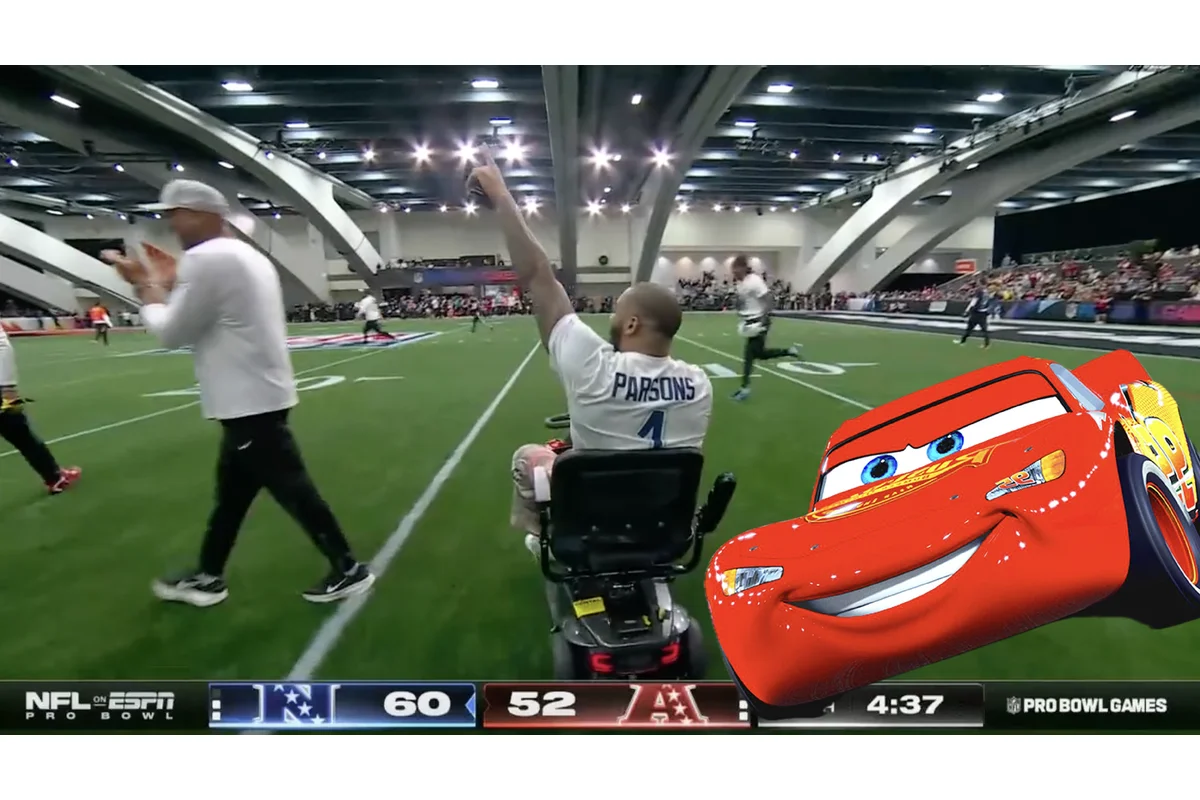
Myles Garrett recently criticized the National Football League’s tendency to award Most Valuable Player honors primarily to quarterbacks, sidelining defensive players like himself and Micah Parsons. Garrett, fresh off winning his second Defensive Player of the Year award, insists that defensive athletes contribute just as much, if not more, to their teams. This discussion emerged during early 2026 as Parsons, sidelined by an ACL injury, and Garrett voiced frustration over the limited recognition defensive stars receive in MVP voting.
Defensive players face steep odds in winning the MVP trophy. In the award’s 68-year history, only two defensive players have ever earned the distinction, emphasizing the rarity and inherent bias in the selection process. Garrett aims to overcome these challenges and set a precedent for defensive players vying for the league’s top individual accolade.
Garrett’s Pursuit of Defensive Greatness and MVP Recognition
This dialogue between Garrett and Parsons arose when Parsons inquired about Garrett’s goals after setting the NFL’s single-season sack record and securing his second Defensive Player of the Year award. Garrett responded by highlighting the common narrative that defensive players do not influence enough victories to merit MVP consideration.
They are saying that a Defensive Player (of the Year) can’t win MVP. We don’t affect winning enough. That’s the next mission, that’s all I’m thinking of.
Myles Garrett replied
Garrett acknowledged the significant advantage quarterbacks have in MVP races, stating their consistent possession of the football naturally elevates their impact in the eyes of voters. Still, the seven-time Pro Bowler remains undeterred, eager to cement his legacy not only as one of the greatest defenders but also as a genuine contender for the MVP award, a feat no defensive player has achieved since 1986.
Historical Context Underscores the Challenge for Defensive Players
The last defensive player to claim the NFL MVP award was Lawrence Taylor in 1986, a linebacker who led the New York Giants to their first Super Bowl while topping the league with 20.5 sacks. Before him, defensive tackle Alan Page won the honor in 1971 as the leader of the Minnesota Vikings’ dominant defense, guiding his team to the playoffs. These two instances remain isolated exceptions in a quarterback-dominated tradition.
Garrett’s 2025 season, marked by a record-shattering 23 sacks and critical leadership for the Cleveland Browns, mirrors those historic performances in impact but did not translate into serious MVP consideration. The Browns’ uncertain quarterback situation and the team’s playoff prospects add to the complexity of Garrett’s case, as postseason success often influences MVP discussions.
Garrett Critiques the MVP Selection Process and Playoff Narratives
Garrett expressed frustration about the metrics and narratives that undervalue defensive contributions. He emphasized that quarterbacks’ statistics—touchdowns, passing yards, and rushing numbers—are more straightforward to quantify and appreciate. In contrast, defensive efforts, such as sacks and forced turnovers, often receive less visibility and acclaim.
QBs can’t be winning these games in the playoffs… It’s too easily handed to them. I feel like we are not taking to account the things that we do. A lot of the numbers that we have… it’s not as easily seen as touchdowns, yards, catches, rushes, all that.
Myles Garrett told Micah Parsons
Despite the post-season focus on quarterbacks, Garrett insists that defensive players’ impact is just as critical to winning games. His record-setting sack achievement in the final game of the 2025 season, acknowledged on the field during the game itself, highlights his exceptional performance and leadership.
Parsons and Garrett’s Shared Vision for Defensive Player Recognition
Though Micah Parsons’ 2025 campaign was cut short by injury, his support for Garrett’s aspirations remains strong. Both players share a vision of challenging the quarterback monopoly on MVP honors, calling attention to the value and influence of defensive stars. Parsons’ early exit due to an ACL tear also underscored the harsh realities defenders face, both in recognition and health tolls.
Their ongoing conversation sheds light on larger systemic issues in how individual excellence is measured in the NFL, especially when defensive players must overcome entrenched biases to be seen as MVP-level candidates.
Outlook for Future MVP Races and Defensive Player Legacy
While Garrett’s record-breaking feats and accolades solidify his status among the NFL’s defensive greats, breaking through the quarterback-centric MVP barrier remains a formidable challenge. Unless defensive players lead their teams to playoff success comparable to what Lawrence Taylor achieved, capturing the MVP may continue to elude them.
The Browns’ uncertain quarterback situation and quest for postseason victory will be pivotal to Garrett’s MVP ambitions, as postseason impact often sways voters. Still, Garrett’s determination to change the narrative has the potential to influence future MVP debates and increase awareness of defensive contributions.
This ongoing dialogue between Garrett, Parsons, and the NFL community could spark broader conversations about fairness in award voting and help redefine what constitutes “most valuable” in professional football.
Myles Garrett says NFL MVP is "too easily handed" to QBs
Full interview: https://t.co/oJC6wXjzzX pic.twitter.com/9VKQoESY73
— Bleacher Report (@BleacherReport) February 10, 2026
